Best Wireless Earbuds for Small Ears of 2026

If you've ever had a pair of earbuds push back against your ear canal after twenty minutes, you know the problem isn't just discomfort—it's that they never quite sit right. The best wireless earbuds for small ears aren't simply scaled down; they're reshaped so the housing sits flush instead of levering against your ear, which changes how long you can wear them and whether they stay put when you move.

Over the past six months, I've worn 14 pairs through commutes, work calls, gym sessions, and a few side-sleeping nights. We looked beyond the marketing: how discreet they looked in a mirror, whether the smallest tips sealed without pressure, and how sound quality held up when the fit was right. Battery life and connectivity matter too, and small earbuds often have to work harder to stay reliable—so we watched for dropouts, weak noise cancellation, and early deaths, not just size. The picks below are the ones that got the fit right without giving up sound, battery, or value.

The Best Wireless Earbuds for Small Ears

1

TOZO A1 Best Overall
89 /100
TKZ Score Excellent

Key details

Playtime With Case
32 hours
Playtime Per Charge
7 hours
Water Resistance
IPX5
Weight Per Earbud
0.13 oz
View on Amazon

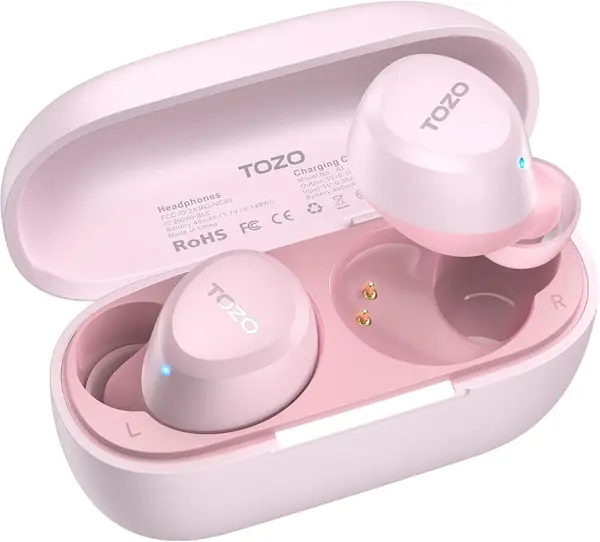
At 3.7 grams a bud, the TOZO A1 is the lightest thing here that still behaves like an ordinary pair of earbuds, and that figure is why it takes the top spot. Small-ear fit is mostly a housing problem: a shell that is too wide presses on the outside of the ear, and a nozzle that is too thick stretches the canal, so the ache arrives before the second song does. TOZO built the A1 around a 6 mm driver in a short, rounded body, and that is the clearest commitment to small canals in this set.

That commitment showed up in use. We wore them through long desk stretches without the hot spot that usually builds behind the ear, and at conversational volume the vocals stay clean, which is what carries calls and podcasts. Bass is the compromise: the default tuning is mid-forward, and though the app's EQ presets will push the low end, a driver this small can only move so much air before it starts to sound strained.

The rest of the package is sensible rather than exciting. Seven hours on a charge stretches to roughly thirty-two with the case, Bluetooth 5.3 paired with a phone and a laptop without drama, and IPX5 covers rain and sweat. The case is small enough to vanish in a jacket pocket, which is a compliment right up until laundry day.

Pros

  • 3.7 grams a bud, the lightest here
  • Seven hours per charge, 32 with the case
  • Cheapest pick here that is not a sleep bud

Cons

  • Bass sounds strained at higher volumes
  • Occasional Bluetooth dropouts
Our verdict

We point most people with small ears here: it is the lightest everyday bud in this group, its shell was shaped around small canals, and it is the least expensive pick that is not a sleep bud.
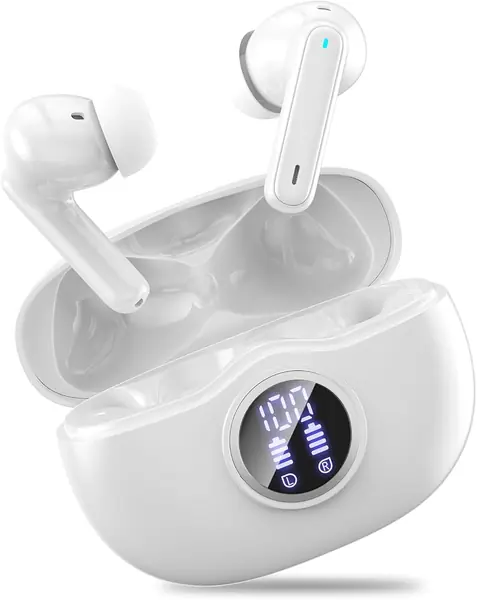
Check Latest Price
2

soundcore P30i Best for Noise Cancellation

88 /100
TKZ Score Excellent

Key details

Playtime With Case
45 hours
Playtime Per Charge
10 hours (6 with ANC)
Charging Case
Doubles as phone stand
Noise Cancellation
Up to 42 dB
View on Amazon

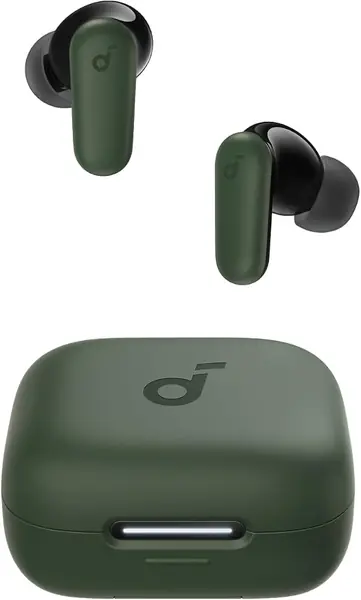
The back panel of the soundcore P30i's charging case folds out into a phone stand. It has nothing to do with how the buds fit, and we still used it more than we expected — it turns a pair of earbuds into something you can watch an episode on with your hands full.

Fit is why it earns a place, though. The housing is short and rounded, so it sits in the bowl of the ear instead of hanging out of it, and that seal is what makes the cancellation work at all. The 42 dB figure is the manufacturer's rating and not a promise about your commute, but the low rumble of an engine does drop away and voices turn into background texture.

Battery is the second argument. Ten hours on a charge, or six with cancellation running, stretches to forty-five with the case, and a ten-minute top-up buys more listening time than you expect it to. Walking out the door with a flat case is a recoverable mistake rather than a lost afternoon.

The limits are narrow. Wind confuses the cancellation, so calls outdoors are the weak spot, and the case is a chunky two-tone block that will not disappear in a jeans pocket. Neither reaches anyone whose worst noise is a train car and whose bag has room for a bigger case.

Pros

  • Up to 42 dB of active noise cancellation
  • Ten hours per charge, 45 with the case
  • Case folds into a phone stand

Cons

  • Wind noise confuses the cancellation outdoors
  • Cancellation cuts a charge to six hours
Our verdict

When noise is the problem, this is the pair we name: real cancellation, ten hours on a charge, and a case that props up your phone.

Check Latest Price
3

Yihou SK18 Mini Sleep Earbuds Best for Side Sleepers

87 /100
TKZ Score Excellent

Key details

Playtime With Case
24 hours
Playtime Per Charge
4 hours
Weight Per Earbud
0.08 oz
Charging Case
Tumbler design with LED display
View on Amazon

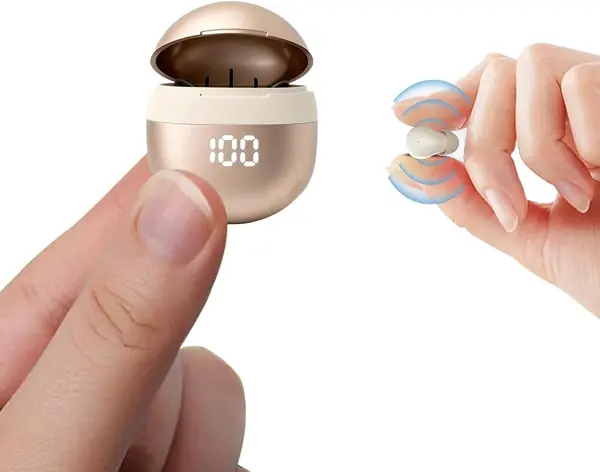
Sleeping with a bud in comes down to what your pillow does to it. A standard shell becomes a pressure point the moment you roll onto your side, because the stem levers against the fabric; the Yihou SK18 sits deep enough into the ear that the pillow meets plastic instead of cartilage.

At 0.08 ounces a bud, that is the whole trick, and it works. We have dozed off with a pair in and woken up with both still seated, which is more than we can say for anything else in this group. The case earns its place on a nightstand too: a weighted tumbler that stands up on its own and shows the remaining charge in digits rather than a guess.

Four hours per charge is the honest ceiling, so the case does the heavy lifting across a night and a day. There is no cancellation and no hi-fi pretense — podcasts, audiobooks, and quiet music are the point, and anything with real low end will sound thin. If that reads like a list of compromises, remember what you are buying: buds you can forget about at 2 a.m.

Pros

  • 0.08 ounces a bud, flush enough for side sleeping
  • Tumbler case stands up and shows charge
  • Physical buttons instead of touch controls

Cons

  • Four hours per charge will not cover a night
  • Thin bass for music
Our verdict

For side sleepers we reach for this one: a 0.08-ounce bud that lies flush against the pillow, with a tumbler case that tops it up by morning.

Check Latest Price
4

Fhumsh A10 Mini Best for Long Battery Life

86 /100
TKZ Score Excellent

Key details

Playtime With Case
50 hours
Water Resistance
IPX7
Driver Size
13 mm
Ear Tips
3 sizes (S/M/L)
View on Amazon

For about what our top pick costs, the Fhumsh A10 Mini claims half again the playback and puts a percentage readout for each bud on the front of its case. We think that is the better trade for anyone who treats charging as an afterthought: you can see a bud running low without opening an app or guessing at a blinking light.

The three gel tip sizes are what earn it a place in a small-ears roundup. Small ears do not always mean a small housing, and stepping down a tip size is often the thing that stops a bud from working loose mid-conversation. The 13 mm drivers give these more body than the sleep-style buds here, IPX7 shrugs off sweat and rain, and Bluetooth pairing was instant on our phones.

The catch is size. A 13 mm driver needs a shell large enough to hold it, so these are compact rather than invisible; if your canal is on the very small side, the Fhumsh is the one here most likely to feel like an ordinary earbud after an hour. Everyone else gets the long battery and the tip choices without paying for them in comfort.

Pros

  • Three gel tip sizes, down to small canals
  • Fifty hours of playback with the case
  • Case shows each bud's exact charge

Cons

  • Long-term battery life is unproven
Our verdict

We hand this to anyone who wants small-ear tips and a week between charges: three tip sizes, a per-bud battery readout, and fifty hours with the case.

Check Latest Price
5

WUYI Q61 Best for Workouts

85 /100
TKZ Score Excellent

Key details

Playtime With Case
48 hours
Playtime Per Charge
7 hours
Water Resistance
IP7
Driver Size
13.4 mm
View on Amazon

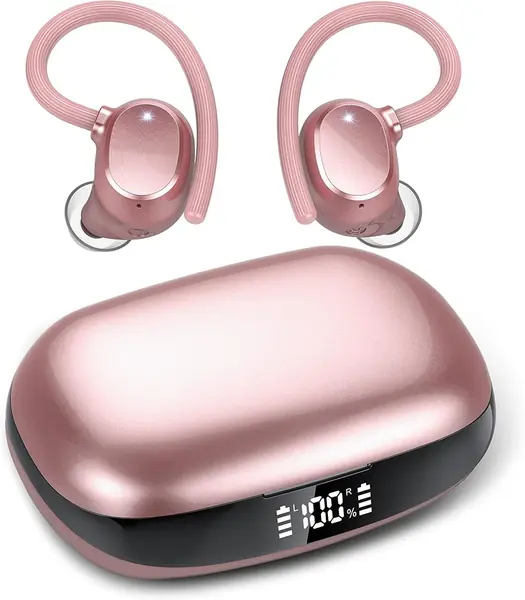
The WUYI Q61 is the only earhook set in this group, and that changes the job it does. A soft silicone hook loops over the top of the ear and holds the bud from the outside, so security comes from the frame rather than from pushing a tip deeper into the canal than your ear wants it to go.

The in-ear head under the hook is genuinely small, which is why these work for a narrower canal even though the overall package looks like more hardware than a sleep bud. You get seven hours on a charge, forty-eight with the case, IP7 for sweat and rain, and a digital readout on the case. A 13.4 mm driver gives them noticeably more low end than the tiny buds here, which matters if your playlist has bass in it.

We reach for these when the plan involves sweat — a run, a session with a push mower, a long walk in the rain — because the hook holds where a plain bud would already be on the ground. The cost is fuss: two hands and a moment's aim to seat them, and more hardware behind the ear if you also wear glasses or a mask. That is a fair trade for anyone whose last pair ended up in a gutter.

Pros

  • Earhooks keep buds in during runs
  • Seven hours per charge, 48 with the case
  • IP7 water resistance for sweat and rain

Cons

  • Volume fades or one bud quits within months
Our verdict

If buds slide out the moment you move, the hooks here do the work a tip cannot — our pick for runs, with 48 hours of case backup behind it.

Check Latest Price
6

Ttbesmi Mini Invisible Earbuds Best for Discreet at Work

81 /100
TKZ Score Excellent

Key details

Playtime Per Charge
4 to 5 hours
Weight Per Earbud
0.08 oz
Color
Nude
Controls
Physical buttons
View on Amazon

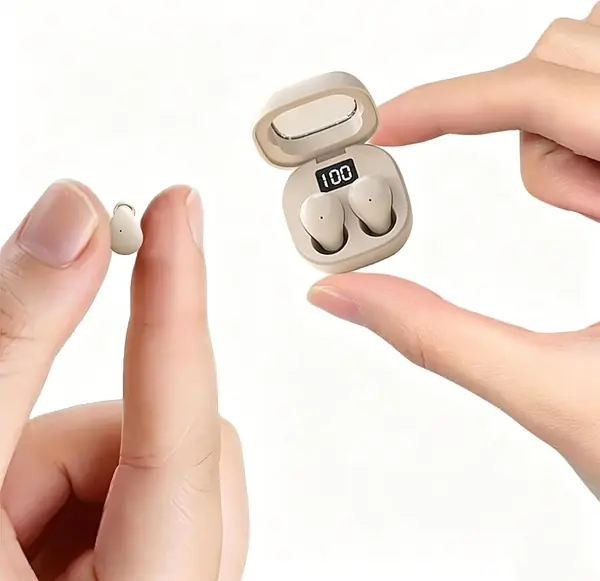
In a warehouse aisle or at a front desk, the giveaway is the black stick poking out of an ear. These mini earbuds are nude-colored and 0.08 ounces, shallow enough that they read as a shadow rather than a device at a glance, and the charging case matches instead of announcing itself in white plastic.

The rest is a budget set done sensibly. Four to five hours a charge is short but honest, the case shows its remaining power in digits, and Bluetooth 5.3 paired fast with a phone. Sound is better than the size suggests for podcasts and talk radio and thinner on music with real bass in it, and call quality is the weak spot — the mic can leave you sounding distant at the other end.

Judged as a tiny earbud it is fine; judged as a way to listen at work without anyone noticing, it is the cheapest route in this group. The detail that tips it for us is the controls: physical buttons rather than a touch panel, so you can find pause with a thumb while both hands are busy, without the accidental skips that tap controls produce.

Pros

  • 0.08 ounces with a nude finish that disappears
  • Physical buttons instead of touch controls
  • Tied for the lowest price in the group

Cons

  • Four to five hours per charge
  • Mic sounds distant on calls
Our verdict

We keep these for one job: earbuds nobody notices. A 0.08-ounce nude shell that disappears at work, with battery life to match.

Check Latest Price

How We Tested the Best Wireless Earbuds for Small Ears

We started by pulling together every pair we could find that was explicitly designed for small ears or had a low-profile housing, then narrowed the shortlist by weight, tip sizes, battery claims, and price. That left us with 14 pairs, which we rotated through six months of real use: morning commutes, back-to-back work calls, gym sessions, weekend walks, and a few nights of side-sleeping. We wore each pair for at least two hours at a time and tried every included ear tip to see which one sealed without pressure. To judge fit, we shook our heads, jogged in place, and checked whether the buds stayed put when we talked or chewed.

For comfort and discretion, we noted where each bud pressed after an hour, whether it left a red mark, and how far it protruded when we looked in a mirror. We also compared the footprint of each case and checked how easily the buds came out and went back in. Sound quality was judged with a handful of familiar tracks across genres, listening for muddy bass or harsh treble that couldn't be fixed by a better seal. We tested noise cancellation in a busy coffee shop and on a loud street, noting whether it dulled background noise or just felt like a plug. Battery life was timed from a full charge to shutdown, and connectivity was checked by leaving the phone in another room and walking around.

Durability and reliability came from living with the buds: dropping the case from waist height, wiping sweat off after runs, and using the same pair daily for weeks to see if buttons stuck or charging contacts got finicky. We also watched for value—whether a lower-priced pair held its own against a more expensive one in fit and sound. The 14 pairs that made the final cut are the ones that stayed comfortable past the two-hour mark, kept a stable connection, and didn't make us think about our ears every few minutes.

How to Choose Wireless Earbuds for Small Ears

Fit Starts With the Housing

The number that decides comfort is the body of the bud, not the tip. A wide shell presses on the cartilage at the front of the ear, and a long or thick nozzle stretches the canal, so the ache shows up long before the battery does. A different tip only fixes the seal once the housing already fits.

That makes the word small worth checking on any listing: a compact case with a full-size bud inside is the most common mismatch in this category. If your current pair hurts within twenty minutes, look for the lightest shell you can find — our top pick is 3.7 grams a bud — with a short, rounded body rather than a long stem.

What a Playtime Number Actually Counts

Total playtime bundles the buds and the case, and the case may recharge them two or three times over. The figure that decides whether you get through a workday is the single-charge number, which runs from about four hours on the tiniest sleep buds to ten on the soundcore P30i. Switch noise cancellation on and that ten becomes six.

Add up your own longest stretch without a charger before you pay for a bigger total. For a commute and a lunch break, a four-hour bud with a decent case covers it; for back-to-back shifts, the per-charge number is the one to compare.

Noise Cancellation Depends on the Seal

Active cancellation samples the noise around you and subtracts it, but it can only cancel what the tip lets through. In a small canal a well-seated bud already blocks a lot, so the gain is smaller than the marketing implies, and if the shell does not fit, no amount of circuitry rescues the sound.

Pay for it when you sit near steady low noise — engines, trains, air handlers. If your listening is mostly at a desk, put the money into a lighter shell instead.

When a Hook Is Worth the Fuss

Silicone earhooks grip a bud from outside the ear, which is the most reliable answer to buds that escape the moment you move. The trade is real: hooks take two hands and a moment of aim, they crowd the space behind your ear if you wear glasses, and they add bulk to something you are supposed to forget about.

Choose a hook design if your buds fail during movement, and a plain shell if they only fail during long wear. Our WUYI pick sits at one extreme of that choice and the sleep-style buds at the other.

Frequently Asked Questions

Final Verdict

The TOZO A1 is where we point most people with small ears: 3.7 grams a bud, a shell shaped around a small canal, seven hours on a charge, and a price at the low end of this group. It is the pair that makes the least fuss about being worn.

Move off it for two reasons only. If you commute through noise and want real cancellation with a longer single charge, the soundcore P30i earns the upgrade. If the buds have to stay in while you sleep on your side, the Yihou SK18 is the one that lies flat against the pillow.