TOZO OpenEarRing Best Overall
Key details
- Water Resistance
- Water resistant
- Design
- Open-ear clip-on
- Playtime
- 10 hours per charge, 40 total
- Bluetooth
- 5.4
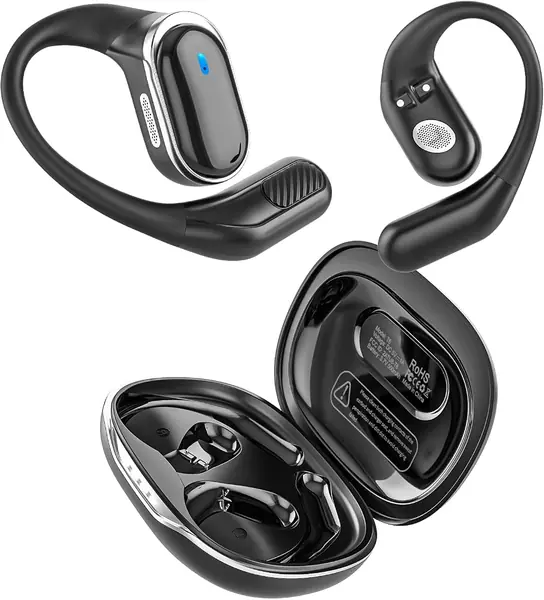
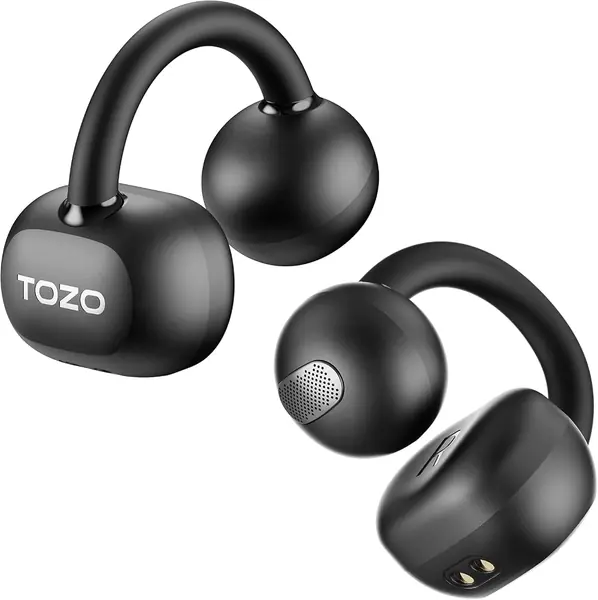
The OpenEarRing solves the first problem before it solves the second. Its clip sits over the edge of the ear and leaves the canal open, so there is no silicone tip pressing inward and no seal to swell or itch. We wore it through desk work and short walks, and the lack of canal pressure was the thing we noticed first. You do give up isolation: traffic, a kettle, and a coworker all come through. For sensitive ears, that is often the right trade.
The clip is light enough to forget on a good fit, but fit is the variable. If the ring lands on a tender part of your ear, it becomes a pressure point rather than a relief. We do not treat it as a universal fit; try the clip on your own ear before a long run. The touch controls are easy to tap once you learn them, and the app's EQ presets let you soften the treble if the open sound feels bright.
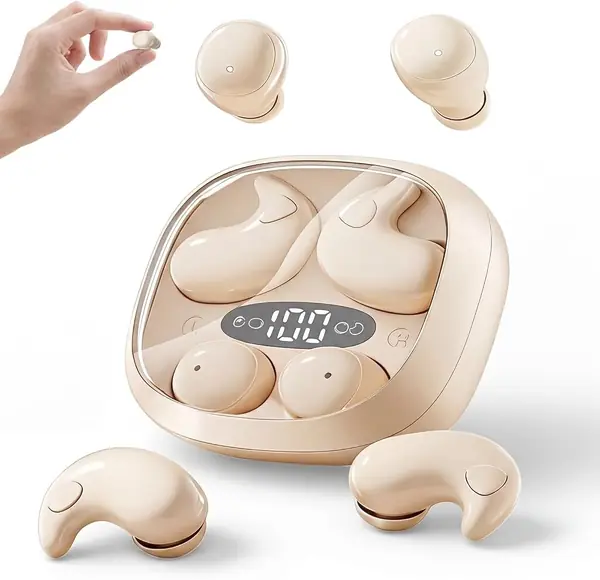
Battery is rated at 10 hours per charge and 40 with the case, enough for several days of mixed use. The charging case is the part to watch: long-term charging is less consistent than the comfort, and a case that needs re-seating is a nuisance. We like the digital display because it takes the guesswork out of a pocket charge.
The OpenEarRing is not the pair for a noisy commute or for bass-heavy listening. It is the pair we reach for when the goal is to finish a workday without sore ears, and the open design is why it earns the top spot.
Pros
- Keeps pressure off the ear canal
- Stays put through errands and light workouts
- 40 hours total with charging case
Cons
- Charging case can be finicky over time
We recommend the OpenEarRing to anyone whose ears ache after an hour in standard earbuds; the clip-on design keeps pressure off the canal and still stays put.