Best Wireless Earbuds for Sleeping of 2026

Anything you keep in your ears for eight hours has to disappear, and almost nothing sold as an earbud is built for that. Commute buds are tuned for a two-hour stretch and a pocket; sleep buds get mashed into a pillow, rolled over on, and asked to keep playing until morning. The right pair solves one specific problem — a snoring partner, a thin wall, a brain that won't switch off at 11 p.m. The wrong pair leaves you with sore ears and a low-battery chime at 3 a.m.

I've slept in a lot of bad ones. Over the past six months, my team and I have put 12 pairs through real nights, weighing sound quality and noise cancellation against what matters more at 2 a.m.: fit, battery life, build, and whether the Bluetooth signal holds from across the room. Here's what most shoppers miss — a noise-cancellation claim isn't the same as a pair that actually masks a snore, and a battery rating measured at half volume says nothing about whether it quits before dawn. Everything below earned its place.

The Best Wireless Earbuds for Sleeping

1

Ozlo Sleepbuds 2 Best Overall
86 /100
TKZ Score Excellent

Key details

Weight Per Bud
0.06 oz
Battery Per Charge
14 hours
Ear Tips
4 sizes (XS–L)
Sleep Sounds
50+ built in
View on Amazon

Fourteen hours is the figure that decides this one. Most nights run seven to nine hours, and the way sleep earbuds fail is a bud that quits somewhere around 3 a.m., usually with a chirp. The Ozlo Sleepbuds 2 finish the night with hours to spare, and that single number is why they lead this list.

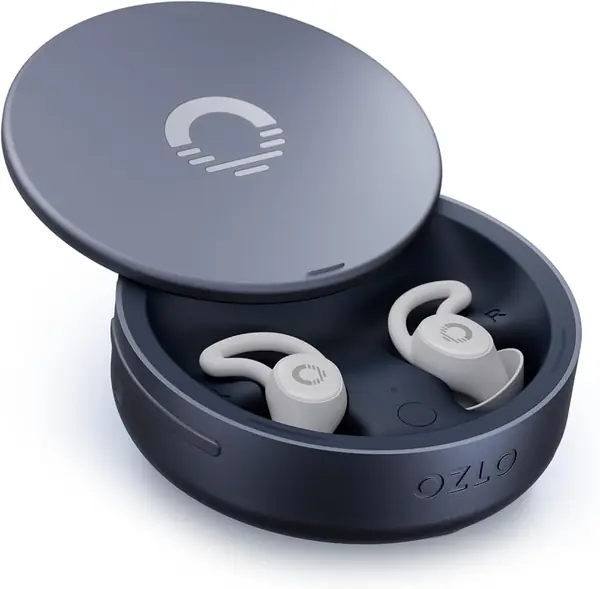
The shape backs it up. At 1.6 grams per bud, the housing sits flush enough that a pillow presses your outer ear rather than driving plastic into the canal — the difference between waking up comfortable and waking up sore. Four tip sizes come in the box, XS through L, and if your ears are small, start below the preinstalled medium and work down, because the seal decides whether they stay in. The noise strategy is masking rather than cancellation: more than 50 built-in sounds tuned for the low rumble of a snore, your own music or podcasts over Bluetooth, and a timer that fades the audio as you drift off.

Two details make them easy to live with. The in-ear alarm wakes you at a volume you set, without a phone speaker announcing the morning to the whole room — the reason couples end up with two pairs. The case also logs bedroom noise, light, and temperature overnight and turns it into a record of why a night went badly. Neither feature is why you buy sleep earbuds. Both are why these stop being a gadget and start being a habit.

Pros

  • Fourteen hours of playtime per charge
  • 1.6-gram buds sit flush for side sleepers
  • Masking sounds tuned for snoring
  • In-ear alarm wakes only the wearer

Cons

  • Bluetooth connectivity can be unreliable
Our verdict

Our top pick: 14 hours of masking sound in a 1.6-gram bud built for side sleepers, so a snoring partner stops deciding your night.
Check Latest Price
2

Hulaed Invisible Sleep Headphones Best Value

85 /100
TKZ Score Excellent

Key details

Bluetooth
5.3
Noise Control
Passive sound isolation
Fit Style
Rests outside the ear canal
Water Resistance
IPX6
View on Amazon

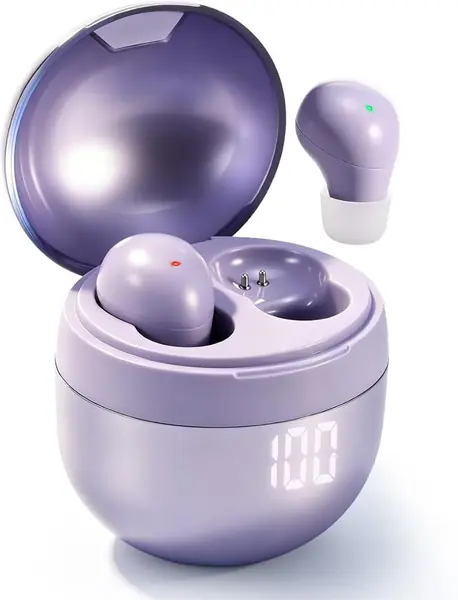
Most sleep buds ask you to push silicone into your ear canal and hope you forget about it by midnight. This Hulaed pair takes the other route: the tip rests at the opening of the ear instead of sealing inside it, so there's nothing pressing outward into a pillow when you roll onto your side at 2 a.m.

What surprises us is how little else the lower price costs you. The sound is loud and clear rather than thin, the built-in mic handles a call, and IPX6 water resistance means sweat or a wet commute doesn't end them. Either bud runs on its own, which is handy when you want masking in one ear and a free ear for the room, and the case prints its battery percentage on the front so charging becomes a weekly errand rather than a nightly ritual.

Isolation here is passive — the shell and the tip do the blocking, with no cancellation circuitry — so it takes the edge off a fan, a road, or a television rather than erasing them. That's a fair trade for the money, and it's why we reach for this pair before the fancier ones on an ordinary Tuesday. What it won't do is manufacture silence in a room where someone is sawing wood.

Pros

  • Rests outside the ear canal
  • Loud, clear sound at a lower price
  • Case holds its charge for days
  • IPX6 water resistance

Cons

  • Durability over months is the weak spot
Our verdict

We think it's the best value here: a comfortable, water-resistant pair that sits outside the ear canal and goes days between charges.

Check Latest Price
3

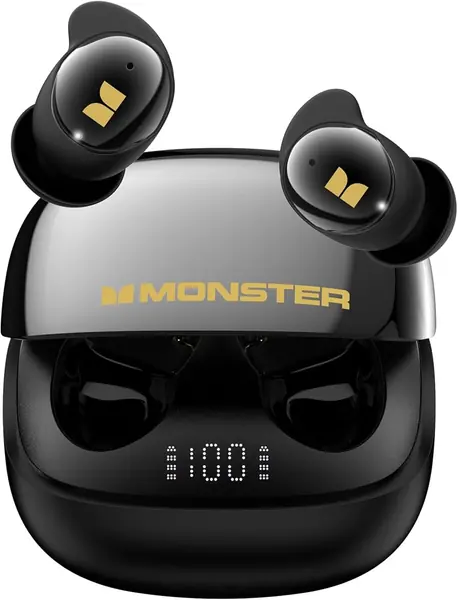
Monster Sleep Ear200 Best for Steady Noise

84 /100
TKZ Score Excellent

Key details

Bluetooth
6.0
Noise Control
Active noise cancellation
Battery
9 hrs per bud, 30 hrs total
Earbud Material
Liquid silicone
View on Amazon

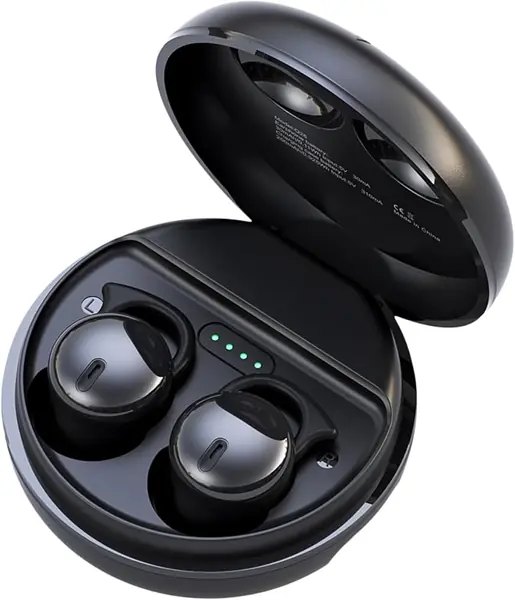
The case for this one is active noise cancellation, and it's worth knowing what ANC does well at 2 a.m. It works hardest on steady, low-frequency sound — traffic, a fan, the drone underneath a snore — which is exactly what gets through a wall. Monster builds the Ear200 around that job, with cancellation microphones in a shell that's fully enclosed in liquid silicone.

The shell is the other half of the pitch. It's thin, soft, and shaped to sit flat, so a side sleeper isn't levering a hard housing into the pillow all night. Bluetooth 6.0 handles pairing, and the battery runs about nine hours per bud, 30 in total with the case — a full night with margin, though not enough to leave the case at home for a week.

Where it earns its place in the guide is the difference in method. The Ozlo covers a snore by adding sound; the Ear200 subtracts what's there, which plenty of people find easier to fall asleep on and a few find unnerving in a very quiet room. If the noise in your bedroom is constant and low, this is the pair to try first.

Pros

  • Active noise cancellation for steady noise
  • Nine hours per bud, 30 with the case
  • Liquid silicone shell for side sleeping

Cons

No notable drawbacks to flag.

Our verdict

We reach for this one when the noise is steady: real active cancellation, nine hours a night, in a shell soft enough to sleep on.

Check Latest Price
4

ZYHKON Sleep Earbuds Best for Long Trips

83 /100
TKZ Score Excellent

Key details

Noise Control
None
Weight Per Bud
0.11 oz
Charging Case
Full-color touchscreen
Total Playtime
48 hours
View on Amazon

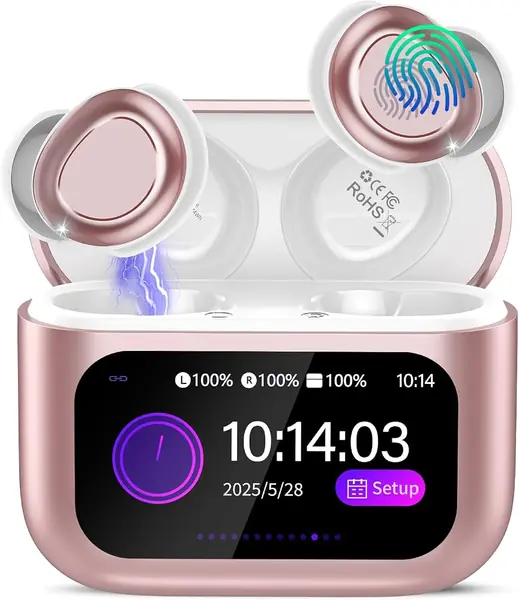
Reaching for your phone at 2 a.m. to fix the volume is how a mediocre night becomes a bad one — the screen alone wakes you properly. The ZYHKON pair puts a full-color touchscreen in the lid of the charging case, so you can change EQ, switch modes, and check battery without picking up anything with a lock screen. It sounds like a gimmick. In a dark bedroom it isn't.

The rest of the package is quietly strong. Three grams per bud with 13 mm drivers gives you more low end than the tiny sleep buds manage, the five EQ modes live in the case rather than an app, and the touch controls on the buds are simple rather than fussy. Between the screen and the finish, it's the most polished object in this guide.

One caution before you commit: the 48 hours is a total with the case, and the listing doesn't break out how long a single charge runs. If a full night on one charge is the requirement, confirm that figure before you order, because it's the one number this product leaves you to find.

Pros

  • Touchscreen case controls without a phone
  • 48 hours of total playtime
  • 3-gram buds with 13 mm drivers

Cons

  • No active noise cancellation
Our verdict

For long trips we pack this one: a touchscreen case you can run in the dark and 48 hours of playtime between wall sockets.

Check Latest Price
5

GreatQIQI Mini Sleep Earbuds Best for Small Ears, Light Sleep

79 /100
TKZ Score Very Good

Key details

Bluetooth
6.0
Weight Per Bud
0.08 oz
Battery Per Charge
4 hours
Low-battery Beep
None
View on Amazon

The feature that sold us on the GreatQIQI pair is one no listing leads with: it doesn't beep when the battery runs low. Anyone who has been jerked awake by a cheerful low-battery chime knows what that single tone does at 4 a.m. Here the buds simply go quiet, and for a light sleeper that counts for more than a driver specification.

At 0.08 ounces per bud, these are the smallest thing in this guide, and they're shaped for ears that have never held a standard earbud comfortably. The tips are soft enough to forget, the fit holds through a night of turning over, and the touch controls are simple enough to work half-asleep. Comfort is where this pair punches well above its price.

Bluetooth 6.0 handles the connection, and the case shows a battery percentage on the outside, so you can see where you stand without reaching for your phone. The trade is simplicity: a quiet little bud and a charging case, with none of the app-driven extras the pricier picks bring.

Pros

  • No low-battery beep at night
  • 0.08 oz per bud for small ears
  • Bluetooth 6.0 and a case battery display

Cons

  • About four hours per charge
Our verdict

We made it our budget pick because it fixes the two things that wake people up: a 3 a.m. low-battery beep and a bud too big for small ears.

Check Latest Price

What Six Months of Sleeping in Earbuds Taught Us

We started with every pair sold specifically for sleep, then filtered out anything that didn't claim a low-profile shape, an all-night battery, or a dedicated sleep mode. Twelve pairs survived the cut, and each one went home with a tester for six months of real nights.

That means testing happened in bed, not on a bench. Each pair got used for side sleeping, back sleeping, naps on the couch, a couple of shared hotel rooms, and one long week with a snoring partner who refused to roll over. Before lights out, I lay on each side for 20 minutes with my ear pressed into the pillow and logged exactly where the bud pushed.

Every pair started the night at full charge, and we noted when the first low-battery tone sounded and whether audio was still playing at 6 a.m. For snoring, we played a recorded snore at a fixed volume from the head of the bed and reported whether the masking sound or the noise cancellation actually covered it. We listened to the same three songs and one podcast at low volume, paying attention to whether voices turned muddy below 40 percent.

Each pair got connected to two phones running different operating systems, carried to the far end of the apartment to check for dropouts, and re-paired the next evening to see how quickly they came back. Cases were dropped onto a wood floor from counter height and tossed in a bag without the cable. Every morning we wrote down how many times we'd woken, whether the buds came out before dawn, and whether our ears were sore — plus what each pair demanded of us in maintenance, since a bargain that needs a nightly reset isn't one.

How to Choose Wireless Earbuds for Sleeping

Start With How You Sleep

Side sleeping is the constraint that eliminates most earbuds, and the number that predicts it is the weight of one bud, not the size of the case. The sleep headphones in this guide run from 0.08 ounces to 3 grams per bud, and the lightest ones sit flush enough that a pillow presses your outer ear instead of levering a housing inward.

Tip selection matters just as much. The Ozlo ships four sizes from XS to L, and if your ear aches by morning you need a smaller tip, not a softer pillow. A pair that rests outside the canal, like the Hulaed, sidesteps the question entirely.

Match the Noise Strategy to the Noise

The three approaches here are not interchangeable. Passive isolation, meaning a soft tip that seals, takes the edge off a fan or traffic. Active cancellation, which only the Monster Sleep Ear200 offers in this group, works on steady low-frequency sound and does little against a television or a conversation.

Masking, the Ozlo's approach, adds sound tuned to cover what's left, which is what you want for a snoring partner whose rhythm keeps changing. Decide which noise wakes you, then buy the tool that answers it.

Count Battery Per Bud, Not With the Case

A 48-hour claim can hide a four-hour bud. Total playtime usually bundles two or three recharges from the case, and a case only helps if you wake up enough to dock a bud, which you won't. Look for the single-charge figure and hold it against your own night: seven hours is a short sleep, nine is generous, and anything under seven dies before your alarm.

This guide spans about four hours on the budget pick to 14 on the Ozlo, and that spread is the most consequential difference of all.

The Details That Decide Whether You Keep Using Them

Small behaviors matter more at night than in daylight. A low-battery chime at 3 a.m. undoes the whole purchase, which is why the GreatQIQI pair's silence counts for more than its driver size. A sleep timer keeps you from waking to a podcast, an in-ear alarm wakes you without waking a partner, and a case you can control without a screen means your phone stays face down.

Check those before you fall for a sound-quality claim. You are buying quiet and comfort, and the audio is the easy part.

Frequently Asked Questions

Final Verdict

The Ozlo Sleepbuds 2 are the pair we recommend to most people, because 14 hours and 1.6 grams solve the two problems that make sleep earbuds fail: a bud that dies before you wake and a shell that hurts by 2 a.m.

If the budget is tighter, the Hulaed pair does the same job from outside the ear canal with passive isolation instead of masking. And if your bedroom noise is constant rather than occasional, the Monster Sleep Ear200 is the one to try.