Best Sweat-Resistant Headphones of 2026

Sweat is quietly lethal to headphones. Not the water bottle that leaks in your gym bag — actual sweat, the kind that creeps into a seam mid-run and turns one earbud into a very small paperweight three weeks later. I've retired more pairs that way than I'd like to admit.

So over the past six months, my team and I have worn 14 pairs through lifting sessions, treadmill intervals, and long humid runs, and the gaps showed up fast. A secure fit beats any spec sheet. Battery claims are optimistic. Noise cancellation is a gift on the gym floor and a genuine hazard on the sidewalk. And sound quality still decides it: if the bass smears the mids at volume, nothing else rescues the pair.

What follows is a mix of open-ear designs that let traffic through and sealed earbuds that shut the gym out entirely, because both earn a place in a training week. These are the ones that stayed in, stayed comfortable, and still worked in month six.

The Best Sweat-Resistant Headphones

1

Shokz OpenRun Best Overall
91 /100
TKZ Score Outstanding

Key details

Weight
0.92 oz
Battery
8 hours
Water Resistance
IP67
Type
Open-ear bone conduction
View on Amazon

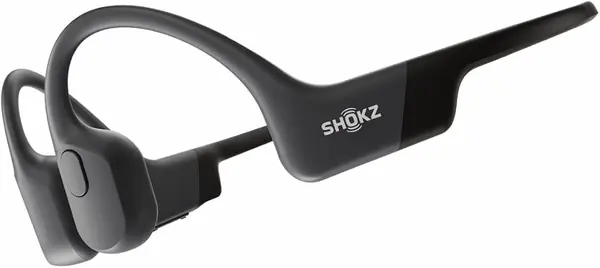
A road run is the one workout where blocking your ears is a bad idea, and that is the problem the OpenRun solves. The wraparound frame sits outside your ear canals, so traffic, a cyclist's bell, and a dog walker's warning all come through while your music plays. At 26 grams, it is light enough that we forget it is there once the frame settles behind our head.

The IP67 rating covers sweat and rain, and the 8-hour battery is enough for a marathon training block; a 10-minute quick charge adds up to 1.5 hours if you're walking out the door. We like the bundled sweat headband more than we expected—it keeps the band from turning into a slip hazard on hot days. This is the pair we reach for when the route is the point.

The trade-off is sound. Bone conduction is light on bass, and at higher volumes the people around you can hear it. A dead battery after months is the failure to watch for, and the two-year warranty is the reason we're comfortable recommending it anyway. For sidewalks and shared paths, the trade is worth it.

Pros

  • Open-ear design keeps traffic audible
  • IP67 sweat and rain protection
  • Light 26 g frame stays secure
  • 8-hour battery with quick charge

Cons

  • Not for loud gyms or isolation
  • Premium price for bone conduction
Our verdict

For road runners who need to hear traffic, the OpenRun is the sweat-resistant pair we recommend first.
Check Latest Price
2

Beats Fit Pro Best for Apple Users

86 /100
TKZ Score Excellent

Key details

Fit
Flexible wingtips
Noise Control
Active noise cancelling
Sweat Resistance
Sweat resistant
Chip
Apple H1
View on Amazon

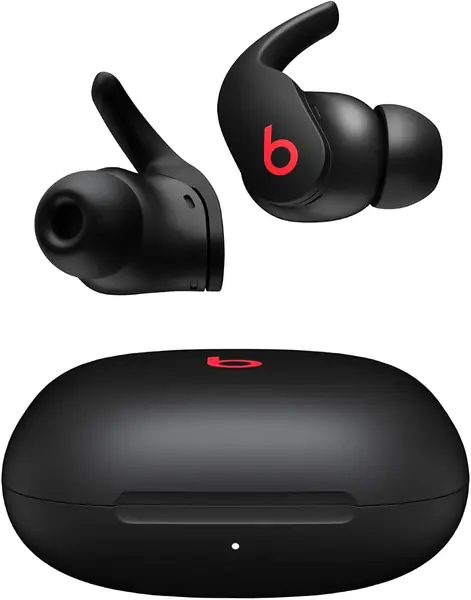
The H1 chip is why these are our pick for iPhone owners: pairing is instant, switching between a phone and a tablet is automatic, and 'Hey Siri' works without reaching for your phone. That convenience matters more in a gym than it sounds—sweaty hands and a locked phone are a bad combination.

The flexible wingtips are the other reason. They tuck into the bowl of your ear and add stability without the deep seal of a fin; at 5.6 grams each, the Fit Pro disappears during lifting and treadmill work. Active noise cancellation is strong enough for a crowded weight room, and transparency mode lets you order a coffee without pulling them out.

Beats calls these sweat resistant but doesn't publish an IP rating, so we treat them as gym-ready, not rain-ready. One earbud going silent is the failure to watch for, and the charging case is bulkier than an AirPods case. If you live in Apple's ecosystem and want ANC, those are acceptable trade-offs.

Pros

  • H1 chip makes iPhone pairing effortless
  • Wingtips add stability for gym work
  • Active noise cancellation and transparency
  • Spatial Audio with head tracking

Cons

  • No published IP rating
  • One-bud failures can occur
Our verdict

We recommend the Fit Pro to iPhone owners who want ANC in a secure workout bud, provided sweat—not swimming—is the exposure.

Check Latest Price
3

JBL Endurance Race 2 Best Budget Waterproof Earbuds

85 /100
TKZ Score Excellent

Key details

Battery
48 hours total
Water Resistance
IP68
Fit
Twistlock wing enhancer
Noise Control
Active noise cancelling
View on Amazon

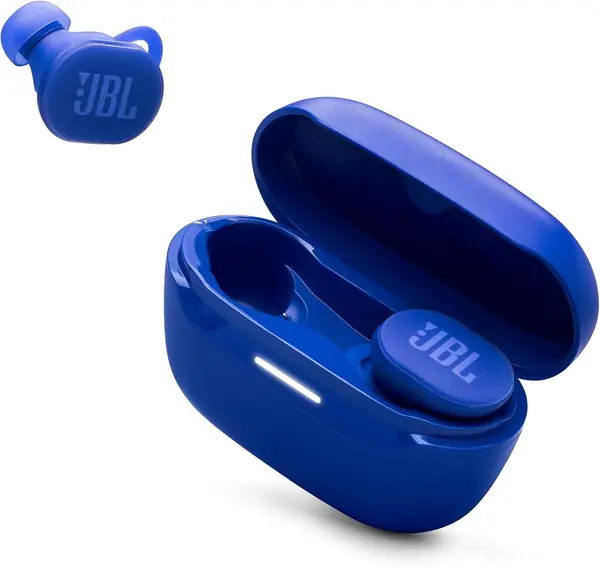
The Endurance Race 2 is the least expensive way here to get a real IP68 rating and active noise cancellation in a true-wireless bud. That combination is why it is our budget waterproof pick: you can sweat through a session, wipe the buds down, and still block some gym noise.

The Twistlock wing is the fit story. You rotate the bud into your ear, and the wing presses against the bowl for a tighter seal; it is more involved than dropping an AirPod in, but it stays put during rows and presses. The 12-hour bud battery and 36-hour case are enough for a week of workouts, and a 10-minute charge buys more time.

This is the pair we hand to someone who wants one inexpensive set for sweaty gym sessions and does not want to baby it. The IP68 rating is the headline; the ANC is a bonus for the weight room. It is not the most refined bud here, but it is the one that makes waterproofing affordable.

Pros

  • Genuine IP68 dust and waterproofing
  • 48 hours total with charging case
  • Twistlock wing for secure fit
  • ANC and Smart Ambient on a budget

Cons

  • Case is bulky for pockets
  • Bluetooth dropouts can interrupt workouts
Our verdict

The Race 2 is our budget pick for sweaty gym sessions, with IP68 protection and ANC at a price that makes a spare pair easy.

Check Latest Price
4

Philips A4216 Best Over-Ear Workout Headphones

84 /100
TKZ Score Excellent

Key details

Weight
8.11 oz
Battery
35 hours
Water Resistance
IP55
Ear Cups
Washable
View on Amazon

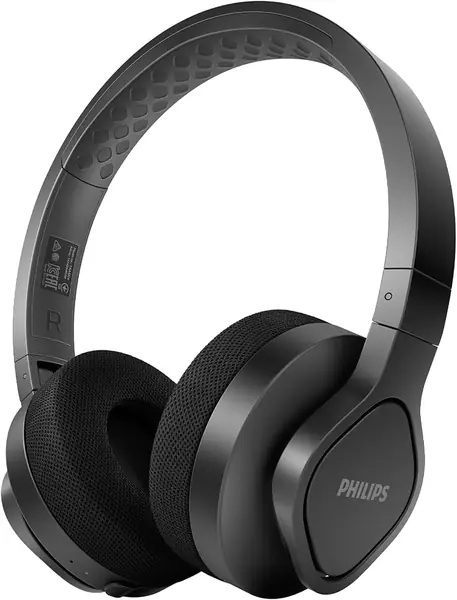
Over-ear workout headphones are a niche, but the A4216 makes a case for them: the cups sit around your ears rather than inside, and the covers pull off and go in the wash. That removable cover is the detail we appreciate most, because sweat and sunscreen build up on over-ear pads faster than anyone expects.

The 35-hour battery is the other argument. A 15-minute charge adds two hours, and USB-C means you can top up from the same cable as your phone. We treat that as a gym-bag headphone you charge on Sunday and forget about for the rest of the week.

The 40mm drivers give it more low-end than most sport buds, and IP55 covers sweat and light rain. There is no active noise cancellation, only passive isolation, so a loud gym will come through. The sound is energetic rather than detailed, which suits workouts better than critical listening.

For lifting, rowing, and treadmill walks, the A4216 is a comfortable alternative to buds that need constant reseating. It is not the pair for sprint intervals or a noisy gym; the over-ear clamp and passive isolation have limits. We like it best as a gym-bag headphone that can also handle a desk call.

Pros

  • Washable, cooling ear-cup covers
  • 35 hours of battery with fast charge
  • IP55 sweat and dust protection
  • Light enough for gym and desk use

Cons

  • No active noise cancellation
  • Loose fit for high-impact movement
Our verdict

We recommend the A4216 to lifters and steady-cardio regulars who want washable over-ear comfort, not noise cancellation.

Check Latest Price
5

Raycon Bone Conduction Best Budget Open-Ear

83 /100
TKZ Score Excellent

Key details

Weight
5.6 oz
Water Resistance
IP68
Type
Bone conduction open-ear
Bluetooth
5.3
View on Amazon

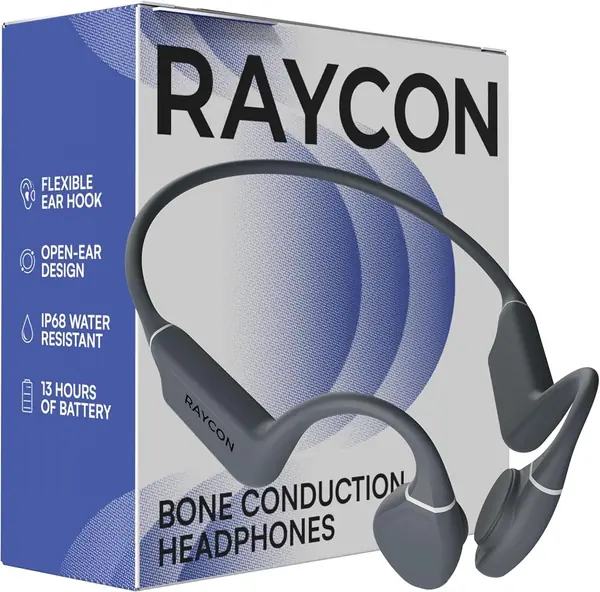
If the Shokz price is the hurdle, the Raycon is the open-ear pair that gets you most of the way there. It uses bone conduction, carries an IP68 rating, and keeps your ears open for traffic—the same basic bargain as the OpenRun, with a lower sticker.

The adjustable ear pieces are the interesting part: slide them closer for more volume or pull them back for more awareness. We like that control, but the 5.6-ounce frame is heavy compared with the OpenRun, and the fit is less secure on smaller heads. If you have a larger head or wear a cap, it settles better.

Sound is clear for podcasts and calls, though bone conduction never delivers deep bass. The magnetic charging cable is easy to knock loose, and some units run out of charge long before a long workout ends. If you want the open-ear idea without the premium, it is a reasonable save; if you run long, pay for the lighter pair.

Pros

  • IP68 water and dust protection
  • Adjustable bone-conduction earpieces
  • Lower-cost open-ear alternative

Cons

  • Heavy 5.6-ounce frame
  • Battery can drain within an hour
Our verdict

If the OpenRun price is too much, the Raycon is a reasonable open-ear substitute for shorter workouts and commuting.

Check Latest Price
6

JBL Endurance Pace Best Open-Ear Neckband

82 /100
TKZ Score Excellent

Key details

Weight
1.17 oz
Battery
10 hours music
Water Resistance
IP68
Type
Open-ear neckband
View on Amazon

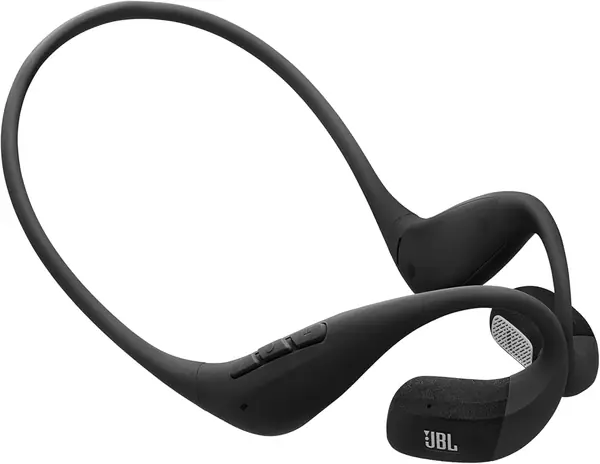
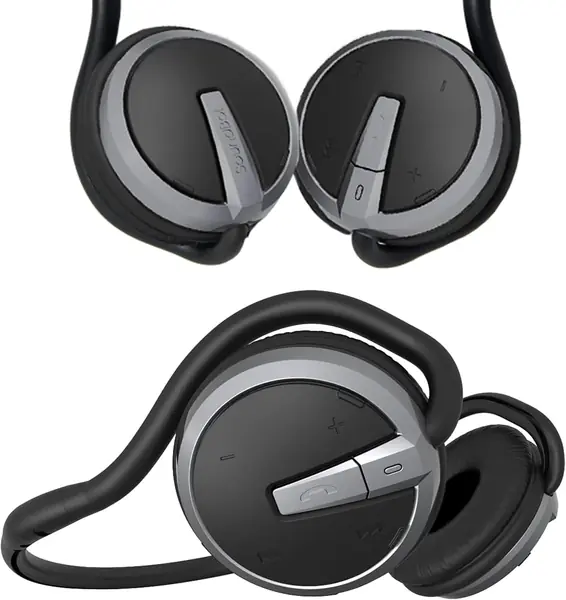
The Endurance Pace is the pair for a runner who wants the electronics off the ears entirely. A memory-wire neckband drapes behind your neck, the open-ear cups rest outside the canal, and the whole thing weighs 33 grams. That makes it a different animal from a true-wireless bud: you can let it hang between intervals and never fish a bud out of the grass.

We like the neckband for long, steady runs because it stays put without a deep seal. IP68 covers sweat and rain, and 10 hours of music is enough for a long training day; two mics handle calls when you stop. The open-ear design also means wind and traffic come through, which is the point on a shared path.

This is a specialist, not a universal upgrade. The sound is thin next to an in-ear bud, and the band is not adjustable for every head. If you want a case and a pocketable shape, look elsewhere; if you want one less thing to lose on a run, the Pace makes sense.

Pros

  • IP68 sweat and rain protection
  • 10 hours of music playback
  • Open-ear neckband is hard to lose
  • Dual mics for calls

Cons

  • Open-ear sound lacks bass
  • No charging case included
Our verdict

For runners who want nothing inside their ears, the Endurance Pace is a sturdy open-ear neckband with real weather protection.

Check Latest Price
7

TRAUSI i27 Best Ultra-Budget Earbuds

81 /100
TKZ Score Excellent

Key details

Weight
7 g per earbud
Battery
54 hours with case
Water Resistance
IPX7
Bluetooth
5.4
View on Amazon

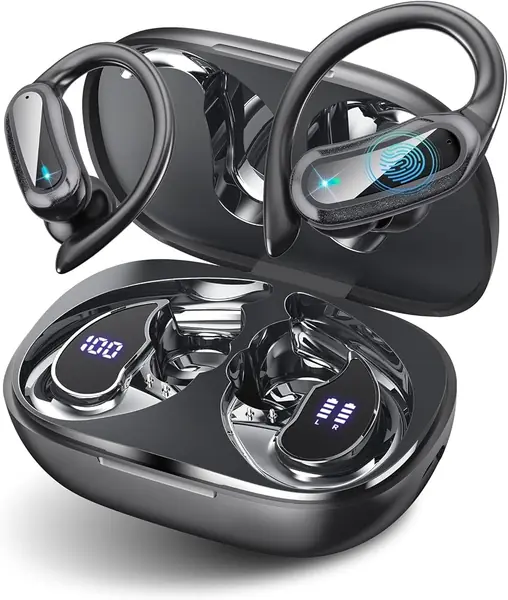
The i27 is the pair to buy when you want a backup set for the gym bag and do not want to think about it. The ear hooks hold each 7-gram bud around the outside of your ear, IPX7 covers sweat and rain, and the case tops them up between sessions.

Six hours on a single charge and 54 hours with the case is more than enough for a week of short workouts. Bluetooth 5.4 pairs quickly, and the touch controls are responsive when your hands are dry. We like the hooks for runs and rows because they do not rely on a deep seal to stay put.

Sound is the compromise: it is clear enough for podcasts and pacing music, but bass is thin and detail is modest. The 90-day warranty is short, even for a budget pair. For a first set, a spare, or a teenager's gym bag, the i27 is easy to recommend; just do not expect it to replace a premium bud.

Pros

  • Secure ear-hook fit for runs
  • IPX7 water resistance
  • 54 hours total with charging case

Cons

  • Thin sound with weak bass
  • Short 90-day warranty
Our verdict

The i27 is the pair we suggest for a cheap gym-bag backup, as long as you value secure hooks over rich sound.

Check Latest Price
8

Soundbot SB221 Best for Long Battery, Calls

80 /100
TKZ Score Excellent

Key details

Weight
3.21 oz
Battery
20 hours music
Type
Behind-the-neck
Sweat Resistance
Sweat resistant
View on Amazon

The SB221's headline is 20 hours of music and 25 hours of calls, which is a different proposition from tiny buds that need a case every few hours. The behind-the-neck shape puts the battery and controls on a flexible band, with the earpieces resting outside the canal. It is old-school, but it solves a real problem.

Bluetooth 4.0 is the dated part. Pairing is simple, but the connection is not as robust as the newer radios here, and the band is sweat resistant rather than IP-rated. We treat it as a gym and walking pair, not a rain-running pair. The physical buttons are easier to find with sweaty hands than touch panels.

The fit is a wrap-around clamp rather than a wingtip, and 91 grams makes it feel more substantial than an earbud. That is comfortable for lifting and walking, but it bounces when you run. The 25-hour call rating is the sleeper feature if you take work calls between sets.

For a cheap pair to leave in a gym bag, the SB221 is fine; for race day, it is the wrong tool. The long battery and physical controls are the reasons to choose it, and the older Bluetooth and bounce are the reasons to leave it for steady sessions. It is a spare, not a daily driver.

Pros

  • 20 hours music, 25 hours calls
  • Behind-neck shape stays off ear canals
  • Physical buttons work with sweaty hands

Cons

  • Bluetooth 4.0 is dated
  • Bounces during running
Our verdict

The SB221 is a cheap, long-battery gym-bag spare, but its old Bluetooth and bouncy fit keep it off race day.

Check Latest Price

How We Tested Sweat-Resistant Headphones

We started with the things that actually separate one pair from another in a gym bag: how each stays on your head (open-ear hooks, wing tips, over-ear cups), its water and dust rating, its battery claim, and whether it blocks sound or lets it in. From there we narrowed to 14 pairs across price tiers and wore them for six months — lifting sessions, treadmill intervals, hot garage workouts, a few long humid runs.

Fit got settled with movement: jumping jacks, burpees, a set of rows with our heads down, and a deliberately ridiculous head-shake test. We also wore each pair for a two-hour stretch to see where hooks and tips started to ache. For sweat, we rinsed every pair under a faucet after sessions and once a week soaked them in salted water for ten minutes, then checked the next morning whether buttons, mics, and charging contacts still worked.

Sound was judged on the same three tracks — one bass-heavy, one acoustic, one podcast — at gym volume over a running treadmill, noting whether bass swallowed the mids and whether a voice stayed intelligible at a sprint. Noise cancellation we judged beside the row of machines and again out on a sidewalk, since the best gym setting is the wrong setting when you're crossing a street. Battery life was measured, not trusted: full charge, looped playlist at 70 percent, timer running until the low-battery chime.

Connectivity meant leaving the phone in a locker and walking the length of the gym floor, plus pairing to a phone and a laptop at once. Controls took the sweaty-finger test: skipping a track mid-set, answering a call without breaking stride. And we asked where the money went — hinges, strain relief, charging cases, cushions that survive a wipe-down. Everything below was still working and still comfortable in month six.

How to Choose Sweat-Resistant Headphones

Start With the Water Rating

IPX4 is the useful floor for sweat: it handles splashes and light rain, which is enough for most indoor sessions. IP67 and IP68 add dust protection and immersion, but they do not make a pair swim-ready; chlorinated pools and open water are a separate claim. We also look at the charging contacts. Sweaty buds dropped straight into a case can corrode or stop charging, so dry both the buds and the case first. Choose IPX4 for the gym, IP67 or IP68 for heavy sweat and wet commutes, and a swim-specific model for laps.

Match the Shape to the Workout

Open-ear designs, whether bone conduction or a neckband, leave the canal clear so you can hear traffic and gym announcements. That is the right call for road running and cycling, but it costs bass and isolation. In-ear buds with wings or hooks sit deeper and seal better for lifting and treadmill work. Over-ear models can be more comfortable for long steady sessions, though they are heavier and warmer. Pick the shape around the workout you do most, not the one with the longest feature list.

Fit and Comfort Beat Features

Fit is the feature you cannot return your way out of. A wingtip that presses in the wrong place will ache by the second mile, and a hook that is too loose lets the bud creep. Start with the smallest ear tips, then move up only if the seal feels weak; dry your ears before putting them in. Test with ten head turns before the workout; if the bud moves, it will not survive a run.

Battery and Charging Habits

Most workout buds last six to ten hours, and a charging case adds several full recharges. That is plenty for a week of gym sessions, but only if you remember to dock them. Quick charging is the feature we value most: a short top-up can rescue a session when the battery warning arrives on the way out. Magnetic cables are convenient but easy to knock loose, so keep a spare cable in your bag. Choose a case that fits your routine, not the smallest one on the shelf.

Noise Cancellation or Awareness

Active noise cancellation is useful in a loud weight room or on a treadmill, where you want to shut out clatter. It is the wrong tool for road running, where hearing a car matters more than blocking wind. Transparency modes bridge the gap, but they are not the same as an open-ear design. We prefer open-ear for streets and ANC for indoor training, and we keep the volume low enough to hear a shout either way. Match the mode to the setting, not to the spec sheet.

Frequently Asked Questions

Final Verdict

The Shokz OpenRun is the sweat-resistant pair we recommend to most people who run outdoors. It keeps your ears open, holds its place, and has the water rating to survive a hot session. If your workout is indoors and you want silence, the Beats Fit Pro is the better fit; if you want the least expensive route to IP68, take the JBL Endurance Race 2. Start with the shape your workout demands.