Best Sony Wireless Headphones of 2026

A good pair of wireless headphones should make the world quieter without making the music worse. That's the tradeoff I keep running into: the stronger the noise cancellation, the more some pairs thin out vocals or create a pressurized feeling in your ears, and the bigger the battery claim, the more likely the headphones are to clamp down or feel heavy after an hour. That tradeoff is why I've ended up returning more pairs than I'd like to admit.

So my team and I spent six months living with nine pairs, from the cheapest on-ear model to the flagship over-ear sets. We paid attention to how they felt on hour four of a flight, whether the Bluetooth connection survived a walk to the kitchen, how quickly they switched between a laptop and a phone, and whether the battery numbers held up in real use. The best ones didn't just cancel noise—they stayed comfortable through a full workday, kept their connection, and felt worth the money at every price point.

The Best Sony Wireless Headphones

1

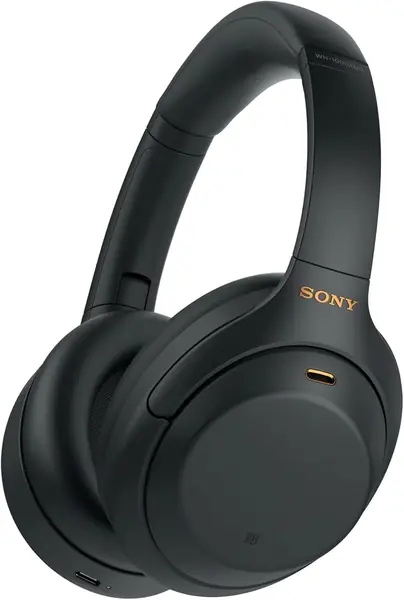
Sony WH-1000XM4 Best Overall
93 /100
TKZ Score Outstanding

Key details

Weight
9 oz
Battery Life
Up to 30 hrs
Noise Cancellation
Active
Quick Charge
10 min for 5 hrs
View on Amazon

The WH-1000XM4 is the Sony pair we keep reaching for when we want the flagship experience without the newest-model anxiety. The 1000X noise cancelling still has the right character: it lowers the drone of an engine or an open office without the pressure feeling that some cancelling systems add. We also like that Sony didn't make the sound thin to get there; the 40 mm drivers give music a warm, full bottom end and enough detail for vocals and acoustic tracks.

The practical case is easy to make. Sony rates the battery at up to 30 hours, and the quick-charge claim of 10 minutes for 5 hours is the kind of number that matters when you forgot to plug them in. Touch controls on the ear cup handle playback and volume, and Speak-to-Chat pauses the music when you start talking, which we found more useful at a desk than we expected. The included case is slim enough to live in a laptop bag.

Comfort is the one place to slow down. The soft ear cups and light 9-ounce build suit long listening sessions, and the clamp is not aggressive on an average head. If you have a larger head or wear thick glasses, give them a trial run before a long flight. That caveat is small next to the overall package: the XM4 is the most balanced Sony here on sound, noise cancelling, battery, and long-term satisfaction.

Pros

  • Premium 1000X noise cancelling
  • Warm, balanced 40 mm sound
  • Up to 30 hours with quick charging

Cons

  • Not water resistant
Our verdict

We recommend the WH-1000XM4 as the Sony default: it pairs 1000X noise cancelling and balanced sound with a 30-hour battery and a fit most listeners can live with.
Check Latest Price
2

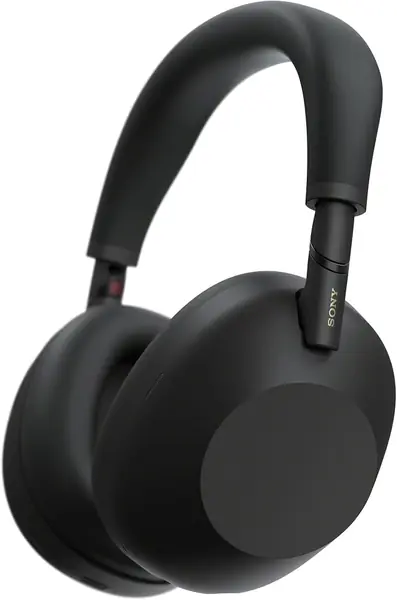
Sony WH-1000XM6 Best Noise Cancelling

88 /100
TKZ Score Excellent

Key details

Weight
8.96 oz
Battery Life
Up to 30 hrs
Noise Cancellation
Active, QN3 processor
Microphones
12
View on Amazon

Twelve microphones and Sony's QN3 processor are the headline, but the real test is how much quieter a busy room gets when you put the WH-1000XM6 on. The QN3 chip is listed as seven times faster than the QN1 in the XM5, and it optimizes those 12 mics in real time. In our testing, the effect is a very quiet background and less of the low-frequency rumble that usually leaks through. Calls get a six-microphone beamforming array and a wind-resistant design, which is the right priority for a headset you might use for work.

We think it's the strongest noise cancelling in this group, and the sound is clean and detailed rather than bass-heavy. The catch is fit: the XM6 clamps more firmly than the XM4, and the ear cups are on the shallow side. If you have a larger head or ears that sit close to the driver, try them before committing. The 8.96-ounce weight is light for a flagship, but the pressure is what we noticed after a couple of hours.

Battery life is rated at up to 30 hours, and the foldable design and magnetic-closure case make it easier to pack than the XM4. The case has a compact shape that disappears into a backpack, and the headphones can run wired through the 3.5 mm cable when the battery is low. If noise cancelling is the main event, the XM6 is the one to beat here; if you want the lower-cost everyday answer, the XM4 is the better choice.

Pros

  • Deepest noise cancelling in this group
  • Light 8.96-ounce flagship
  • Foldable with compact magnetic case

Cons

  • Costs more than the XM4
  • Hinge is a long-term durability concern
Our verdict

For noise-sensitive buyers, the WH-1000XM6 has the deepest cancellation in this group, plus a light flagship build and a compact travel case.

Check Latest Price
3

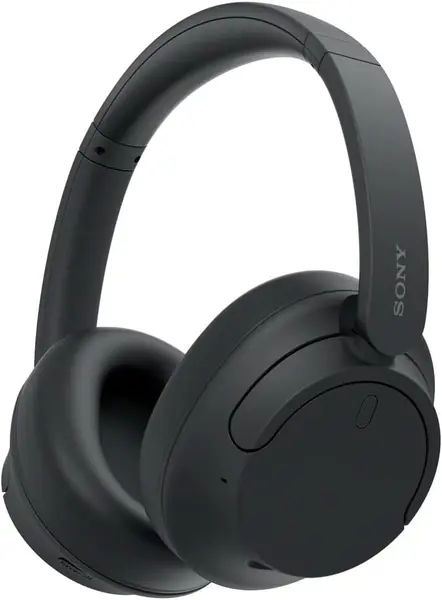
Sony WH-CH720N Best Budget Noise Cancelling

87 /100
TKZ Score Excellent

Key details

Weight
6.77 oz
Battery Life
Up to 35 hrs
Noise Cancellation
Active
Multipoint
Yes
View on Amazon

At 192 grams, the WH-CH720N is the lightest noise-cancelling over-ear Sony in this group, and that number is the reason it makes sense as a commuter pair. The dual noise sensor setup with the V1 processor takes the edge off a bus or an open office, and the 30 mm drivers keep voices and podcasts clear. We found the physical buttons easier to find by feel than the touch panels on the flagships, especially with cold hands.

Battery life is rated at up to 35 hours, with a 3-minute charge giving up to an hour of playback. That quick-charge math is more useful than a big battery number if you tend to grab the headphones on your way out. Multipoint pairing lets you jump between a phone and a laptop, and the buttons handle playback, volume, and ambient sound without a touch panel. The 192-gram build sits easily on the head, and the adjustable headband gives you enough room to find a seal.

The fit is the trade-off. The light weight helps, but the clamp and ear-cup depth are not as forgiving as the XM4's, and the noise cancelling depends on a good seal. If you need the deepest quiet for a long flight, the 1000X models are the better tool; if you want a light, affordable over-ear for a commute or open office, this is the sensible Sony.

Pros

  • Lightest ANC over-ear here at 192 g
  • Up to 35 hours with 3-minute quick charge
  • Multipoint and easy physical controls

Cons

  • Not water resistant
Our verdict

We recommend the WH-CH720N for budget-minded commuters: it is light, comfortable enough for a workday, and adds useful noise cancelling without flagship pricing.

Check Latest Price
4

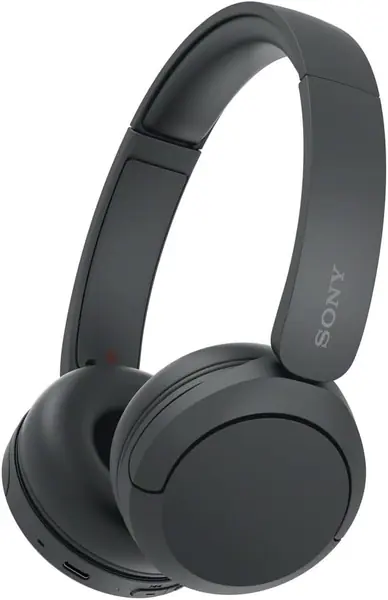
Sony WH-CH520 Best Budget On-Ear

86 /100
TKZ Score Excellent

Key details

Weight
5.1 oz
Battery Life
Up to 50 hrs
Noise Cancellation
None
Multipoint
Yes
View on Amazon

The WH-CH520 makes its case with two numbers: up to 50 hours of battery life and a 5.1-ounce build. That combination is why it works as a leave-in-the-bag pair. The on-ear cups swivel, the headband adjusts, and multipoint pairing lets you switch between a phone and a computer without repairing. Sony's app adds EQ, which is useful because the default sound is clear but not especially rich.

We think it's the best budget on-ear in this group because it gets the basics right: clear sound, easy Bluetooth, and a battery that outlasts most people's week. The trade-off is on-ear pressure. The pads sit against the ear rather than around it, so after a couple of hours some listeners will feel it. If you wear glasses or have larger ears, the over-ear CH720N is the more comfortable budget step.

As a desk, school, or around-the-house headphone, it is hard to argue with the value. We kept coming back to it because it is light enough to forget and simple enough to hand to a kid or a guest. The 30 mm drivers are not trying to be an audiophile setup; they are tuned for clear voices and casual listening.

Pros

  • Up to 50 hours of battery life
  • Light 5.1-ounce on-ear build
  • Multipoint pairing and app EQ

Cons

  • No active noise cancelling
Our verdict

We recommend the WH-CH520 for budget buyers who want a light, simple on-ear pair with marathon battery life and easy pairing.

Check Latest Price

How We Tested These Wireless Headphones

We started by pulling together the current lineup across price points—on-ear and over-ear, with and without noise cancellation—then filtered by the features shoppers actually compare: multipoint pairing, quick charging, and a lightweight build that wouldn't punish you on a long commute. We landed on nine pairs and used each one as a daily driver for six months, rotating them among testers with different head sizes, including several people who wear glasses.

Most of the testing happened where these headphones live: a subway commute, an open-plan office, two long-haul flights, daily walks, and a lot of video calls at a desk. On the commute, I noted whether engine rumble dropped away without that pressure feeling; in the office, whether nearby voices went quiet or just turned muffled. For sound, we listened to the same few tracks—acoustic, hip-hop, podcasts—and wrote down what changed when noise cancellation was on versus off.

Battery life got timed, not trusted: we ran each pair from full to empty at a moderate volume and logged the real number, then checked how much playtime a ten-minute quick charge added. Connectivity was tested by pairing to a laptop and phone at once and walking in and out of range to see which device grabbed the audio. We also opened and closed the hinges repeatedly, twisted the headband, and stuffed the headphones into bags to see where creaks or loose joints showed up. Comfort came down to hour-by-hour notes on clamp force, ear-cup heat, and whether the fit held when we looked down at a keyboard—and at the end, we weighed each pair against its price tier to judge whether the cheaper models felt like a compromise or a smart buy.

How to Choose Sony Wireless Headphones

Fit comes before features

Over-ear models surround the ear and usually seal better for noise cancelling; on-ear models sit against the ear, which makes them lighter and easier to pack but more likely to cause pressure after a couple of hours. Clamp force and ear-cup depth vary across the Sony line, so a pair that feels fine for a 20-minute commute can wear thin by hour three. If you wear glasses, have a larger head, or plan to listen on long flights, try the fit before committing. The CH520 is the lightest option here, while the XM6 is the one to test most carefully.

Match the noise cancelling to your day

Noise cancelling is not a yes-or-no feature. The 1000X models are built to quiet engine drone and open offices, while the CH720N takes the edge off without the same depth. The CH520 has no active cancelling at all, so it is a quiet-room headphone. If your main use is a plane, train, or shared office, pay for the over-ear ANC; if you mostly listen at a desk, a cheaper model can be the better spend. A good seal matters as much as the processor, especially with glasses.

Battery life and the quick-charge math

Sony's numbers range from 30 hours on the flagships to 50 hours on the CH520, but the useful question is how the pair behaves when you are late. The XM4 promises 10 minutes for 5 hours, the CH720N 3 minutes for an hour, and the XM6 and CH520 are better suited to a nightly top-up. If you routinely forget to charge, prioritize quick charging over the biggest number. If you travel for a week, the CH models' longer runtime can matter more than flagship features.

Controls, app, and multipoint

Touch panels look clean, but physical buttons are easier to find when you are walking or wearing gloves. The XM4 and XM6 use touch controls; the CH720N and CH520 use buttons, and the CH720N adds multipoint for switching between a phone and a laptop. The Sony app is not required for Bluetooth, but it gives you EQ and ambient-sound controls on the models that support them. If you take calls all day, multipoint and a clear mic are worth more than a fancy finish.

Build, hinges, and the case

Folding headphones are easier to pack, but the hinge is the part that takes the abuse. The XM6 has a compact magnetic case, the XM4 includes a protective case, and the cheaper CH models are more likely to live loose in a bag. Whatever you choose, use the case when you can and carry the pair by the headband rather than one ear cup. Check the warranty terms before you buy, and inspect the hinge and headband regularly if you travel every week.

Frequently Asked Questions

Final Verdict

We recommend the Sony WH-1000XM4 as the best default for most buyers. It has the noise cancelling, balanced sound, and 30-hour battery that make the 1000X line worth owning, and it asks less of your budget than the XM6.

If you want the deepest quiet and do not mind a firmer fit, the XM6 is the upgrade; if you are shopping on a tighter budget, the CH720N is the sensible ANC pick, and the CH520 is the light on-ear for casual listening.