Best Smartwatches of 2026

A smartwatch only earns its place on your wrist if it's still there a month later, and the reason most end up in a drawer is the charger. Take it off overnight and you lose the sleep data; forget to charge and you lose the morning run. A good one fixes that quietly, reading your heart rate, your workouts, and your nights without turning into another device to babysit.

I've worn one for years, mostly for running, and my team and I just spent eight months living with 12 models on morning runs, at our desks, and in bed. What separated them was less about sensor counts than whether the app told me something I'd actually act on.

Your phone also decides half the field: a handful of these watches are built around one platform and quietly shed features on the other. We weighed that alongside battery life, comfort, durability, and whether the extra money buys real capability or just a nicer band. The watches below are the ones we kept reaching for.

The Best Smartwatches

1

Apple Watch Series 12 Best Overall
94 /100
TKZ Score Outstanding

Key details

Case Size
42 mm
Health Sensing
Heart rate, HRV, Vitals
Band
Sand Sport Band, S/M
Safety
Fall and crash detection
View on Amazon

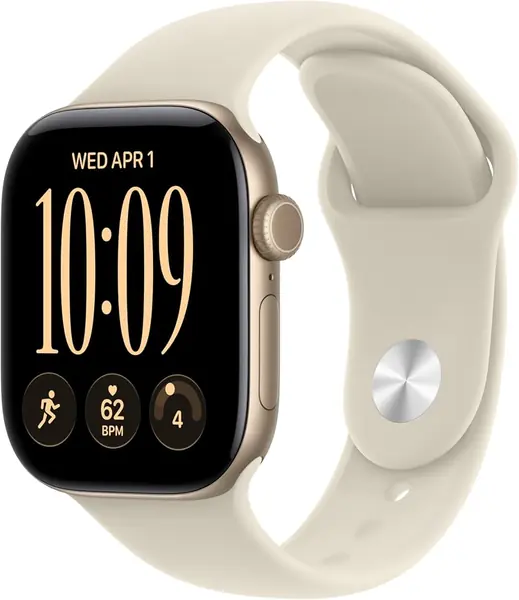
Heart rate variability, sampled as often as every five minutes, is the change that makes the Series 12 more than a faster version of the watch before it. Read alongside the Vitals app, a nightly sleep score, and the readiness view, it turns the watch into something that answers a real question: push through a hard week, or back off? That's the most useful thing a wrist computer can do, and it's why this is the best smartwatch here for most iPhone owners.

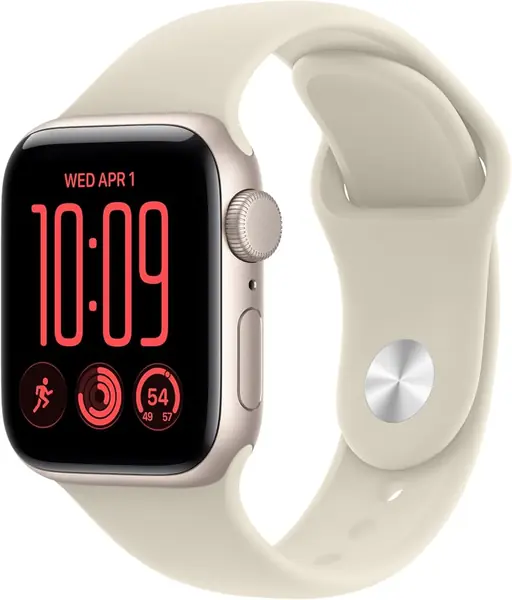
The hardware is the easy part. The light gold aluminum case reads as jewelry rather than gear, the sand sport band is soft enough to sleep in, and fall and crash detection will call emergency services without you touching a thing. For training days there's Pacer and heart rate zones, and setup on an iPhone already signed into iCloud took minutes, with faces and notifications carrying over without a fight.

The thing to try in person is the case. Forty-two millimeters is a real jump for a smaller wrist, and the included band runs narrow, so if you're near the top of the strap's range, order the longer band at the same time. Battery life also surprised us — even with the display set to stay on, we charged it less often than the SE 3 below, which is the opposite of what we expected from the more feature-dense watch.

Pros

  • Deepest health sensing in this lineup
  • Fall and crash detection calls for help automatically
  • Sleep score and readiness guidance worth acting on

Cons

  • Works only with an iPhone
Our verdict

We recommend the Series 12 to anyone with an iPhone who wants the most complete health-and-safety watch here; nothing else in this group reads your body as closely.
Check Latest Price
2

Apple Watch SE 3 Best Value

93 /100
TKZ Score Outstanding

Key details

Case Size
40 mm
Rated Battery
18 hours
Health Sensing
Temperature, Vitals, cycle tracking
Charging
Up to 2x faster than SE 2
View on Amazon

Everything that makes an Apple Watch worth wearing is in the SE 3: fall and crash detection, temperature sensing that feeds the Vitals app and cycle tracking, workout tracking from a 10K to a strength session, and Siri on the wrist. What's missing is the training-grade layer the Series 12 adds — five-minute HRV sampling, readiness scoring, heart rate zones — and for most people that's a fair trade rather than a sacrifice.

Where it gives ground is battery. Apple rates it at 18 hours, which means a nightly charge, and a heavy notification day can push the low-power warning into the evening. Charging is up to twice as fast as the SE 2, so a top-up while you shower covers most gaps. We think that's the price of the smaller case and the lower cost, and it's a routine most people already keep for their phone anyway.

The 40mm display is the other dividing line: unobtrusive on a small wrist, cramped for anyone used to a bigger face, and the one specification we suggest checking on your own arm. It's also the least expensive Apple Watch here, and nothing about the experience reads as entry-level — the strap swaps with older bands, the screen is bright, and the safety features are the same ones the flagship relies on.

Pros

  • Core Apple health and safety features for less
  • Temperature sensing feeds Vitals and cycle tracking
  • Charges up to twice as fast as the SE 2

Cons

  • Eighteen-hour rating means a nightly charge
  • 40mm face feels small on a larger wrist
Our verdict

Buy the SE 3 if fall detection, sleep tracking, and workout logging are all you need from a watch; it's the smartest money in this roundup.

Check Latest Price
3

Garmin Instinct 3 AMOLED Best Battery Life

91 /100
TKZ Score Outstanding

Key details

Case Size
45 mm
Rated Battery
Up to 18 days
Water Resistance
100 meters
Display
1.2-inch AMOLED
View on Amazon

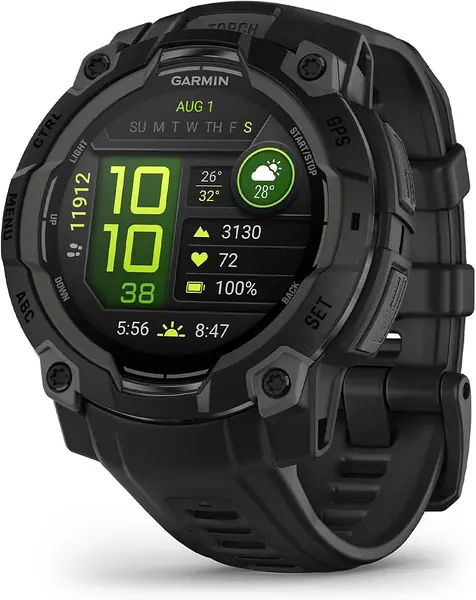
Eighteen days of rated battery is the headline, but the feature that sold us is the flashlight — variable brightness plus strobe modes, on your wrist, at the moment a trail marker disappears into dusk. Around it sits a 1.2-inch AMOLED screen at 1,000 nits, a fiber-reinforced polymer case with a metal-reinforced bezel, and 100-meter water resistance. This is the watch in the group we'd trust on a multi-day hike and the one we'd be least worried about banging into a rock.

Physical buttons instead of a touchscreen-first interface are the other deliberate choice, and the right one: with gloves on or hands wet, three buttons beat swiping every time. The navigation stack is what justifies the price over a fitness-first watch — multi-band GPS with SatIQ, a three-axis compass and a barometric altimeter, plus Pulse Ox and advanced sleep monitoring.

What you accept is bulk and a thin app library. At 53 grams it's the heaviest watch here, noticeable overnight, and notification handling is basic next to Apple's or Samsung's. If your week is a commute and a gym session, the vívoactive 5 does more of what you need at a lighter weight; if your week ends at a trailhead, this is the watch.

Pros

  • Up to 18 days of rated battery life
  • Built-in flashlight with strobe modes
  • Multi-band GPS, compass, and altimeter for trails

Cons

  • 53 grams is heavy for overnight wear
  • Thinnest app ecosystem in this roundup
Our verdict

We point outdoor and off-grid buyers to the Instinct 3: 18 days of rated battery and a built-in flashlight beat a richer app store when you're far from an outlet.

Check Latest Price
4

Samsung Galaxy Watch9 Best for Android

90 /100
TKZ Score Outstanding

Key details

Case Size
40 mm
Weight
1.1 oz
Display
1.34 inches
Compatibility
Samsung Galaxy and other Android phones
View on Amazon

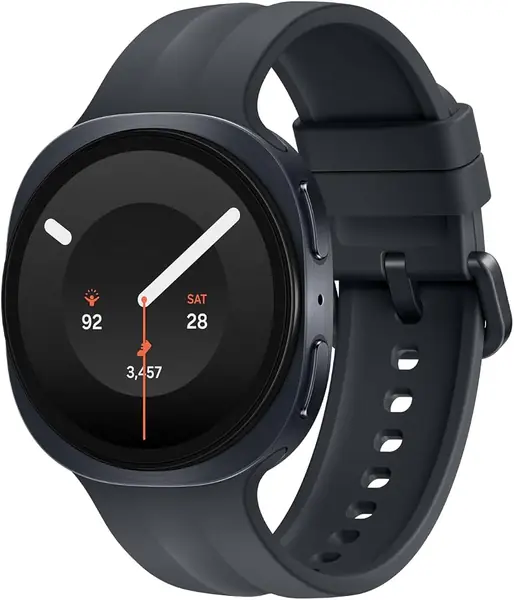
Samsung's case design is the first thing you notice. At 1.1 ounces and 40mm, the Watch9 sits flat against the wrist instead of perching on it, which matters when you're typing, lifting, or sleeping with it on. The 1.34-inch screen stays legible in daylight, and the graphite finish looks like a watch rather than a gadget clipped to your arm.

The software is what makes it the Android pick. Vitals watches sleep metrics for shifts away from your baseline, Fitness Index folds sleep, activity, and heart data into a single number, and the assistant answers without a wake phrase — raise your wrist and talk. The sleep coaching in particular reads like advice rather than a pat on the head, and that's rare enough to be worth paying for.

The band is sized on the small side, so if your wrist lands near the top of the range, order a longer strap with the watch rather than after it. It pairs with Android handsets broadly, though Galaxy phones get the tightest integration. The blood pressure metric is the one feature that needs a cuff to calibrate against before the numbers mean anything.

Pros

  • Sleep vitals and coaching that read like advice
  • Bright 1.34-inch screen in a 1.1-ounce case
  • Assistant responds without a wake phrase

Cons

  • Battery struggles through a heavy day
  • Pairs with Android phones only
Our verdict

If your phone runs Android, the Watch9 is the one we hand you — deep sleep coaching and a case that disappears on the wrist, as long as you charge nightly.

Check Latest Price
5

Garmin vívoactive 5 Best for All-Day Fitness

88 /100
TKZ Score Excellent

Key details

Case Size
42 mm
Rated Battery
Up to 11 days
Water Resistance
50 meters
Weight
1.3 oz
View on Amazon

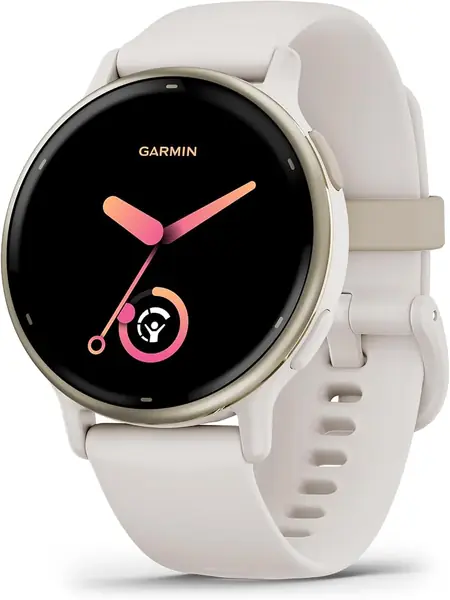
At 1.3 ounces, the vívoactive 5 is the watch we forget we're wearing, which is exactly what you want from something meant to log your sleep. The 1.2-inch AMOLED panel is crisp at 390 by 390, the 42mm case sits flat, and 50-meter water resistance means it stays on for a swim. More than 30 sport profiles cover the usual ground, and a wheelchair mode that counts pushes instead of steps is the kind of inclusion we wish more brands bothered with.

Read Garmin's battery claim carefully, because it's two numbers in one. Up to 11 days applies in smartwatch mode; enable the always-on display and it drops to five, with GPS sessions eating into both. That's still several times what an Apple Watch manages, and it's the reason Body Battery, sleep coaching, and HRV status are worth setting up — the watch has to be on your wrist overnight to have anything useful to say in the morning.

The part to flag is longevity. Cracked lenses and watches that stop charging inside a year are the failures to watch for, so register it and keep the receipt against the one-year limited warranty. Sleep scoring is the other soft spot: the week-long trends are worth reading, the individual night's number less so. Neither changes our view that this is the best value in fitness tracking here.

Pros

  • 1.3 ounces, light enough to sleep in
  • Up to 11 days of rated battery
  • Thirty-plus sport modes, including wheelchair tracking

Cons

  • Always-on display cuts rated battery to five days
  • Sleep scoring is the least convincing metric
Our verdict

We like the vívoactive 5 for anyone who wants Garmin's training and recovery data at the lightest weight here, and can live with a so-so sleep score.

Check Latest Price
6

TORJALPH Smart Watch Budget Basics

86 /100
TKZ Score Excellent

Key details

Rated Battery
7 days
Water Resistance
IP68
GPS
Via smartphone
Screen
1.83-inch LCD
View on Amazon

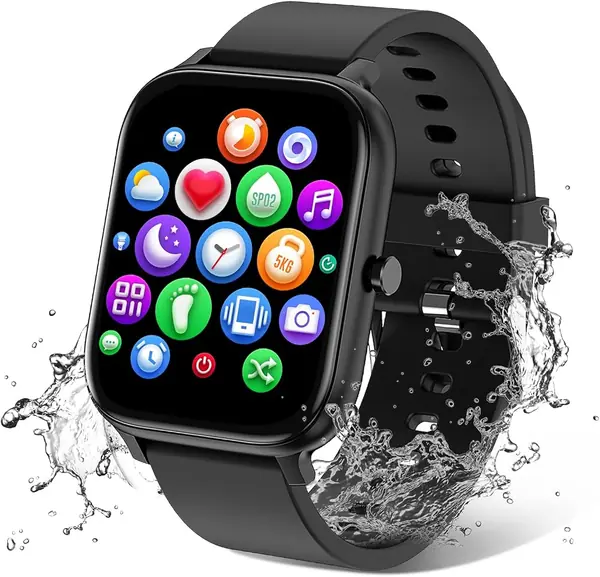
A smartwatch this inexpensive is going to cut corners, and the TORJALPH cuts them where a casual wearer won't notice: the 1.83-inch screen is LCD rather than OLED, the case is plastic, and GPS comes from your phone instead of the watch. What survives is the useful part — Bluetooth calls and notifications, a week of rated battery, IP68 sealing, and a big, bright face that's easy to read at arm's length without your glasses.

Health tracking is where expectations need resetting. Step counts drift, heart rate can miss by a wide margin during intervals, and the blood pressure and blood oxygen figures are decoration rather than data. Worn as a step-and-notification watch it's fine; taken to the gym as a training tool it will mislead you, and that's the honest boundary of what the low price buys.

Two practical notes before you order. Almost everything runs through the phone app, so texts are readable but replying is a chore, and the strap and charging cable are the parts that give out first — put a spare band in the cart with it. As a first watch for a kid, a weekend watch for someone with a good one in a drawer, or a way to find out whether you'll actually wear a watch at all, it earns its small place here.

Pros

  • 1.83-inch screen is big and readable
  • Bluetooth calls and notifications for very little
  • IP68 sealing and a week of rated battery

Cons

  • Step and heart-rate readings drift
Our verdict

We recommend it as a first watch for a kid or a cheap second watch for notifications; we don't recommend trusting its workout numbers.

Check Latest Price

How We Tested 12 Smartwatches Over Eight Months

We started with research rather than a shopping spree: hundreds of owner reviews, sorted by which phones each watch supported, case size, and price, then narrowed to 12 watches we bought ourselves. The field ran from flagship models at the big names to a rugged outdoor watch, a running-first GPS model, and a budget watch sold on marketplaces. Every one spent eight months with a tester.

Each tester wore their watch to sleep for seven consecutive nights so we could line up its sleep stages against our own notes on how rested we felt, and we ran the same 3-mile loop with a phone in hand to see whether the plotted route matched the road. We counted how many taps it took to start a workout, how legible the screen was at noon, and how far we could walk from a parked phone before notifications stopped arriving. Batteries were charged to 100 percent and then timed with sleep tracking left on, the setting that drains them fastest.

Durability got tested by accident and on purpose: showers, sweaty gym sessions, a sleeve catching on a doorframe, a case edge dragged across a desk. We also wore each one to dinner and to the office to judge whether it read as jewelry or a plastic brick, and we read every paywall prompt to see what the sticker price actually included. Health and fitness data only counted if it changed what we did the next day.

How to Choose a Smartwatch

Put Your Phone First

Compatibility settles the shortlist faster than anything else. An Apple Watch pairs with an iPhone and nothing else. Samsung's Galaxy Watch line is built around Android, and a Galaxy handset gets the most out of it. Garmin is the flexible option in this group — the Instinct 3 and vívoactive 5 pair with either system and give up very little in the swap. Decide your phone, then shop.

The trap sits at the cheap end. Many budget models run everything through one companion app, and features that look native in a product photo turn out to live behind that app.

Read Battery Ratings as a Best Case

A rated battery figure assumes default settings, not the way you'll actually use the watch. Garmin's 11 days for the vívoactive 5 becomes five with the always-on display enabled. Apple rates the SE 3 at 18 hours, which means a charger by the bed. The Instinct 3 claims up to 18 days. The question is what your routine demands: if you want sleep data, the watch has to survive the night and the day that follows.

We put a lot of weight on that arithmetic. A watch that charges twice a week gets worn more, tracked more, and charged less often than one that needs a nightly routine.

Decide Which Health Numbers You'll Use

Every watch here counts steps and reads heart rate, so the difference is what each one does with the signal. Apple and Samsung turn it into a readiness or energy score and coach you from there. Garmin's Body Battery and training metrics go deeper for athletes, sport by sport. Pick one metric you'll genuinely check — resting heart rate, sleep, or HRV — and buy for that rather than for the longest feature list.

Treat blood oxygen and blood pressure readings on inexpensive watches as entertainment, and remember none of these devices is a medical instrument.

Case Size, Weight, and the Band

The case you can't stand is the watch you stop wearing. Sizes here run from 40mm to 45mm, and weight from 1.1 ounces to 53 grams — the difference between a watch you sleep in and one you take off at bedtime. Try the case on if you can, and check the strap separately: several of these ship with a small/medium band that runs narrow, and a longer strap is an inexpensive fix.

A 45mm case on a 53-gram body is a lot of watch for a small wrist. A 40mm face is the opposite risk, reading cramped to anyone used to a bigger display.

GPS and Water Resistance

Built-in GPS is what lets you leave the phone behind, and it's the clearest divide between price tiers. The Instinct 3, the vívoactive 5, and both Apple Watches navigate on their own; the budget TORJALPH borrows your phone's GPS, which drains two batteries instead of one.

Water ratings split the same way. IP68 handles splashes and a shower; 50- and 100-meter ratings cover swimming. Match the number to what you actually do, and rinse the watch in fresh water after a pool session, since seals age faster in chlorinated water.

Frequently Asked Questions

Final Verdict

For most people, the Apple Watch Series 12 is the purchase. It reads your body more closely than anything else in this group — HRV every five minutes, a nightly sleep score, a readiness view that tells you when to back off — and it wraps that in a case comfortable enough to sleep in and safety features that work on their own.

If you carry an Android phone, the Galaxy Watch9 is the equivalent buy on your side of the fence. And if charging every night is the part you can't live with, the Instinct 3's 18-day rating and built-in flashlight settle the question.