Best Power Banks for Heated Vests of 2026

A heated vest is only as good as the brick clipped inside it. The pack feeds a wire grid through a plug, and if that plug doesn't match your vest's port — or the pack quits an hour into a cold morning — you're wearing a shell with a dead cord in the pocket. The mistake I see most often is shopping by milliamp-hours alone: a 30,000mAh pack at 7.4 volts and a 10,000mAh pack at 5 volts don't push the same heat or hold it for the same number of hours.

Over the past five months, my team and I have worn 14 power banks through commutes, after-dinner dog walks, a long Saturday in cold bleachers, and one ski weekend. We timed how long each kept a vest warm on high, how fast it refilled from the wall, and whether the gauge told the truth near empty. We also noted which ones slid flat into a vest's battery pocket and which hung there like a brick. The picks below are the ones worth clipping on, sorted by the plug, capacity, and weight your vest can actually live with.

The Best Power Banks for Heated Vests

1

TIDEWE Power Bank Best Overall
93 /100
TKZ Score Outstanding

Key details

Output
5V/2.4A USB
Weight
6.7 oz
Capacity
10,000 mAh
Heat Time
Up to 10 hours
View on Amazon

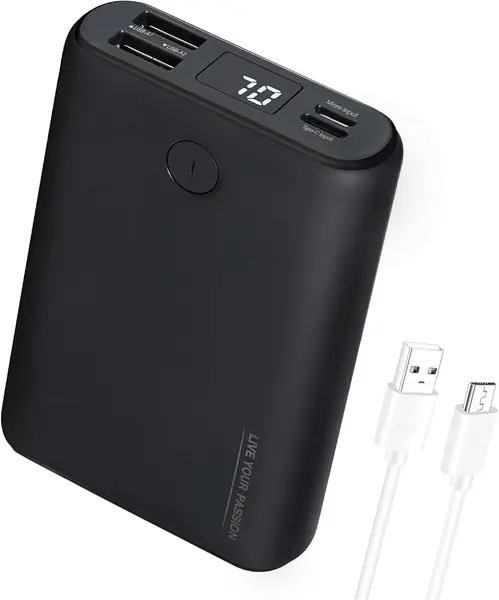
Ten hours of heat is the claim on the box, and that number is what decides whether a heated vest is a tool or a jacket with a dead pocket sewn into it. The TIDEWE pack backs the claim better than anything else in this group: 10,000mAh, 5V at up to 2.4A, in a body small enough to vanish into a vest pocket. Of everything we tested, it's the one we compare the others against.

Pocket fit is where the spec sheet undersells it. At 6.7 ounces and roughly 3.65 by 2.5 by 0.9 inches with rounded corners, it sits flat against a rib without digging in when you lean back in a stadium seat. We were also glad to see UL, FCC, RoHS, and CE certification on a battery that spends hours pressed against your body. Both USB-C and micro-USB inputs mean the cable already in your bag can top it up.

The boundary is the plug. A vest that ends in a round 7.4V DC barrel is not this pack's job, and no adapter changes that. If yours is USB, the rest of this list is a search for a second-best answer.

Pros

  • Best-supported all-day runtime here
  • 6.7 ounces with rounded, pocket-friendly corners
  • UL, FCC, RoHS, and CE certified

Cons

  • Recharge takes about four hours
  • Power button is fiddly to switch off
Our verdict

We recommend the TIDEWE to anyone with a single USB heated vest who wants dependable all-day runtime from a pack light enough to forget you're wearing.
Check Latest Price
2

Whsahans Heated Vest Battery Best for Long Shifts

89 /100
TKZ Score Excellent

Key details

Output
5V/2A USB
Weight
8.5 oz
Capacity
10,000 mAh
Heat Time
3 to 10 hours
View on Amazon

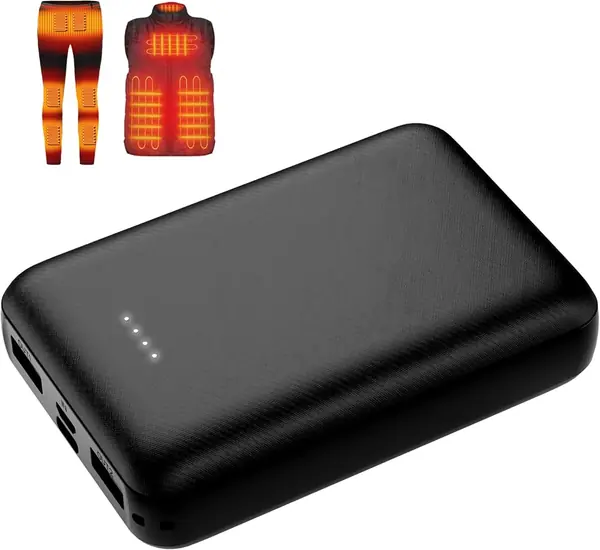
There is no button to find. Plug the vest's cable into the Whsahans pack and it starts heating; pull the cable and it stops. With three layers on and gloves in the way, that single design decision is the difference between heated clothing you wear and heated clothing you leave in the closet, and it is the reason this pack made the list at all.

Runtime is the other half of the argument. Whsahans rates it at three hours on high, six on medium, and ten on low, a spread that matches how people actually use a vest — a hard, short burst on a frozen morning, or a low simmer through an afternoon in the bleachers. We reach for this one on the longest days for exactly that reason. The cost is bulk: at 1.18 inches thick and about 8.5 ounces, it is the chunkiest 10,000mAh pack here, and in a chest pocket you feel it.

One fit note is worth the thirty seconds it takes to check. The USB-A ports sit in a recess, and a vest cable with a molded collar may not seat all the way home. A half-seated plug doesn't fail dramatically — the vest cuts in and out, which is easy to misread as a dying battery. Push the connector in until it stops and confirm the vest's light comes on before you zip up.

Pros

  • Starts heating as soon as the vest is plugged in
  • Three hours on high, ten on low
  • Second port charges a phone alongside the vest

Cons

  • Chunkiest 10,000mAh body here
Our verdict

We point outdoor workers and anyone facing a long, cold shift to the Whsahans pack — it starts the moment you plug it in and runs long enough to finish the day.

Check Latest Price
3

MOSILA 30,000mAh Battery Pack Best for 7.4V DC Gear

88 /100
TKZ Score Excellent

Key details

Output
7.4V DC and 5V USB
Weight
14.1 oz
Capacity
30,000 mAh
Warranty
2 years
View on Amazon

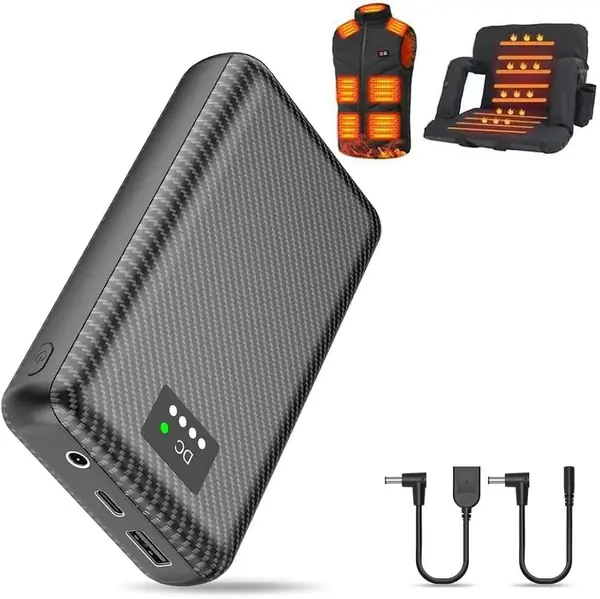
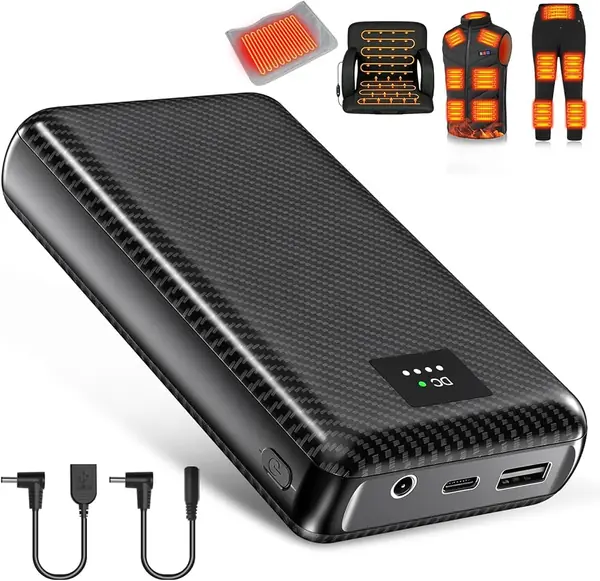
The 7.4V DC output is the whole point. Gear designed for a DC supply heats faster and harder at 7.4 volts than the same gear manages on a 5V USB pack, and the MOSILA is the largest DC-capable battery in this group: 30,000mAh, a 7.4V DC port, a separate 5V USB port, and two conversion cables in the box.

The rest of the package is built for cold-weather practicality. A percentage display tells you what's left without guessing, connecting the vest switches the pack on with no button press, and the cells are UL and CE certified with a two-year warranty behind them — the longest coverage here. It is also 14 ounces and an inch thick, so it rides in a jacket pocket or a daypack rather than a vest's own battery slot.

Our read on the capacity number is that 30,000mAh is a ceiling, not a promise. A vest on its highest setting pulls hard, and a couple of hours is a realistic high-heat stint before you go looking for a warm room; the capacity goes much further on medium and low, which is where most of a cold day actually gets spent. Buy it for the 7.4V heat and the long low-heat afternoons, not for an all-day blast.

Pros

  • Runs 7.4V DC gear at full heat
  • 30,000mAh for long, cold days
  • Starts on plug-in with a percentage display
  • Two-year warranty, UL and CE certified

Cons

  • Bulky at 14 ounces and an inch thick
Our verdict

We recommend the MOSILA to anyone whose heated gear takes a 7.4V DC barrel plug and who wants the hottest, longest-running pack here — just budget jacket-pocket space for it.

Check Latest Price
4

VINTELEIN 2-Pack Battery Best Two-Pack

87 /100
TKZ Score Excellent

Key details

Output
5V/2A USB
Weight
7.8 oz each
Capacity
10,000 mAh each
Heat Time
Up to 8 hours each
View on Amazon

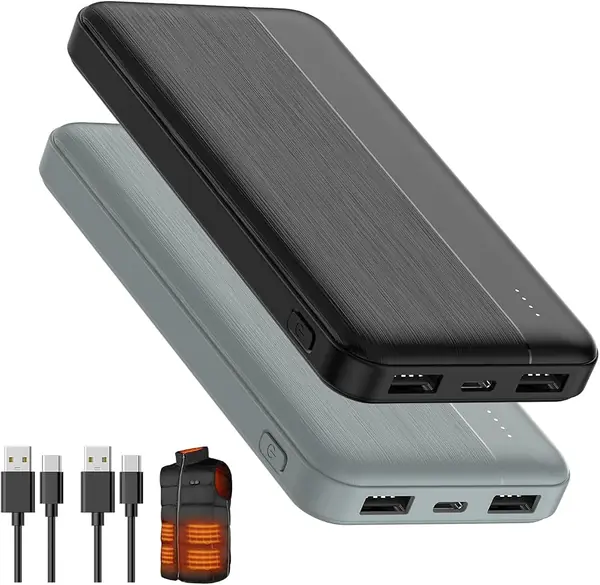
Two batteries is a different answer to the runtime question than one bigger battery, and for a lot of people it is the better one. The VINTELEIN set gives you a pair of 10,000mAh, 5V/2A packs at 7.8 ounces and 0.7 inches thick each, rated at up to eight hours of heating, for less than a single premium pack on this list costs.

In practice the spare changes how you use the vest: a dead battery stops being the end of the afternoon. What we like most is the shape — 0.7 inches lies flat in a vest pocket and 7.8 ounces doesn't drag the vest down on one side the way a 14-ounce DC pack does. Each one recharges over USB-C or micro-USB in about four hours, so a pair can leapfrog a single wall outlet overnight.

The trade is straightforward: two packs means two things to keep track of, and neither will run a high-heat vest through a whole day on its own — which is fine, because the second one is in your bag. As a system it's the most practical cold-weather setup here, one warm and one charging.

Pros

  • Two 10,000mAh packs in one box
  • 0.7-inch bodies fit flat in a vest pocket
  • Dual USB-A ports on each pack

Cons

  • USB-C is input only
  • Long 5.7-inch frame in a short pocket
Our verdict

We recommend the VINTELEIN pair to anyone who would rather swap a battery at halftime than ration heat — two slim packs for less than one of the premium batteries here.

Check Latest Price
5

BIUMVP Power Bank Best Budget

86 /100
TKZ Score Excellent

Key details

Output
5V/2A USB
Weight
7.4 oz
Capacity
10,000 mAh
Warranty
1 year
View on Amazon

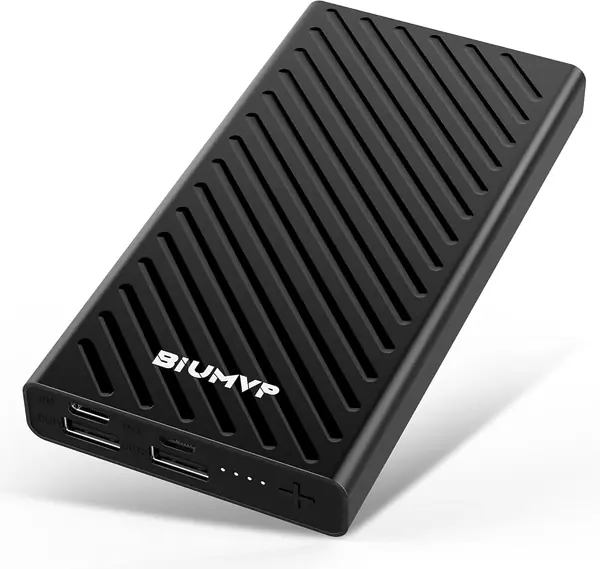
Start with the disqualifier: this is a 5V USB pack, so it will not run a vest with a 7.4V DC barrel plug, and no adapter fixes that. For everyone with a USB vest and a limited budget, though, it is the value pick of this group — the least expensive pack we recommend, and one that still holds 5V at 2A instead of sagging under a heating element.

The body is 0.63 inches thick and 7.4 ounces, slim enough to sit in a jacket pocket without a lump showing, and it takes a charge through USB-C or micro-USB at 5V/2.1A. Two USB-A outputs are there if you want a phone topped up on the same outing, and the finish is plain enough that it doesn't call attention to itself under a jacket.

Nothing about it changes the heat you feel. The pack does the one job, it does it for less, and it comes with a year of warranty behind it. If you're buying for a season of cold-morning commutes rather than a decade of abuse, that's the sensible trade — and at this price, two of them still cost less than one premium pack.

Pros

  • Least expensive pack we recommend
  • Holds a steady 5V at 2A
  • Light 7.4-ounce body

Cons

  • Long 5.35-inch body suits fewer pockets
  • Charge retention is uneven
Our verdict

For a cheap second pack or a first vest on a tight budget, the BIUMVP delivers a steady 5V/2A for less than anything else we recommend.

Check Latest Price
6

OKZU Power Bank Best Slim Fit

85 /100
TKZ Score Excellent

Key details

Output
5V/2A USB
Weight
5.8 oz
Capacity
10,000 mAh
Thickness
0.5 in
View on Amazon

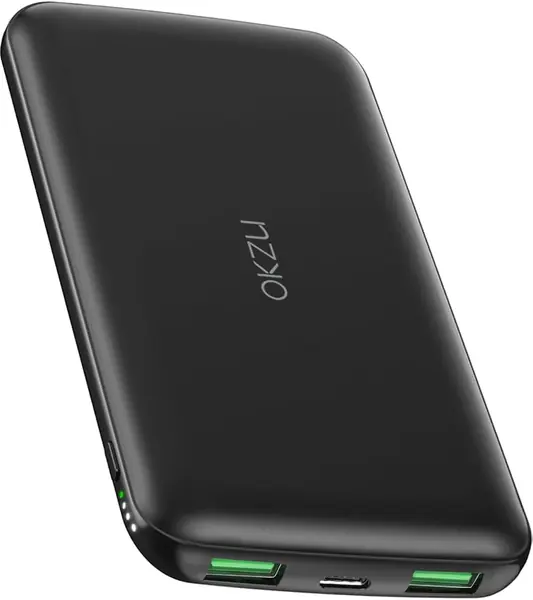
Half an inch thick and 5.8 ounces is the entire case for the OKZU. It is the slimmest 10,000mAh pack in this group by a wide margin, and in a vest with a flat inner pocket it lies still instead of swinging against a hip. We wore it under a jacket for a morning and kept patting the pocket to confirm it was still there.

What we didn't expect from a pack this thin is the turnaround: 3.5 hours to refill with a USB-C fast wall charger, quicker than most of the batteries here, which makes running two of them a much easier habit to keep. The finish has a soft-touch feel that keeps it from sliding out of a pocket, and the ports grip a vest cable firmly enough that it doesn't work loose while you move.

The trade is runtime, and it is worth naming plainly: this is a half-day pack on high heat rather than an all-day one, and the people happiest with it treat it as one of two. If your vest has a deep battery slot and you want to load it once in the morning and forget it, the TIDEWE is the better call.

Pros

  • Half an inch thick, 5.8 ounces
  • Refills in 3.5 hours with a USB-C charger
  • Soft-touch finish that stays put

Cons

  • Shortest runtime of the 10,000mAh packs here
Our verdict

We recommend the OKZU for a vest with a shallow, flat battery pocket — it's the slimmest pack here, and a half-day of heat is the trade you accept for that.

Check Latest Price
7

DR.HILL 7.4V Battery Pack Best for DC Adapter Kits

84 /100
TKZ Score Excellent

Key details

Output
7.4V DC and 5V USB
Weight
14.1 oz
Capacity
30,000 mAh
Heat Time
Up to 20 hours
View on Amazon

Barrel plugs are the quiet frustration of DC heated gear. Two packs can both say 7.4V and still not fit your vest, because one connector measures 3.8mm and the other 4.0mm, and the difference is invisible in a listing photo. DR.HILL builds the kit around that problem: a DC 3.8mm-to-4.0mm cable and a DC-to-USB cable come in the box alongside the micro-USB charging cable.

Behind the cables sits a 30,000mAh battery with a 7.4V DC output and a separate 5V USB output, a digital percentage display, and UL certification. DR.HILL rates it at six hours on high, eight on medium, and up to 20 hours overall, which is the kind of spread that assumes you spend a cold day on the low setting.

Runtime on high is the part to take with salt. A vest at its hottest setting pulls hard, and a few hours is a realistic stint before you're back on the charger — the long numbers belong to medium and low, which is where most of a cold day ends up anyway. Treat the 20-hour figure as a low-heat ceiling rather than an expectation.

Where this pack earns its place is the price of certainty. It is cheaper than the MOSILA, and the adapter kit means a vest with an oddball barrel size is more likely to plug in on the first try instead of after a second order. If you already know your vest's plug size and want the longer warranty, the MOSILA is the better buy; if you don't, this one is.

Pros

  • Two DC adapters in the box
  • 30,000mAh with 7.4V and 5V outputs
  • UL certified with a digital display

Cons

  • Bulky 14-ounce body
  • Short 180-day guarantee
Our verdict

We recommend the DR.HILL kit to anyone with a 7.4V DC vest and an uncertain barrel size — the included adapters can save a return, and it costs less than the other DC pack here.

Check Latest Price

How We Tested Heated-Vest Power Banks

We built the shortlist by sorting listings by connector first and capacity second. A pack with a 5V/2A USB output and a pack with a 7.4V DC barrel plug do different jobs, and a brick that only fits one style of vest is a brick for everyone else — so we cut anything that couldn't be matched to a common vest port, then filtered the rest by stated capacity, weight, and price. We ended up buying 14 packs across the capacity range and used them from November through March.

Testing happened where the vests did: the walk to the train, two-mile dog walks after dinner, a full day sitting in cold bleachers, and a three-day ski trip. We ran each pack on high heat with a stopwatch, noting when the elements first felt warm and when they went cool, then compared that to the hours promised on the box. At home we drained each one completely and timed the recharge from dead to full, touching the shell every half hour to see how hot it got in hand.

Fit and weight got the same scrutiny. We slid every pack into a vest's own battery pocket and watched whether the cable kinked at the plug or the pack bulged against the lining, then wore the heaviest ones on a two-hour walk to see how they dragged. We also ran the battery gauges down to nothing to see whether the last bar held or the pack dropped from two bars to dead, and repeated full cycles on the same unit to check whether runtime faded after a month of steady use. Value came down to usable hours of heat per dollar, not the number printed on the label.

How to Choose a Power Bank for a Heated Vest

Match the Output to the Vest's Plug

Two different products get sold as heated-vest batteries. If the cable from your vest ends in a standard USB-A plug, you want a 5V pack rated at 2A or better on a single port, which is most of what we recommend here. If it ends in a round barrel connector, the vest wants 7.4V DC and a 5V pack will not light it up at all.

The trap is that both kinds are marketed identically. A listing promising compatibility with most heated vests usually means most 5V USB ones, and no adapter in your drawer turns a 5V battery pack into a 7.4V supply. Unplug your vest's cable and look at the end before you buy anything.

Capacity Is Only Half of Runtime

A 10,000mAh pack can run a vest for most of a day on low heat and about three hours on high, because the heat setting moves the needle far more than capacity does. Makers quote the low-heat number for a reason, and that's the figure to hold against a 30,000mAh pack's much larger claim.

The practical rule: if you ride high heat all day, two 10,000mAh packs beat one big battery pack, because you swap in seconds and charge the spare overnight. If you mostly run medium and low, capacity buys you genuine hours and the bigger pack earns its weight.

Pocket Fit Is Mostly About Thickness

A vest's battery pocket wants something flat. Six to eight ounces and under three-quarters of an inch disappears against your side; the 30,000mAh packs, at around 14 ounces and a full inch thick, belong in a jacket pocket or a daypack instead.

Be suspicious of the word compact on a listing, which often means it fits a glovebox rather than a vest. Check thickness and length against the pocket, and leave an inch of slack for the plug — a cable bent hard against a seam works itself loose while you move.

Look at How It Starts and What It Tells You

Small design choices repeat every single time you put the vest on. A pack that begins heating the moment you connect the cable saves fumbling under three layers; one with a button asks you to find it through gloves. A percentage readout tells you whether you have an hour left or should swap packs now, where four blinking dots leave you guessing.

Neither feature changes how warm the vest gets. Both change how often you bother with it, and that is the number that decides whether heated clothing earns its place in your closet.

Check the Certification and the Warranty

A battery that sits against your ribs for hours should carry UL, CE, or FCC certification, and most of the packs here do. Warranty length varies far more than you might expect — from 180 days on one pick to two years on another — so read that line before you buy on price alone. A certified pack with a longer warranty is worth a few dollars more.

Frequently Asked Questions

Final Verdict

If you own one USB heated vest and want to stop thinking about batteries, buy the TIDEWE. It has the steadiest runtime of anything here in a body light enough to forget, and it's the pack every other pick on this page gets measured against.

For a 7.4V DC vest, the MOSILA is the one to get. If your barrel size is a mystery, the DR.HILL kit's adapters are the hedge worth paying for. And when a flat pocket matters more than an extra hour of heat, the OKZU is the trade we make.