Best Phone Holders for Running of 2026

There's a special frustration reserved for mile four of a good run, when your phone has slid sideways down your waistband and you're doing a one-armed shimmy to fish it out. A good running phone holder should disappear — no bounce, no creeping, no chafing at the hip. What you're really buying is the ability to carry a phone, a key, and maybe a gel without thinking about it until you stop.

I've tried the sports-bra-strap method and the ziplock-bag-in-a-pocket method, so I came to this with opinions. Over the past four months, my team and I logged miles with 14 holders — stretchy belts, zippered pouches, armbands, and one chest bag — on roads, treadmills, and a memorably humid trail.

Two things surprised me. A belt that feels snug in your kitchen can still ride up on hills, and the zipper matters more than the price suggests — a cheap one snags at mile five when your hands are sweaty. The picks below are the ones that stayed put.

The Best Phone Holders for Running

1

Fitgriff Running Belt Best Overall
95 /100
TKZ Score Outstanding

Key details

Pockets
2
Water Resistance
Water repellent
Waist Fit
Sized M-L
Closure
Zipper
View on Amazon

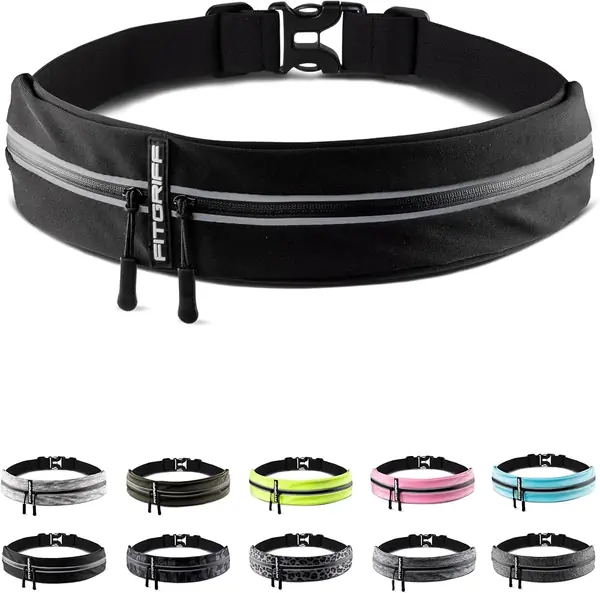
The Fitgriff gets the everyday balance right: a zippered main pocket for the phone, a second pocket for keys or a card, and a flat shape that sits against the lower back instead of swinging at the hip. The reflective strips are stitched along the zip, so visibility is built into the closure rather than added as a flapping tag.

What settled it as our top pick is how little the belt asks you to change your run. The elastic strap and zipper held a large phone and a key without the pouch drifting, and the soft polyester did not dig in at the waist. We also appreciate that Fitgriff sells this in sizes rather than pretending one band fits everyone; measure your waist and use the chart before ordering.

The two pockets cover a phone, a key, a card, and maybe a gel, but this is not a hydration belt. The water-repellent finish shrugs off sweat and light rain, and the low profile works under a light jacket. For a runner who wants one less thing to think about, the Fitgriff is the easy place to start.

Pros

  • Large phone rides securely without bounce
  • Separate pocket keeps keys off the screen
  • Reflective strips along the zipper

Cons

  • Hand wash only
Our verdict

We recommend the Fitgriff as the default running belt for most people: a large phone and small essentials ride securely without bouncing.
Check Latest Price
2

FlipBelt Zipper Running Belt Best Buckle-Free Belt

94 /100
TKZ Score Outstanding

Key details

Pockets
4
Closure
Zipper
Care
Machine wash
Size
Medium
View on Amazon

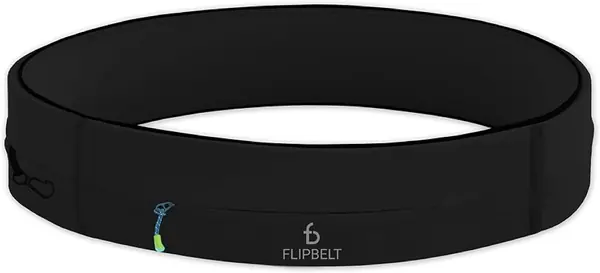
The FlipBelt Zipper looks like a wide headband, and that is the point: no buckle, no dangling strap, just a tube of stretch fabric you pull on. Four openings give you places to tuck a phone, keys, a card, or a gel, and the zip pocket adds a closure for the small things you do not want to lose.

We prefer it for runners who hate hardware at the waist. The band sits close and the doubled fabric keeps a phone from flopping, and the lack of a buckle means there is nothing to press into your stomach on a longer run. The fit is the decision: FlipBelt sizes this by waist, and the brand suggests going up a size if you wear it low on your hips.

The zip pocket is genuinely useful, not decorative, and the whole belt can go in the washing machine, which is rare here. What we keep coming back to is the fabric: it is soft enough to wear against skin and substantial enough to feel controlled when loaded. The premium is real, but so is the comfort.

Pros

  • Buckle-free band reduces waist pressure
  • Zipper pocket secures cards and keys
  • Machine washable

Cons

  • Phone sleeve is tight for thick cases
  • Can ride up when worn at hips
Our verdict

Choose the FlipBelt Zipper if you want a buckle-free band and a secure zip pocket, and you do not mind a snug phone sleeve.

Check Latest Price
3

SPIbelt Original Running Belt Best Expandable Pouch

93 /100
TKZ Score Outstanding

Key details

Pockets
1
Weight
2.47 oz
Waist Fit
25 to 47 in
Expanded Size
9 x 4 x 2 in
View on Amazon

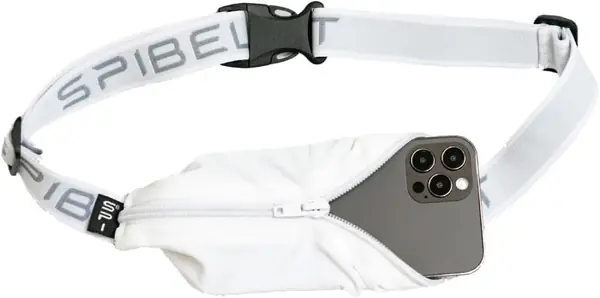
Where the Fitgriff has structured pockets, the SPIbelt is one stretch pouch that expands as you fill it. It starts compact and opens to 9 by 4 by 2 inches, which is enough for a large phone, a key fob, and a card.

We reach for the SPIbelt when the phone is the bulky part of the load. The 1-inch elastic band sits flat, the buckle adjusts across a 25-to-47-inch waist range, and the pouch stayed close without sagging on our runs. It is also the one here that makes a convincing travel belt: the same pocket takes a passport.

The expandable design is the whole appeal, and the lighter fabric is what you trade for it; the FlipBelt feels more substantial in the hand. The white version is easier to find in a dark gym bag, which sounds trivial until you are packing at 5 a.m. For a big phone and a passport, this is the one we pack.

Pros

  • Expands around large phones and passports
  • Stays close without sagging
  • Wide 25-to-47-inch waist range

Cons

  • Single compartment mixes phone and keys
  • Hand wash only
Our verdict

We reach for the SPIbelt when a large phone or a passport has to fit, because the expandable pouch swallows both without bouncing.

Check Latest Price
4

USHAKE Ultra Light Running Belt Best Minimalist Belt

92 /100
TKZ Score Outstanding

Key details

Pockets
2
Weight
3.52 oz
Water Resistance
Water resistant
Waist Fit
25.9 to 42 in
View on Amazon

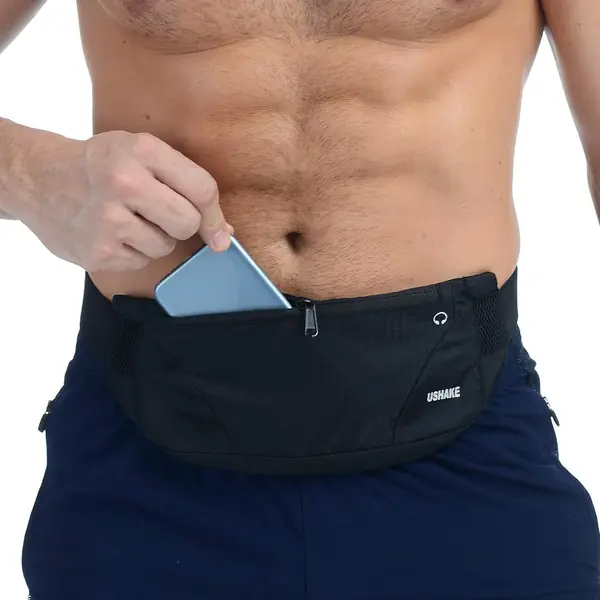
At 3.52 ounces, the USHAKE is the belt we notice least when we first put it on. The nylon shell, elastic band, and two zippered pockets keep the profile flat, and the reflective stripe is narrow enough to look like trim in daylight.

What we appreciate is the restraint. The main pocket takes a phone in a case, the second pocket handles a key and a card, and the ear-bud hole means you can run a cable without leaving the zipper open. The band adjusts with a buckle and elastic, and the whole thing stays close enough that we forget it is there until we need it.

The two pockets are enough for a phone, a key, and a card, but not a vest or a water bottle. For a short run or a walk with the dog, that is the point: it stays out of the way. The reflective stripe is a useful extra, not a substitute for a light near traffic.

Pros

  • Light enough to forget on short runs
  • Two pockets keep phone and key apart
  • Reflective stripe adds low-light visibility

Cons

  • Waist range tops out at 42 inches
  • Not fully waterproof
Our verdict

The USHAKE is our pick for a minimalist run: a phone, a key, and a card disappear into a light belt that stays put.

Check Latest Price
5

Molarun Running Belt Best Budget Belt

91 /100
TKZ Score Outstanding

Key details

Pockets
3
Weight
3 oz
Water Resistance
Water resistant
Waist Fit
24 to 46 in
View on Amazon

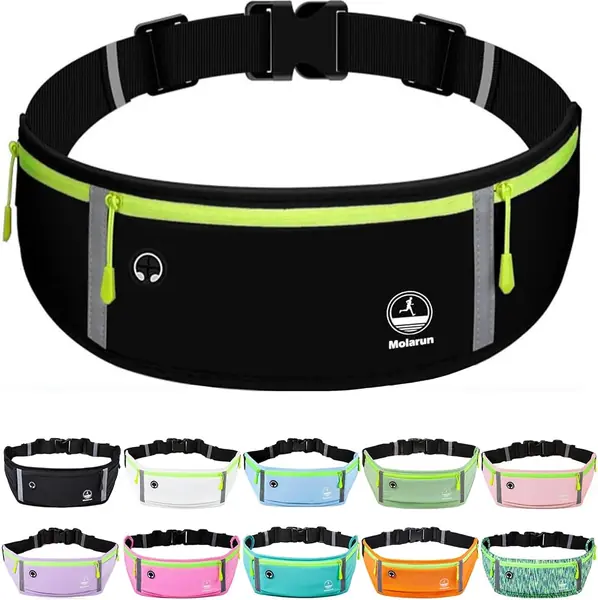
If you want a running belt that disappears under a T-shirt, the Molarun is the budget one we hand to friends first. Three pockets give the phone its own sleeve and put keys or a card in the side compartments, while the stretch fabric keeps the whole thing low-profile.

We appreciate the separate side pockets more than we expected; they keep a key from knocking against the phone and make it easier to grab a card without pulling out the main pouch. The 24-to-46-inch band covers a wide range, and the reflective strip runs across the front.

The soft spandex is comfortable against skin, and the whole belt packs down to almost nothing, so it can live in a glove box or jacket pocket. The three pockets stay useful without adding bulk, but this is a phone-and-keys belt, not a hydration pack. For a first 5K or a daily walk, it does the basics without asking much.

Pros

  • Three pockets separate phone and keys
  • Wide 24-to-46-inch waist range
  • Low-profile stretch fabric

Cons

  • Can run small for larger waists
  • Can shift when the main pocket is full
Our verdict

We recommend the Molarun to budget-minded runners who want separate pockets for phone and keys without a bulky waist pack.

Check Latest Price
6

Muserise Sports Chest Bag Best Chest-Pack Alternative

90 /100
TKZ Score Outstanding

Key details

Pockets
4
Weight
9.52 oz
Water Resistance
Water resistant
Chest Size
9.5 x 5 x 1.2 in
View on Amazon

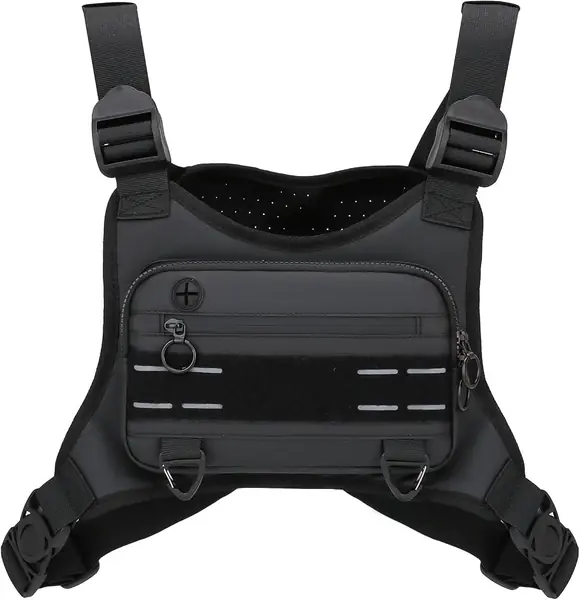
A chest pack solves a problem waist belts cannot: your phone stays in front of you, where you can see it and reach it without breaking stride. The Muserise uses four adjustable straps, four pockets, and reflective panels front and back, with a main compartment sized at 9.5 by 5 by 1.2 inches.

We recommend it for the runner who wants more storage than a belt and does not want a backpack. The front pocket takes a phone in a case, the other compartments hold keys, a card, and a gel, and the chest position keeps the screen visible. Getting the four straps evenly tensioned is the whole job; when they are balanced, the pack sits flat instead of riding high.

The four straps take more time to put on than an elastic belt, and the pack is more gear than a minimalist run needs. We still reach for it on hike-run days and errands where we want a phone, wallet, and keys in one place. A waist belt remains better for pure speed work.

Pros

  • Keeps phone visible and reachable
  • Four pockets hold phone and small gear
  • Reflective front and back panels

Cons

  • Heavier than a running belt
Our verdict

We recommend the Muserise to runners and hikers who want their phone visible on their chest, not hidden at their waist.

Check Latest Price
7

HAISSKY Running Armband Best Armband

89 /100
TKZ Score Excellent

Key details

Weight
2.08 oz
Arm Fit
8 to 18 in
Phone Fit
Up to 6.9 in
Extra Pocket
Zipper pocket and card slot
View on Amazon

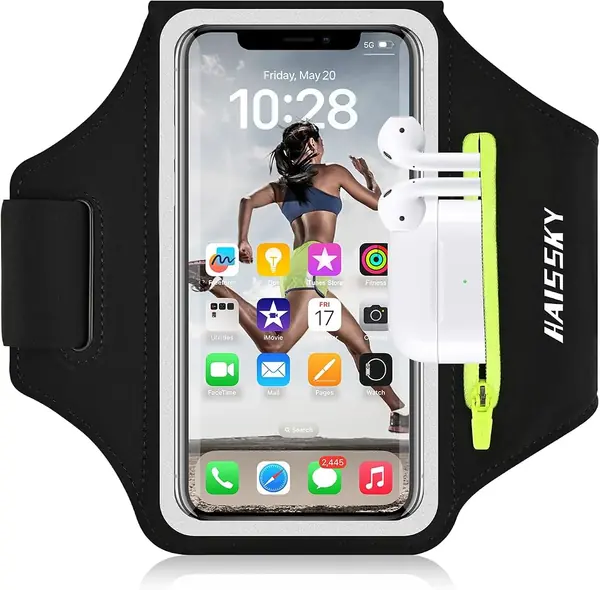
The HAISSKY puts the screen on your arm, which is exactly where your hand goes when you want to skip a track or check a split. The clear touchscreen window, zipper pocket, card slot, and reflective frame make it more than a plain phone sleeve.

We like the extra zipper pocket for a key or earbud case, and the card slot means you can leave a wallet behind. The armband fits an 8-to-18-inch arm, a wider range than most, and the silicone backing gives it some grip. The touchscreen handled basic taps through the plastic, though it is not as crisp as bare glass.

What we kept coming back to is the access: a quick glance at pace or a track change does not require digging at your waist. The window is large enough for a 6.9-inch phone, so it feels substantial on a small arm, but that size is what makes the touchscreen usable. The 8-to-18-inch range is wide enough to share between partners, which is rare for an armband.

Pros

  • Touchscreen window allows on-arm control
  • Zipper pocket holds a key and card
  • Wide 8-to-18-inch arm range

Cons

  • Can slide on a sweaty arm
Our verdict

The HAISSKY is our armband pick for runners who want to see and tap their screen without slowing down.

Check Latest Price
8

ULANARO Slim Running Belt Discreet Wear Under a Shirt

88 /100
TKZ Score Excellent

Key details

Pockets
1
Weight
2.4 oz
Water Resistance
Water resistant
Waist Fit
27 to 46 in
View on Amazon

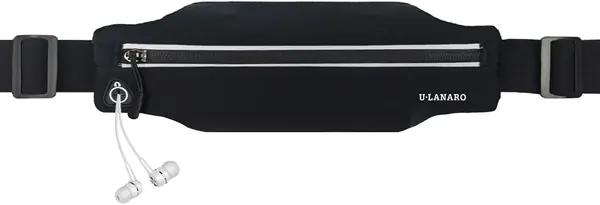
The ULANARO is the belt we use when we want the phone to disappear under a shirt. One expandable pocket, a 2.4-ounce body, reflective strips, and a water-resistant zipper with a TPU liner make it look almost too simple.

That simplicity is the appeal. On our runs the flat pouch sat against the lower back, took an iPhone in a case without a fight, and stayed put when we picked up the pace. At 2.4 ounces it is the lightest waist belt here, and the 27-to-46-inch band covers most waists without a lot of extra strap.

The reflective strips are small but present, and the water-resistant zipper is a sensible touch for sweat or a drizzle. The black version disappears against dark shorts, which is the point. This is a belt for a phone and a key, not for a full race-day kit.

Pros

  • Very slim under a shirt
  • Light 2.4-ounce build
  • Expandable pocket fits large phones

Cons

  • Single compartment mixes phone and keys
  • Elastic may lose tension over time
Our verdict

We recommend the ULANARO to runners who want the slimmest possible belt under a shirt and can live with one pocket.

Check Latest Price
9

Guzack Running Armband Best for Medium Arms and a Backup Buckle

87 /100
TKZ Score Excellent

Key details

Water Resistance
Waterproof
Arm Fit
10 to 16 in
Phone Fit
Up to 6.9 in
Extra Pocket
Zipper pocket and card slot
View on Amazon

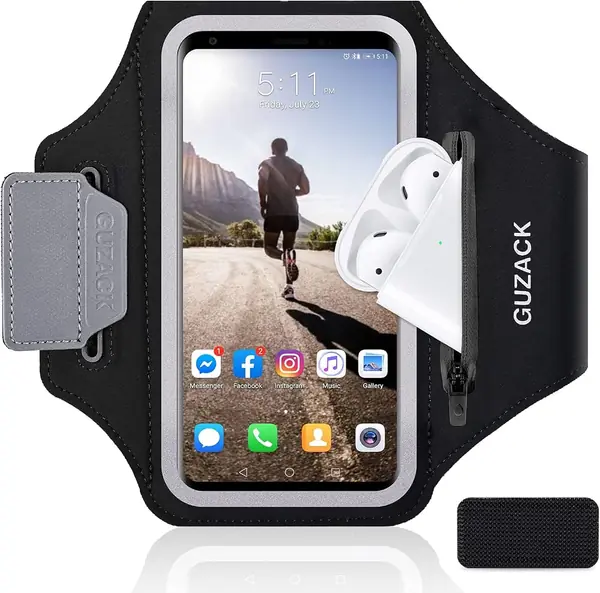
The Guzack's best trick is a small one: an anti-drop buckle that gives the Velcro a backup, so the band does not rely on hook-and-loop alone. It also adds a zipper pocket and a card slot, details that make an armband more useful than a clear sleeve.

We like it for medium arms and big phones. The 10-to-16-inch arm range is the first thing to check; on the right arm the band sits flat and the phone stays put. The clear window handled taps and unlock gestures, and the zipper pocket took a key and an earbud case.

The zipper pocket is still the feature we use most, because it keeps a key off the screen. The card slot is a small thing, but it means one less pocket in your shorts. The band is built for medium arms, not every arm, so check the range before ordering.

Pros

  • Anti-drop buckle backs up the Velcro
  • Zipper pocket and card slot add storage
  • Touchscreen window works through plastic

Cons

  • No warranty listed
Our verdict

Choose the Guzack if you have medium-sized arms and want an armband with a backup buckle and a useful zip pocket.

Check Latest Price

How We Tested Running Phone Holders

We started by rounding up every running belt, armband, and chest bag we could find from brands we already trusted and a handful we didn't, then read through customer reviews to see what actually broke first. We filtered for phone compatibility — we wanted holders that could swallow a large phone in a thick case, not just a bare one — plus closure type, adjustability, and price, which narrowed the field to 14 units. Testing ran for four months.

Every holder went on real runs: weekday three- to six-milers, long weekend efforts, hill repeats, and at least one treadmill session, usually loaded with a phone, a house key, and a gel. To judge stability, I marked where the belt sat on my hip at the start of a run and checked it again at the end, and I paid attention to whether things got worse on downhills. Comfort showed up later, in the form of waistband seams rubbing, arm straps digging in, and buckles pressing against my ribs when I stretched. I wore each one over both leggings and loose shorts.

Back home, we loaded each pouch to see whether a phone went in with one hand and whether a card slot could give up a card without dumping everything else. We opened and closed every zipper dozens of times, first with dry hands and then with sweaty ones, and we cycled the hook-and-loop closures repeatedly, watching for frayed edges and lint pickup. Water-resistant options got five minutes under a faucet with a paper towel sealed inside. Then everything went through the wash to see which fabrics came back stretched out.

How to Choose a Phone Holder for Running

Start With the Shape You Will Wear

A waist belt puts the load around your hips and keeps the screen out of the way; an armband puts the screen within reach but can slide or feel bulky; a chest pack carries more and keeps the phone visible, at the cost of extra straps and weight. We prefer a belt for everyday running, an armband when you check your phone mid-run, and a chest pack when you want phone, wallet, and keys in one place.

Fit It to Your Body, Not Your Pants Size

Measure where you will actually wear the carrier. A belt worn high on the waist takes a different size than one worn low on the hips, and an armband needs to fit your upper arm, not your wrist or sleeve. A band that is too loose will bounce; one that is too tight will restrict your breathing. Check the stated range before ordering, and size up if you plan to wear a belt over layers.

Check the Phone Pocket With Your Case On

A pocket listed for a large phone can still be tight once a rugged case, pop socket, or wallet attachment is added. Expandable pouches are more forgiving than fixed sleeves, while stretch fabric can make a snug pocket workable. Before a long run, load your phone in its everyday case, close the closure, and make sure you can remove it without wrestling the fabric.

Treat the Closure as the Safety Feature

The zipper or buckle is what keeps your phone off the pavement, so give it more attention than the color or logo. Look for a backed zipper, a buckle that stays flat, and a design that does not depend on a single thin pull. A belt that opens easily at the waist is not secure, however comfortable it feels when you first put it on. Test the closure with the phone inside and give the pouch a gentle shake.

Match Pockets to What You Carry

One pocket is enough for a phone and a key, but separate compartments keep keys from scratching the screen and make cards easier to reach. Three pockets can be worth the extra bulk if you carry keys, a card, and an energy gel. Armbands with a zipper pocket add useful capacity without putting anything in your shorts, while chest packs can replace a small running vest for longer outings.

Frequently Asked Questions

Final Verdict

The Fitgriff is the running phone holder we recommend to most people because it gets the fundamentals right: a large phone rides securely, keys stay separate, and the reflective trim adds visibility without extra bulk. If you hate a buckle at your waist, the FlipBelt Zipper is the better feel; if you need to carry a passport or a very large phone, the expandable SPIbelt is the more useful shape.