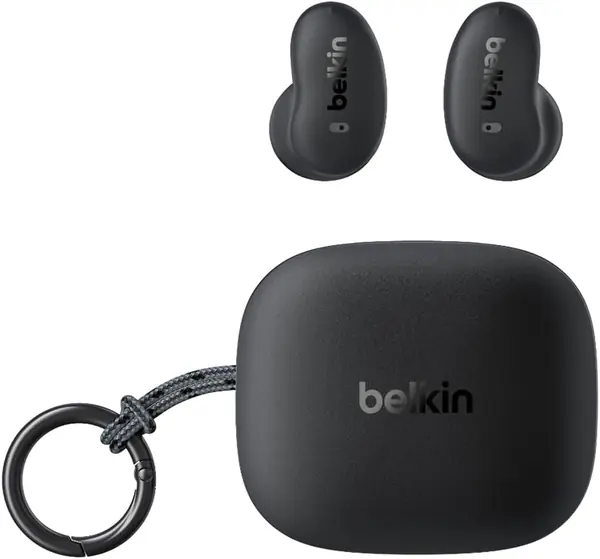
Best Earbuds for Teens of 2026

Earbuds for a teenager live harder lives than yours do. They rattle around a backpack, hit the gym floor, and turn up in the laundry three days later — which is why the real question isn't which pair sounds best, but which pair you won't regret buying when it vanishes in a month. The answer has tips that fit, a battery that clears a school day, and enough water resistance for rain and sweat.

We've spent the past four months with 14 pairs, and the winners were rarely the flashiest on paper. Two things mattered more than specs: a companion app with EQ presets, since the same earbuds can sound thin or muddy with the wrong tips, and a charge display on the case, since no teenager opens an app to check battery. Multipoint matters if your kid bounces between a school laptop and a phone.

None of these are audiophile-grade, and I won't pretend they'd survive a forgotten night in the rain. They're the pairs I'd hand over without wincing, and the list below is sorted by how well each held up.

The Best Earbuds for Teens

1

soundcore P20i Best Overall
91 /100
TKZ Score Outstanding

Key details

Battery Life
10 hours per charge, 30 with case
Water Resistance
Water resistant
App Extras
22 EQ presets, Find My Earbuds
Driver Size
10mm dynamic
View on Amazon

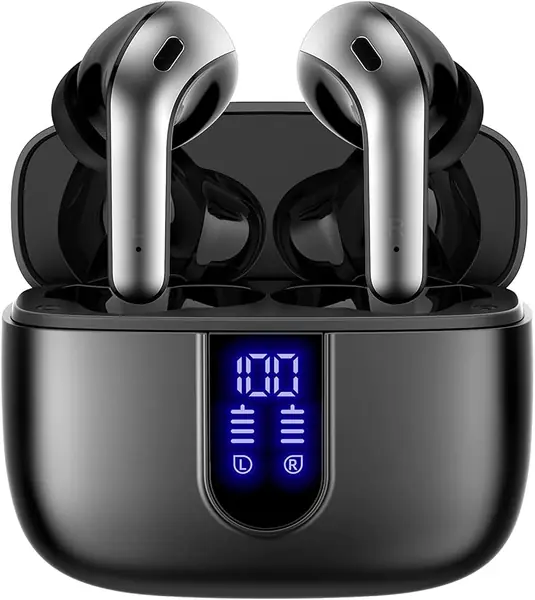
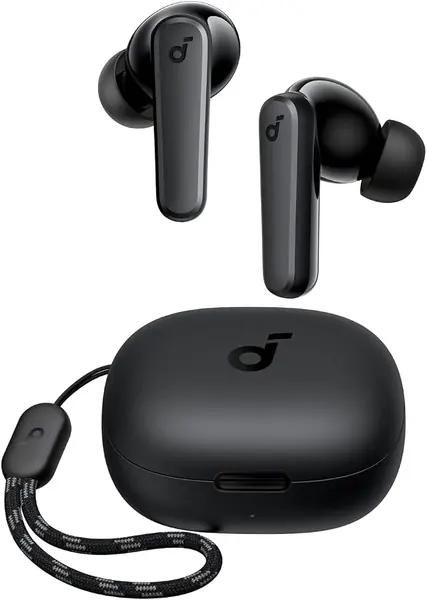
The feature we keep coming back to on the soundcore P20i has nothing to do with sound. Find My Earbuds in the soundcore app makes a misplaced bud chirp, and for the way teenagers actually treat earbuds that is the single most useful thing on this list. Anyone who has watched a kid pat down a backpack for ten minutes will understand why it counted for so much.

It earns the top spot because everything under that trick is solid too. The 10mm drivers put out real bass rather than the thin approximation budget earbuds usually manage, and the 22 EQ presets plus touch remapping in the app mean a teen who thinks everything sounds wrong can fix it without buying new hardware. Ten hours on a charge and 30 with the case covers a school day plus the ride home, and two mics with an AI pass kept calls clear enough that we never had to repeat ourselves.

Fit is the thing to settle in the first week. Three tip sizes come in the box and the seal decides how much of that bass actually arrives, so if a bud feels loose at the start, go up a tip size before writing the earbuds off. That is also why it makes a sensible first pair: three sizes cover a much wider range of ears than a fixed shell does.

Two things to know going in. There is no active noise canceling, only the passive seal of the tip, which is fine for music and close to useless on a loud bus. And the case has a lanyard loop, a small detail that keeps it clipped to a backpack instead of rolling loose at the bottom of one.

Pros

  • 10mm drivers with genuinely deep bass
  • Ten hours per charge, 30 with the case
  • App finds a misplaced earbud
  • 18-month warranty backs the pair

Cons

  • Long-term durability is inconsistent
Our verdict

We point most teens here: the P20i delivers real bass, a full day per charge, and an app that can find the bud they swear they lost.
Check Latest Price
2

soundcore P30i Best for Noise Canceling

90 /100
TKZ Score Outstanding

Key details

Battery Life
45 hours with case, 25 with ANC
Water Resistance
IP54
Charging Case
Doubles as a phone stand
Noise Canceling
Up to 42dB adaptive ANC
View on Amazon

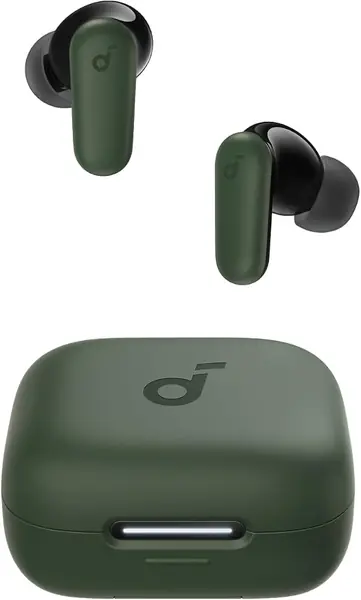
Open the back panel on the P30i's case and it becomes a phone stand. On a spec sheet that reads as filler. In practice it is the reason this pair kept ending up in our bag, holding a phone at eye level with something playing while we worked.

The rest of the package is built around quiet. Adaptive active noise canceling is rated to cut up to 42dB and adjusts to what is around you, and transparency mode brings the room back without a bud coming out. The shells sit on the smaller side as well, which is why this is the pair we point to for teens with narrow ears.

Our recommendation is for the teen who needs to disappear into homework on a bus or in a loud kitchen. Playtime runs 10 hours a charge, six with ANC on, and 45 with the case, and that noise canceling is exactly what the extra money buys over the P20i. If concentration is not the problem, the cheaper pick in this guide does the same job with fewer parts to go wrong.

The folding stand makes the case thicker than the buds alone require, so plan on a backpack pocket rather than a jeans one. A 24-month warranty covers the pair, which is more coverage than the P20i's 18 months.

Pros

  • Adaptive ANC rated to cut up to 42dB
  • Case folds into a phone stand
  • 45 hours total, six per charge with ANC
  • Smaller shells suit narrower ears

Cons

  • Wind noise gets through outdoors
Our verdict

We reach for the P30i when the room is loud: adaptive noise canceling that actually works, transparency when someone talks, and a case that holds a phone up.

Check Latest Price
3

TOZO A1 Best for Small Ears

89 /100
TKZ Score Excellent

Key details

Battery Life
7 hours per charge, 32 with case
Water Resistance
IPX5
App Extras
32 EQ presets
Weight
3.7g per earbud
View on Amazon

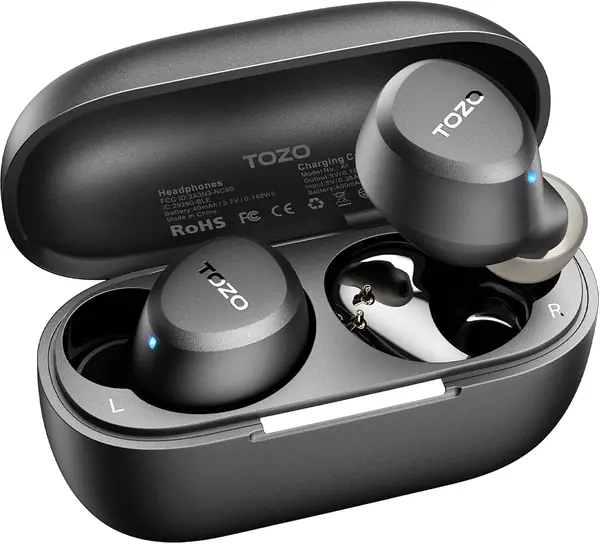
At 3.7 grams a bud, the A1 is the lightest pair in this guide, and it is the one we hand to anyone who says earbuds start to ache after an hour. TOZO builds it around small ears, with a compact shell, a 6mm driver and tips that do not need to be forced in, and for a teenager with a narrow canal that is most of the decision made.

The rest is sensible for the money. Seven hours a charge and 32 with the case, IPX5 for sweat, Bluetooth 5.3, and 32 EQ presets in the app so the tuning can be bent toward whatever they actually listen to. We like that the app does the work here instead of a fixed signature nobody can change.

The limit is volume. Six-millimeter drivers thin out when the music gets pushed, and a teen who wants to feel bass will hear the gap next to the P20i's 10mm pair. Everything else is a straight answer to a small budget: the IPX5 covers sweat and a splash but not a swim, and the whole kit disappears into a school bag pocket.

Pros

  • 3.7 grams a bud, built for small ears
  • Seven hours per charge, 32 with case
  • 32 EQ presets in the app
  • IPX5 handles sweat and splashes

Cons

  • Some units stop charging within months
Our verdict

We keep the A1 for anyone who says earbuds start to ache: 3.7 grams a bud, a shell built for small ears, and the lowest price on this list.

Check Latest Price
4

Btootos A90 Pro Best for Sweat and Rain

88 /100
TKZ Score Excellent

Key details

Battery Life
36 hours with case
Water Resistance
IP7 waterproof and dustproof
Driver Size
14.2mm dynamic
Bluetooth
5.4
View on Amazon

IP7 is the number that matters here. The A90 Pro carries the highest water and dust rating on this list, helped by an internal nano coating, and that is exactly the spec you want on the pair that lives at the bottom of a gym bag. We recommend it for the teen who is hard on gear.

There is more to it than the rating. Dual 14.2mm drivers give it fuller low end than most of this group, the case reads out its own charge and each bud's on an LED display, and Bluetooth 5.4 handles the pairing. Six to eight hours a charge and 36 with the case is plenty for a school week of casual listening.

Fit takes five minutes of fiddling, since three tip sizes ship in the box and the seal is what makes those 14.2mm drivers land, and it is worth doing before the first gym session. This is not the pair for blocking out a loud bus, though: there is call noise reduction here, not active noise canceling. A two-year warranty covers it, which is longer than the P20i's 18 months.

Pros

  • IP7 is the highest water rating here
  • 14.2mm drivers deliver fuller low end
  • 36 hours with the case, LED readout
  • Two-year warranty

Cons

  • Touch controls respond inconsistently
Our verdict

We hand the A90 Pro to the teen who is hard on gear: IP7 is the highest water rating here, and 36 hours means it survives the week.

Check Latest Price
5

TAGRY X08 Best Battery Life

87 /100
TKZ Score Excellent

Key details

Battery Life
60 hours with case
Water Resistance
IPX5
Driver Size
13mm
Charging Case
Wireless charging, dual LED display
View on Amazon

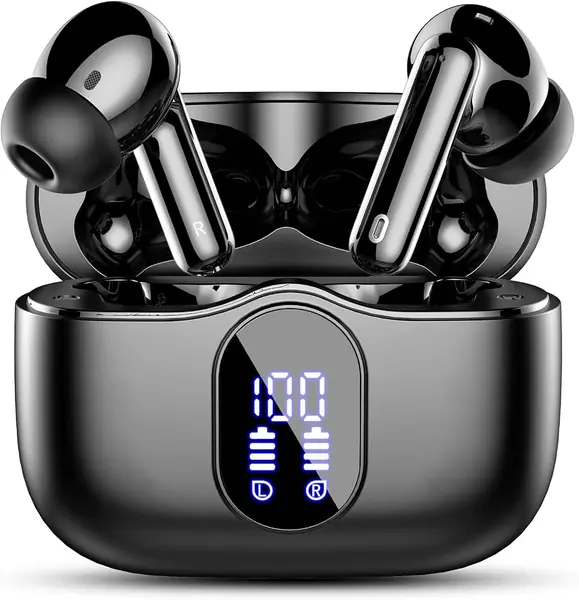
Two LED numbers on the front of the case show the case's charge and the buds', and that display is the reason the X08 is easy to live with. No single blinking light, no guessing whether it is a charging day. The case takes a wireless pad as well as a USB-C cable, so it can be dropped on a charger instead of hunting for the cord.

The headline is 60 hours of playback with the case, the longest figure in this guide, and 13mm drivers give it more low end than the price bracket usually manages. A hall switch handles pairing, so opening the lid reconnects the buds without a button press.

Comfort holds up over long stretches and three tip sizes cover most ears; this is the pair we stopped noticing during a full afternoon of listening. Nothing about the shape calls attention to itself in a classroom either.

We keep this one for the teen who never remembers to charge. Sixty hours means a case top-up can stretch across weeks of short commutes, and the display removes the guessing entirely, which is a different proposition from the nightly charging habit most of this group demands. The five-year manufacturer warranty is the longest promise here, so register it on day one and keep the receipt.

Pros

  • 60 hours of playback with the case
  • Dual LED display shows exact battery
  • Case charges wirelessly or by USB-C
  • Five-year warranty promised

Cons

  • Durability is inconsistent over months
Our verdict

We like the X08 for its 60-hour case and honest battery readout: a pair that asks for a top-up every couple of weeks, not every night.

Check Latest Price
6

JLab JBuds Mini Best Parental Controls

86 /100
TKZ Score Excellent

Key details

Battery Life
5.5 hours per charge, 20 with case
Water Resistance
IP55
App Extras
Safe volume limiter, EQ presets
Weight
3.3g per earbud
View on Amazon

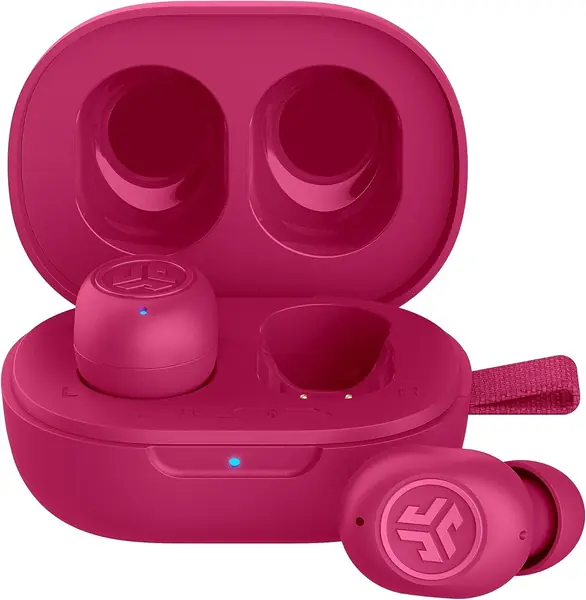
The setting we did not expect to care about lives in the JLab app: a safe hearing volume limiter. Set a ceiling and the buds stay under it, which is the one feature in this guide aimed squarely at the thing parents lie awake about. At 3.3 grams a bud they are also the smallest pair here, and JLab puts them 30% under the GO Pop+.

For a young teen, or anyone with genuinely small ears, that combination is hard to argue with. The shells sit almost flush, the fit holds through a run, and IP55 covers sweat and dust. Multipoint pairing across a phone and a school laptop is the sort of feature that stops being noticeable because it simply works.

Battery is where the Mini gives ground: 5.5 hours a bud and 20 total with the case, the shortest in this guide. That is a charge-it-nightly habit, like a phone, and it is fine once it becomes one. Four EQ presets and touch remapping live in the same app for when the stock sound does not suit.

The case clips onto a key ring or a backpack loop, which is the practical answer to how often small things go missing: clip it to a bag and it stops being something that can fall out of a pocket in a hallway. JLab backs the pair with a two-year warranty.

Pros

  • 3.3 grams a bud, JLab's smallest
  • Safe hearing volume limiter in the app
  • Multipoint pairs phone and laptop
  • IP55 for sweat and dust

Cons

  • Some pairs stop charging or drop connection
Our verdict

We recommend the JBuds Mini to parents who want a hard volume ceiling and to teens whose ears have never held a normal pair.

Check Latest Price
7

JBL Vibe Beam Bass Lovers Whose Ears Suit the Stem Shape

85 /100
TKZ Score Excellent

Key details

Battery Life
8 hours per charge, 32 with case
Water Resistance
Splash and dust resistant
Sound
JBL Deep Bass, 8mm drivers
Ambient Mode
Smart Ambient and TalkThru
View on Amazon

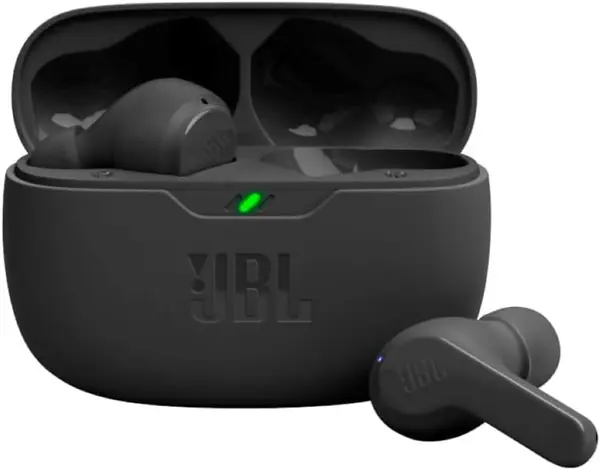
The Vibe Beam has a fit problem, and it is the first thing to say. The stem-and-bud shape suits plenty of adults but rides loose in smaller ears, and the seal is also what makes the bass land, so a pair that works its way out gives up its best feature first. Try the small tips before anything else; if the shell still slides out of the canal, this is not the one.

What you get when the fit holds: JBL's Deep Bass tuning from 8mm drivers, eight hours in the buds and 32 with the case, and Smart Ambient, which lets the outside world in without a bud coming out. TalkThru drops the music for a quick conversation, and VoiceAware balances how much of their own voice they hear on a call.

We rank it below the Anker pairs because of that fit risk rather than the sound. Bass is the point of this model and there is more of it here than on the P20i, and the ambient tools are the most useful convenience on this list for a kid who is forever pulling a bud out to talk. If the tips work for your teen's ears, it is a good buy. If they do not, no amount of tuning fixes it.

Pros

  • JBL Deep Bass from 8mm drivers
  • TalkThru for quick conversations
  • 32 hours with the case
  • Smart Ambient keeps surroundings audible

Cons

  • One-year warranty is the shortest here
  • Buds do not always seat in the case
Our verdict

We rate the Vibe Beam on sound and ambient tools, but only for an ear the stem shape actually holds.

Check Latest Price
8

Belkin SoundForm Anywhere Best for Teens Who Hate Ear Tips and Need to Hear Traffic

77 /100
TKZ Score Very Good

Key details

Battery Life
6 hours per charge, 26 with case
Water Resistance
IPX4
Bluetooth
5.4 with multipoint
Fit
Semi in-ear, no ear tips
View on Amazon

Semi in-ear means there is no silicone tip going into the canal; the bud rests against the opening instead. For a teen who pulls earbuds out after twenty minutes because their ears ache, that shape decides whether the pair gets used at all, and it is the reason this one is on the list despite weaker specs elsewhere.

The case is a key-ring fob holding 20 hours on top of six per bud, and Bluetooth 5.4 runs multipoint across a phone and a laptop without re-pairing. IPX4 covers sweat and a light drizzle rather than a downpour, which is the trade for a shell that does not seal.

Because nothing seals, bass is lighter than on the in-ear picks and more of the room comes through. That is a feature on a walk to school and a compromise on a noisy bus. Three EQ presets shift the balance, but no preset creates a seal, and we would not pretend otherwise.

Our verdict is narrow and we are comfortable with it: this is the pair for the kid who will not tolerate tips and needs to hear traffic. The flush shell suits some ears and not others, and Belkin includes a size-up sleeve in the box for ears that find it small. Use the sleeve before deciding the shape is wrong.

Pros

  • Semi in-ear shape leaves the canal open
  • Key-ring case clips to a backpack
  • Multipoint across two devices
  • Traffic and announcements stay audible

Cons

  • IPX4 covers sweat, not a soaking
Our verdict

We keep the SoundForm Anywhere for the teen who refuses ear tips and needs to hear the street, not for bass chasers.

Check Latest Price

How We Tested These Earbuds

We started with every budget pair I could find that listed a water-resistance rating, then crossed off anything whose case wouldn't fit a front jeans pocket and anything locked to a single phone brand. That left 14 pairs, judged on what they delivered for the money rather than the badge on the case. All 14 went through the same four months: a school bus commute, a study hall, an after-school practice, and a kitchen table covered in homework.

I wore each pair for a two-hour stretch and noted where pressure built up, which was almost always the outer ear rather than the canal. We tried all three tip sizes before judging fit and jogged a block in each to see what stayed put. Setup was timed cold — box open to music playing, no instructions, by a teenager who had never seen that pair before — and each case rode in a front pocket with keys to see how much it bulged.

For sound, we played the same four songs on every pair, listening for vocals buried under bass, then opened each app to see how much the presets actually changed. Battery claims were checked by playing a podcast at moderate volume until the buds died, then compared against what the case display showed. Each pair was paired to a phone and a laptop at once and carried between rooms to see if the signal held; we also took calls from a noisy hallway to hear how much background came through. Noise cancellation was judged on a bus against a quiet room, which mostly sorted real cancellation from a good tip seal. Cases were dropped from desk height onto tile, and one pair went through a wash cycle by accident — we dried it out and kept going.

How to Choose Earbuds for a Teenager

Start With the Ear, Not the Driver

When an earbud doesn't seal, bass disappears and the volume goes up to compensate, which is exactly the pattern to avoid in a teenager's ears. Small shells help: the TOZO A1 is 3.7 grams a bud and the JLab JBuds Mini is 3.3, both shaped for narrower canals, while a semi in-ear design like the Belkin SoundForm Anywhere skips the tip entirely. The trap is assuming a bigger driver means better sound. A 14.2mm driver that won't sit still is worse than a 6mm one that seals.

Treat Water Resistance as the Durability Spec

Nothing ends a cheap pair faster than sweat and a water bottle leaking in the same bag. IPX4 handles sweat and a light drizzle, IPX5 takes a proper soaking, and IP7 is the highest rating in this group, on the Btootos A90 Pro. If your teen plays a sport, that jump from splash-proof to IP7 is worth more than another EQ preset. No rating covers a wash cycle or a steamy bathroom, so a case that keeps the buds dry still earns its place.

Compare Hours Per Bud, Not Just the Case Total

The case-included total is the bigger, friendlier number, and it hides the figure that actually decides whether a pair survives a school day. Sixty hours with the case on the TAGRY X08 is genuinely useful, but the per-bud number is what carries a commute: 5.5 hours on the JLab, 10 on the soundcore P20i. Active noise canceling cuts it further, dropping the P30i from 10 hours to six. If your teen forgets to charge, weight the case total; if they forget to put the buds back, weight the per-bud figure.

Choose Quiet or Awareness, Not Both

An in-ear tip already blocks a fair amount of noise passively. Active noise canceling adds to that and costs more, which is what the P30i's 42dB rating buys and why it suits a bus or a loud kitchen. The opposite choice is a flush or semi in-ear shell that leaves the canal open so traffic and announcements come through. For a teen who walks or bikes to school, openness is the safer default, and transparency mode is the next best thing.

Budget for the Replacement, Not the Repair

Earbud repairs rarely make sense; a lost or dead bud is a replacement. That argues for staying below the top of your range on a first pair and for features that prevent loss: Find My Earbuds on the P20i, the key-ring cases on the JLab and the Belkin, a lanyard loop on almost anything else. Warranty length is the other half of the calculation, and it varies wildly here, from one year on the JBL to five on the TAGRY.

Frequently Asked Questions

Final Verdict

Buy the soundcore P20i for most teenagers and stop there. It gets the four things that matter right at once: three tip sizes for a real seal, 10 hours per charge, water resistance, and an app that finds a missing bud. Nothing else here covers all four. If quiet is the requirement, the P30i's noise canceling justifies the step up; if the problem is small, sore ears, the 3.7-gram TOZO A1 solves it for less.