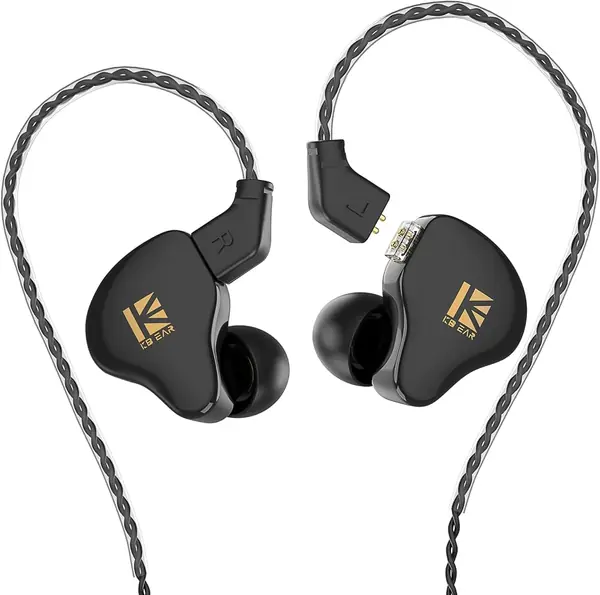
Best Earbuds for Musicians of 2026

The first time you sing in a basement rehearsal, you find out the floor monitor isn't your friend. I spent years pitchy and slightly shouty because the drums were louder in my head than my own voice. In-ear monitors solve that — they seal the room out and put your mix an inch from your eardrum — but the wrong pair hisses, slips out mid-chorus, or loses a channel at the connector after a season of gigs. My team and I spent six months rehearsing, gigging, and tracking with 14 pairs to find the ones that don't.

Here's what nobody tells a first-time buyer: driver count is a bad way to shop. A well-tuned single dynamic driver can beat a cheap five-driver hybrid on clarity and low end, and none of them give you bass if the tip doesn't seal — which is why fit and comfort matter more here than in a pair of gym earbuds. A detachable cable and a spare set of tips and ear fins in the box matter almost as much.

The Best Earbuds for Musicians

1

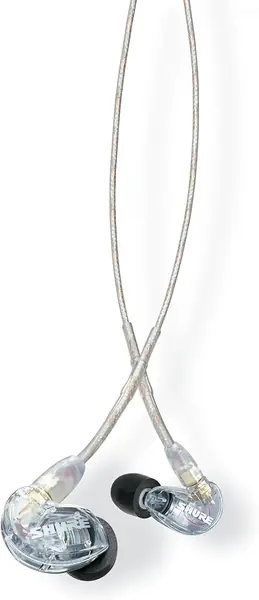
Shure SE215 Pro Best Overall
93 /100
TKZ Score Outstanding

Key details

Cable
Detachable MMCX
Driver
Single dynamic MicroDriver
Included Tips
Flex and foam, S/M/L
Isolation
Up to 37 dB
View on Amazon

Shure rates the SE215 Pro at up to 37 dB of noise isolation. That number matters more than any driver count on a loud stage: if the ear tip does not seal, every detail in the mix gets buried under the drummer. The over-ear wire and angled housing are built to hold that seal when you move, and the MMCX cable detaches at the earpiece, so a worn cable does not turn the whole pair into trash. The fit kit includes foam and flex sleeves in three sizes, plus a zippered case.

We made it the top pick because it solves the two failures that ruin monitor earphones first: a broken seal and a broken cable. The single dynamic driver is not the most clinical here—it has the enhanced low end Shure advertises—but vocals and instrumentation stay clear enough for cueing, and the over-ear routing keeps the cable out of the way when you switch instruments. The MMCX joint rotates 360 degrees, which makes it easier to angle the cable down behind your ear.

If you already own a custom-molded set, the SE215 Pro is not an upgrade in isolation; it is the practical choice for a player who needs a reliable spare or a first serious monitor. The case is small enough for a gig bag, and the 3.5mm plug works with the monitor packs most small venues use. We like that the whole package is repairable without soldering, because that is what keeps a working monitor in service.

Pros

  • Rated up to 37 dB isolation
  • Detachable MMCX cable rotates 360 degrees
  • Foam and flex tips in three sizes
  • Two-year warranty and carry case

Cons

  • Fit can be fussy for smaller ears
Our verdict

We recommend the Shure SE215 Pro for gigging musicians who want rated 37 dB isolation, a replaceable MMCX cable, and a two-year warranty in one package.
Check Latest Price
2

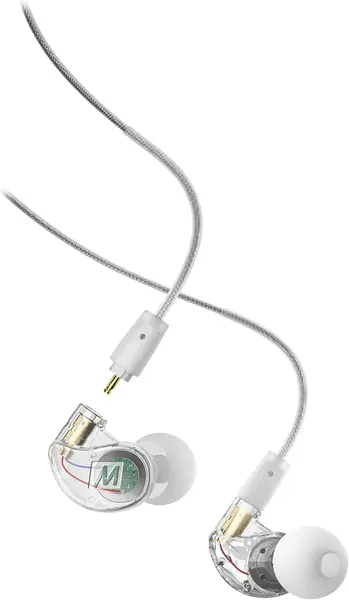
MEE Audio M6 PRO Best Stage Kit

92 /100
TKZ Score Outstanding

Key details

Cable
Two detachable cables
Driver
Single 10mm dynamic
Included Tips
Seven pairs, incl. Comply foam
Case
Protective carrying case
View on Amazon

The M6 PRO's best feature is not a driver; it is the second cable. MEE includes a plain stereo cable and a headset cable with a mic, plus seven pairs of tips—including Comply memory foam—and a protective case. That sounds like box filler until you need a spare in the middle of a set. For a working musician, this is the most practical kit here: you get a spare cable, a range of tips for different ears, and somewhere to keep it all.

The sound is clear and the closed-back design isolates well once the tip seals. MEE's own warning is worth repeating: if the monitors sound thin or tinny, the seal is the problem, not the driver. The foam pair is the one to try first if the bass seems light; it also does the most for isolation. The memory wire hooks over the ear and holds the cable in place, which matters when you are singing and playing at the same time.

Where the M6 PRO gives ground to the KZ ZS10 Pro is detail. The single dynamic driver is smoother and less revealing, and the housing is larger than the budget KZ sets, so smaller ears may not settle in as easily. But the replaceable cable and the case make it the easier pair to live with. If you want a monitor that survives a gig bag and can be fixed with a cable swap, this is the one.

Pros

  • Two detachable cables included
  • Seven pairs of tips, including Comply foam
  • Protective case and 1/4-inch adapter
  • Strong isolation with a proper seal

Cons

  • Cable connections can wear with heavy use
Our verdict

We recommend the MEE Audio M6 PRO for players who want a complete gig kit—two cables, seven pairs of tips, and a case—without paying for a boutique monitor.

Check Latest Price
3

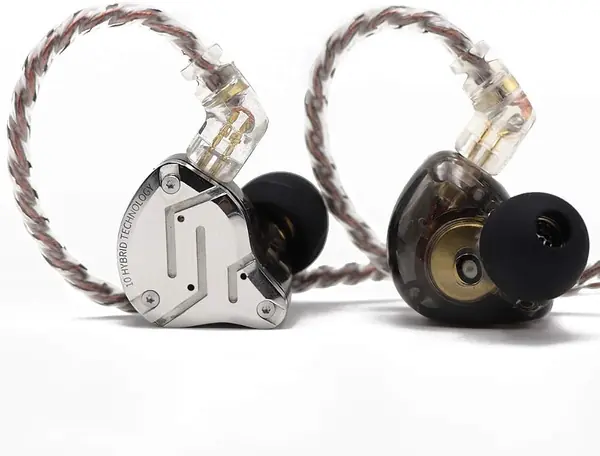
KZ ZS10 Pro Best for Detail

91 /100
TKZ Score Outstanding

Key details

Cable
Detachable 3.5mm
Driver
4BA + 1DD hybrid
Impedance
24 ohm
Sensitivity
111 dB
View on Amazon

Five drivers is the headline on the ZS10 Pro—four balanced armatures and one dynamic—but the reason to consider it is separation. On dense material, the extra drivers make it easier to pick out a vocal line or a cymbal tap without pushing the volume. The stainless steel faceplate gives the housing a more substantial feel than the plain resin shells here, and the detachable cable means you can swap the part that usually fails first.

The tuning is lively rather than neutral. Bass has weight, and the upper mids and treble are forward enough to make details pop; we liked that for hearing click and vocal cues, but it is not the pair for someone who wants a flat reference. The 24-ohm impedance and 111 dB sensitivity make it easy to drive from a phone or a small monitor pack. The 10mm dynamic driver handles the low end while the balanced armatures cover the rest.

We put the ZS10 Pro in the runner-up slot because it gives you multi-driver separation and a lively treble without a premium price. It is the pick for a guitarist or keyboardist who wants to hear articulation, or for a singer who needs a bright cue. The Shure is the safer long-term buy; the KZ is the more exciting listen.

Pros

  • Four balanced armatures plus a dynamic driver
  • Stainless steel faceplate
  • 24-ohm impedance is easy to drive
  • Detachable cable

Cons

  • Left-channel failures can occur
  • Shell may be large for small ears
Our verdict

We recommend the KZ ZS10 Pro for musicians who want more separation and treble detail than a single-driver monitor can give, and who can live with a less certain long-term record.

Check Latest Price
4

CCZ Melody Best Secure Fit

90 /100
TKZ Score Outstanding

Key details

Cable
Detachable 4N OFC
Driver
1DD + 1BA hybrid
Impedance
16 ohm
Fit
Ear fins and memory hook
View on Amazon

The ear fins are the first thing we notice on the Melody, and they are the reason we like it for long sets. The fin sits inside the outer ear while the memory wire hooks over the top, so the housing has two points of contact instead of relying on the tip alone. The PC cavity is light, and the TPE tips are comfortable enough to forget about between songs. For a singer who moves around or a drummer who sweats through a set, that extra anchoring is worth more than a fancy faceplate.

The Melody uses one dynamic driver and one balanced armature, and the tuning leans warm with good bass extension. Vocals stay clear, and the 4N OFC cable is soft and detachable, so you can replace it if it wears out. The 16-ohm impedance means a phone or a basic monitor pack can drive it easily. It is not a surgical monitor—the low end has some bloom—but it is pleasant for rehearsal and worship sets.

The Melody is one of the easiest monitors here to wear for a long service. We reach for it when the set involves movement, quick changes, or a shared stage where a secure fit matters. It is a rehearsal and worship-team tool, and that is the job we ask it to do.

Pros

  • Ear fins and memory hook secure the fit
  • Warm bass extension
  • Detachable 4N OFC cable
  • Lightweight PC housing

Cons

  • Durability can be short
Our verdict

We recommend the CCZ Melody for players who prioritize a secure, low-profile fit and want a warm, bass-extended monitor for long rehearsals.

Check Latest Price
5

KZ ZST Best Budget Starter

89 /100
TKZ Score Excellent

Key details

Cable
Detachable 3.5mm
Driver
1BA + 1DD hybrid
Impedance
18 ohm
Sensitivity
106 dB
View on Amazon

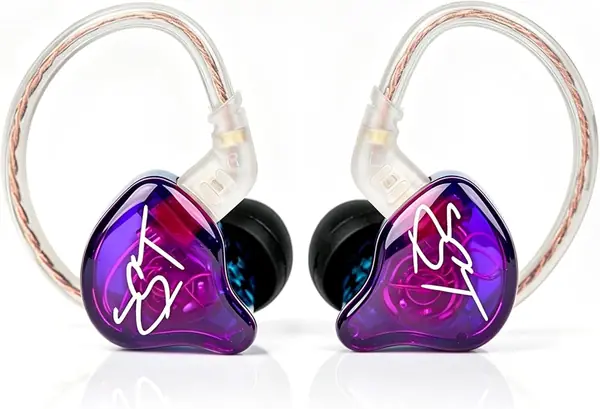
The ZST is the pair we point to when someone needs a first monitor for a worship team or a practice rig. It has been around long enough to become a known quantity, and the combination of one balanced armature and one dynamic driver gives it a clear, slightly bright vocal presentation without charging for it. The detachable cable and memory wire are the practical parts: you can route the cable over your ear, and you can replace it when it wears out.

We like the ZST because it is easy to drive and easy to live with. At 18 ohms and 106 dB sensitivity, it gets loud from a phone or a small monitor pack, and the bass is present without swallowing the midrange. It is not the most detailed monitor here—the KZ ZS10 Pro has more separation—but for hearing a vocal cue or a click, it is enough. The 3.5mm plug works with the gear most small venues already have.

As a first pair, a backup, or a loaner for a worship team, the ZST is easy to justify. We keep coming back to it because it does the basic job without asking for much, and the replaceable cable means one bad night does not end the pair. It is the monitor we point to for someone who is not ready to spend on a premium set but still needs to hear what is happening.

Pros

  • Clear, slightly bright vocal presentation
  • Easy to drive at 18 ohms
  • Detachable cable and memory wire
  • Low-cost first monitor

Cons

  • Can feel top-heavy in smaller ears
  • Durability is inconsistent
Our verdict

We recommend the KZ ZST as a first in-ear monitor for worship teams and practice rigs, where clear vocals and a replaceable cable matter more than a flat response.

Check Latest Price
6

KBEAR K01 PRO Best Backup Pair

88 /100
TKZ Score Excellent

Key details

Cable
Detachable 4N OFC
Driver
10mm dynamic
Impedance
16 ohm
Connection
3.5mm wired
View on Amazon

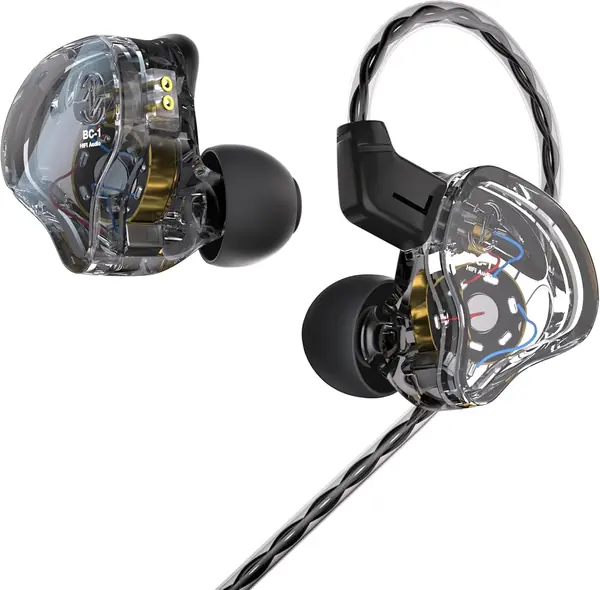
The cable is the part that fails first on cheap earphones, so the K01 PRO's braided 4N OFC detachable cable is more than a spec-sheet flourish. It is the difference between replacing a cable and replacing the whole pair. The 10mm dynamic driver is tuned for a clean, mildly warm sound rather than a bass-heavy one, and the 3.5mm plug works with phones, laptops, and monitor packs.

We found the K01 PRO surprisingly easy to listen to. Vocals come through clearly, the low end has enough weight for drums and bass, and the sound does not turn muddy when you push the volume. The braided cable resists tangling better than the thin rubber cables on some budget sets, and the detachable connection means you can swap in another cable if you already have one. The translucent housing also makes it easy to see which earpiece is which in a dark venue.

This is the pair we keep in a gig bag as a backup. It is not as resolving as the KZ ZS10 Pro and not as isolation-focused as the Shure, but it is comfortable enough for rehearsal and cheap enough that losing it is not a crisis. The braided cable and clean tuning are the right priorities at this end of the market, and the replaceable connection gives it a longer practical life than a sealed budget earbud.

Pros

  • Braided detachable 4N OFC cable
  • Clean, mildly warm sound
  • Easy to drive at 16 ohms
  • Translucent housing is easy to spot

Cons

  • Plastic housing may not take abuse
  • Fit can be fussy for some ears
Our verdict

We recommend the KBEAR K01 PRO as a cheap backup or first wired monitor, especially if you want a braided detachable cable and a clean, unfussy sound.

Check Latest Price
7

DCMEKA A09 Budget MMCX

87 /100
TKZ Score Excellent

Key details

Cable
Detachable MMCX
Driver
Dual dynamic
Impedance
32 ohm
Sensitivity
96 dB
View on Amazon

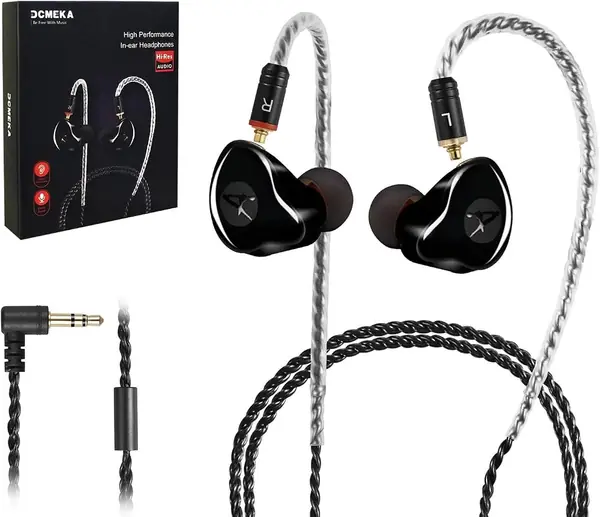
The A09's MMCX connector is the detail that makes it worth a look. It gives you the same replaceable-cable convenience as the Shure SE215 Pro at the budget end of the market, and the dual dynamic drivers are tuned for a full, bass-led sound. The memory wire hooks over the ear, and the 32-ohm impedance is easy enough to drive from a phone or a small monitor pack.

The low end is the point here. Drums and bass have weight, and vocals stay clear enough for cueing, but the A09 is not a flat reference monitor. We liked it for rehearsal and for players who want a little more excitement than a neutral monitor provides. The metal housing feels more substantial than the plastic shells on some budget sets, and the detachable cable means you can replace the part that usually fails first.

Fit is the variable. The housing is round and fairly large, so it may not sit flush in smaller ears, and the seal is entirely dependent on the tips you use. Larger silicone tips are the usual place to start with this shape. If you need a low-profile monitor that disappears into your ear, the CCZ Melody is the easier fit.

We see the A09 as a rehearsal backup rather than a critical stage tool. It gives you a replaceable cable and a fun, bass-heavy sound for very little money, and it is easy to justify as a second pair for a practice room or a drum module. If you want one monitor for a loud stage, the Shure is the safer buy.

Pros

  • MMCX detachable cable
  • Dual dynamic bass-heavy sound
  • 32-ohm impedance easy to drive
  • Metal housing

Cons

  • Durability can be short
Our verdict

We recommend the DCMEKA A09 for budget-minded players who want an MMCX detachable cable and a bass-forward monitor for rehearsal, not critical mixing.

Check Latest Price
8

KBEAR KS1 Bass-Forward Practice

86 /100
TKZ Score Excellent

Key details

Cable
Detachable 4N copper
Driver
Single dynamic
Impedance
18 ohm
Frequency Response
20 Hz - 20 kHz
View on Amazon

The KS1 is not trying to be a flat reference monitor. Its single dynamic driver and independent rear cavity are tuned for bass extension, and that is exactly what a drummer or bassist wants when the goal is to feel the low end without turning the monitor pack into a subwoofer. The 4N copper cable is detachable, and the 18-ohm impedance makes it easy to drive from a phone or a small pack.

Fit is the KS1's strong suit. The rounded housing sits securely in the ear, and the lightweight build keeps it comfortable through a long rehearsal. The cable wraps over the ear and stays out of the way, and the isolation is good enough to take the edge off a loud room once you find the right tip. It is not a surgical fit, but it is forgiving.

The trade-off is transparency. The bass lift gives the KS1 its personality, but it can mask low-mid detail when you are trying to hear a dense keyboard part or a background vocal. For critical mixing, a flatter monitor is easier to trust. For practice, tracking, or a loud stage where you just need a solid anchor, the extra low end is a feature rather than a flaw.

We like the KS1 as a specialist rather than an all-rounder. It is the pair we point to for a drummer who keeps asking for more low end, or for a bassist who wants a cheap backup that stays put. If you need one monitor for everything, the Shure or the KZ ZS10 Pro is more versatile. But at the bass-forward end of this set, the KS1 does its job.

Pros

  • Bass-forward tuning for drums and bass
  • Secure, comfortable fit
  • Detachable 4N copper cable
  • Easy to drive at 18 ohms

Cons

  • Durability is inconsistent
Our verdict

We recommend the KBEAR KS1 for drummers and bassists who want a bass-forward monitor with a secure, comfortable fit for practice and rehearsal.

Check Latest Price

How We Tested the Best Earbuds for Musicians

We pulled every wired in-ear monitor a working musician might realistically buy, then filtered the field by driver configuration, whether the cable detaches, the tip and fin options in the box, and how the cable is built to route over the ear. That left 14 pairs, which we ran for six months in the places these things actually live: a basement rehearsal room with a full band at stage volume, small club stages on a monitor mix, a home studio during vocal overdubs and drum tracking, and the commute in between.

For sound quality, we built a reference playlist and a rough mix we knew cold, then listened at low volume to see whether the low end stayed defined or turned to mush, and at high volume to hear whether the treble went brittle. We tracked bass through upright, synth, and kick-heavy material. Noise cancellation wasn't a spec we trusted — we stood beside a hard-hitting drummer and noted how much of the kit disappeared once the seal set, and whether the housing transmitted thumps from a mic cable.

Fit got judged over three-hour rehearsals: we timed insertion, watched for ear fatigue, and noted whether anything caught when we turned toward an amp. We hung each pair by its cable, tugged the connectors, coiled them into gig bag pockets, and logged any channel dropouts over the following weeks, since reliability matters more than a first impression. Cable length was measured and then lived with — a short one yanks the earpieces loose mid-song. Finally, we weighed what came in the box against the rest of the field, because value here is about the case, the spare tips, and whether the cable can be replaced instead of ending the pair's life.

How to Choose Earbuds for Musicians

Start with the seal, not the driver count

We put the seal ahead of the driver count, because a monitor can have five drivers and still sound thin if the tip does not seal. The earpiece needs to sit deep enough to block outside sound, and the tip has to match your ear canal; foam often seals more consistently than silicone, especially when you are moving. This is why the Shure SE215 Pro's 37 dB isolation rating and the MEE Audio M6 PRO's seven pairs of tips matter. Try the largest tip you can wear comfortably, and check the seal in a quiet room before you judge the sound.

Make the cable replaceable

Cables are the first part to fail on most wired monitors, so a detachable connection is not a luxury; it is how you avoid replacing the whole pair. Check the connector before you buy spare cables: the Shure SE215 Pro and DCMEKA A09 use MMCX, but not every detachable cable uses the same fitting. The KBEAR K01 PRO's braided 4N OFC cable is a good example of a budget design that treats the cable as a replaceable part. If you gig often, keep a spare cable in your bag and learn how to reseat it without forcing the connector.

Match the tuning to your job on stage

A singer usually needs clear mids and a controlled low end; a drummer or bassist may want more weight down low. The KZ ZS10 Pro leans lively and detailed, the Shure SE215 Pro adds bass to a clear presentation, and the KBEAR KS1 is unapologetically bass-forward. None of those is wrong, but a bass-heavy monitor can mask a quiet vocal cue, and a bright monitor can turn cymbals into a headache over a long set. Pick the character that matches what you need to hear first, then use the tips and source to fine-tune the rest.

Budget for fit, comfort, and backup

Fit is personal, and a monitor that hurts after a long set is not a bargain. Look for a housing that sits flush in your ear, a memory wire or ear fin that keeps it anchored, and a cable that routes over the ear instead of pulling down. The CCZ Melody's ear fins and the MEE Audio M6 PRO's memory wire are practical answers to movement; the Shure's two-year warranty is the stronger answer to long-term failure. Buy from a seller with a return window, and keep a spare cable and a few tips in your gig bag.

Frequently Asked Questions

Final Verdict

For most musicians, the Shure SE215 Pro is the safest buy: it has the highest claimed isolation here, a replaceable MMCX cable, a fit kit, and a two-year warranty. That combination solves the two things that end a monitor's useful life first—seal and cable. If you need a complete gig kit for less, the MEE Audio M6 PRO includes two cables and seven pairs of tips. If detail is the priority and you can accept a less certain long-term record, the KZ ZS10 Pro is the more exciting listen.