Best Basic Fitness Watches of 2026

A basic fitness watch asks you to take a lot on faith: that the step count is close, that the heart rate isn't invented, that the sleep score means something. I've worn a cheap band that put my resting heart rate at 112 while I sat at my desk, and another that tracked a four-mile run to within a few dozen steps of my phone. The right one answers "how much did I actually move today" without a subscription, a nightly charge, or a manual thick enough to be a warning sign.

After six months with 14 of them, a few patterns held. Battery claims get measured with the power-hungry extras switched off, so a "14-day" watch can need charging every five. The backlight matters more than any spec on the box — it's what you use at 2 a.m. and squint at in the sun. And looks count: a tracker you find ugly is one you quit wearing by week three.

The picks below earned a spot on my wrist, whether you want a bright screen that pairs cleanly with your phone or one button and nothing else.

The Best Basic Fitness Watches

1

MorePro Air6 Best Overall
86 /100
TKZ Score Excellent

Key details

Water Resistance
IP68
Display
1.52 inches LCD
Compatibility
iOS and Android
Weight
1.12 oz
View on Amazon

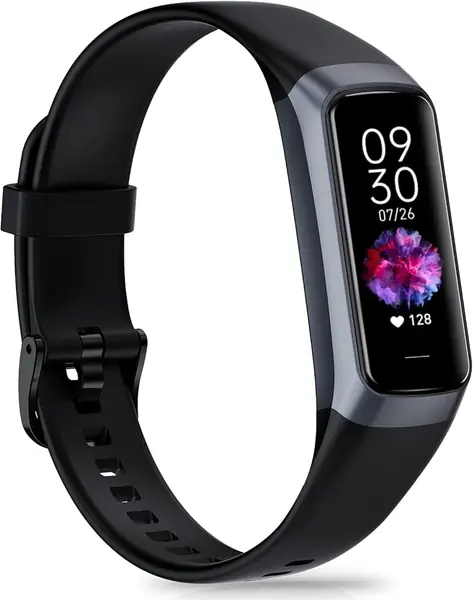
Plenty of inexpensive trackers are Android-only or iPhone-only, which is the first thing that goes wrong when you buy one for yourself and then try to set up a second for a parent on the other platform. The MorePro Air6 pairs with either, and none of it — steps, heart rate, sleep, workouts — requires a subscription. For a first fitness watch, that combination is most of the decision.

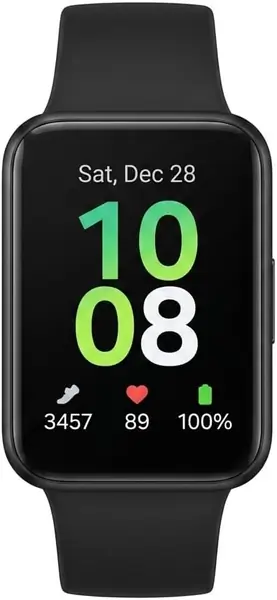
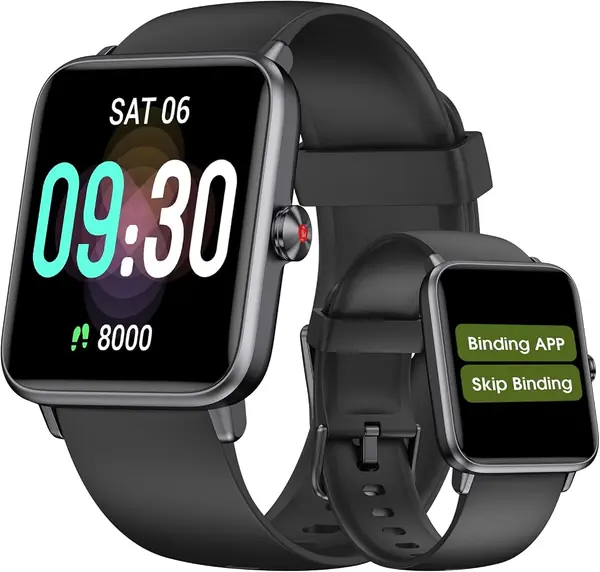
What we noticed in daily wear is how little there is to notice. At 1.12 ounces on a soft 20 mm silicone band, the watch stops being a thing on your arm, which is what makes wearing it overnight realistic, and the band is a standard width, so a worn strap isn't the end of it. The 1.52-inch screen is LCD rather than AMOLED, so it looks a little flatter than the Samsung's, but it's bright and the type is large.

A charge lasts about a week, and pairing with either an iPhone or an Android phone is the easy part of setup. The 120-plus sport modes are more than a beginner needs; we sorted through them once and went back to walking, and they don't crowd the main screen. Two readouts deserve skepticism: blood pressure and blood oxygen are wellness estimates rather than measurements a doctor would use, and last night's sleep data can land in the app a beat late.

Where it gives ground is the display and the cable. A week per charge is good rather than remarkable, and if you want the brightest screen in this group you'll pay more for the Galaxy Fit 3. What the MorePro buys in exchange is a watch that works with whatever phone is already in the house.

Pros

  • Works with iPhone and Android
  • Light 1.12-ounce build you can sleep in
  • No subscription for the basics

Cons

  • LCD screen, not AMOLED
  • IP68 only, not built for swimming
Our verdict

The one we hand to a first-time tracker buyer: it pairs with either phone, asks for no subscription, and disappears on the wrist.
Check Latest Price
2

Samsung Galaxy Fit 3 Best for Android Phones

85 /100
TKZ Score Excellent

Key details

Water Resistance
5ATM & IP68
Battery
Up to 14 days
Display
1.6 inches AMOLED
Compatibility
Android only
View on Amazon

A 1.6-inch AMOLED that reaches 1,000 nits is where to start: it's the biggest, brightest screen here, and the one you can read in direct sun without cupping a hand over it. At 36.8 grams the watch doesn't drag at your wrist, and the aluminum case looks better than the money suggests.

The rest of the package is complete in a way the cheap trackers aren't: sleep coaching, SpO2, all-day heart rate, automatic detection across 101 workout modes, and a 5ATM and IP68 rating that makes swimming a non-event. Battery is the variable. Samsung claims up to 14 days, and how many notifications you let through decides where you land in that range — leave everything on and expect to visit the charger more often than the box suggests.

Two details decide whether it's your watch. It's Android-only and will not pair with an iPhone at all, and this version is an international model with no US warranty, which changes your options if it fails in month nine. Carry a Galaxy phone and want the best screen for the money, and neither caveat should stop you — read the model number and the warranty line before checkout, because that's the part of the listing that's easy to skim past.

Pros

  • Biggest, brightest screen in this group
  • Swim-proof 5ATM and IP68 build
  • Automatic workout detection across 101 modes

Cons

  • Android only
  • International model without a US warranty
Our verdict

The best screen in this group, and the pick for anyone carrying an Android phone who wants a swim-proof tracker that runs for days.

Check Latest Price
3

Pautios EW1 Best Without a Phone

84 /100
TKZ Score Excellent

Key details

Battery
10 days
Sensors
Heart rate and blood oxygen
Case Size
41 mm
App Required
No
View on Amazon

The most useful thing about the Pautios EW1 is what you never do: no app to install, no account to create, no pairing dance, and no Bluetooth troubleshooting over the phone with someone who doesn't want to hear about it. Switch it on, put it on, and the steps, heart rate, and sleep are on the screen. That's why this is the one we point to when a tracker is a gift for a parent.

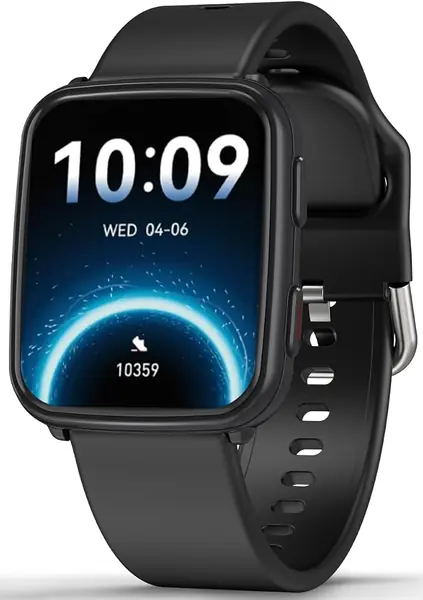
Precision is the trade. Step counts can run generous, and the heart-rate and blood-oxygen numbers are wellness-grade estimates rather than measurements. Treat them as a nudge in the right direction: the value is noticing that Tuesday was half of Monday, not the exact figure. The 41 mm case and the large color touchscreen are the other half of the argument — big text, few menus, nothing to learn.

Two practical notes. The 10-day battery means the cable can live in a drawer, but the connection at the watch is where charging trouble starts, so keep it findable. And because nothing leaves the watch, there's no long-term history — what you get is today's numbers, not a year of charts. If you want to scroll back through months, the MorePro is the better tool.

Pros

  • No app, account, or phone pairing
  • Large color screen with big text
  • Up to 10 days per charge

Cons

  • Step counts can read high
  • No history without an app
Our verdict

No app, no account, no pairing — the tracker for someone who wants to press one button and see their steps.

Check Latest Price
4

Bakoor Fitness Tracker Best for Small Wrists

83 /100
TKZ Score Excellent

Key details

Water Resistance
IP68
Display
1.10 inches AMOLED
Sport Modes
25
Sleep Tracking
Light and deep
View on Amazon

Small screen, short leash. The Bakoor's 1.10-inch AMOLED is the smallest display here, and it asks for the charger more often than anything else in this group. Neither is a dealbreaker at this end of the market, but you should know what you're trading before it goes on your wrist.

What you get back is a screen that punches above its money — AMOLED, where most cheap trackers settle for washed-out LCD — plus 25 workout modes, all-day heart rate, and a light-and-deep sleep breakdown in the Keep Heath app. The silicone band is soft and the whole thing is light, which is what decides whether sleep tracking ever actually happens. On a narrow wrist, that combination is rare.

Accept two things going in. There's no warranty in the box, so the working assumption is replace rather than repair, and the readings drift — step and distance totals won't always match the walk you just took. For a first tracker, a teenager's first watch, or a spare for the gym bag, neither is a reason to look elsewhere.

Pros

  • AMOLED screen at a budget price
  • Light and soft enough to sleep in
  • 25 workout modes plus sleep stages

Cons

  • Charges every three or four days
  • Sold with no warranty
Our verdict

A bright AMOLED tracker for very little money, best for small wrists, a first watch, or a gym-bag spare.

Check Latest Price
5

Casio WS-B1000 Best for A Watch First and a Step Counter Second

82 /100
TKZ Score Excellent

Key details

Water Resistance
100 m
Battery
2-year battery
Sync
Bluetooth to Casio app
Step Tracking
On-watch
View on Amazon

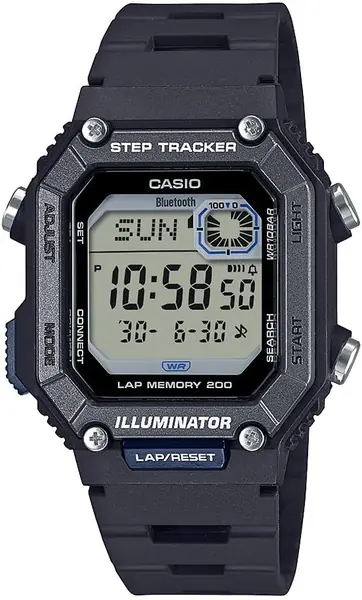
No heart rate. No sleep score. No nudge about how long you've been sitting. The Casio WS-B1000 counts steps, keeps time, and runs a chronograph behind a real watch face — which makes it the odd one out here, and exactly right for a particular kind of buyer.

What it does have is the watchmaker's version of the feature list: 100-meter water resistance, an LED illuminator, a daily alarm, a 100-second chronograph, and a two-year battery that takes charging off your list entirely. It's easy to read in sunlight, the backlight handles the dark, and pairing it with the Casio app once lets it set its own time — a nicer convenience than it sounds.

For anyone who wants a watch first and a step count second, this is the most satisfying thing in the roundup: it looks like a watch, it survives a swim, and it never asks for a cable. What it cannot do is tell you anything about your heart rate or your sleep, so it does nothing for training or recovery — it serves the person who wants credit for walking to the store and no lecture about REM cycles.

Pros

  • Two-year battery, no charging cable
  • 100-meter water resistance
  • Sets its own time over Bluetooth

Cons

  • No heart rate or sleep tracking
Our verdict

A step-counting watch for someone who wants a real watch face, 100-meter water resistance, and no charger — with no heart rate or sleep data at all.

Check Latest Price
6

Zeacool 5ATM Tracker A Cheap, Swim-Proof Second Tracker

81 /100
TKZ Score Excellent

Key details

Water Resistance
5 ATM
Battery
10 days
Display
1.10 inches AMOLED
Sport Modes
25
View on Amazon

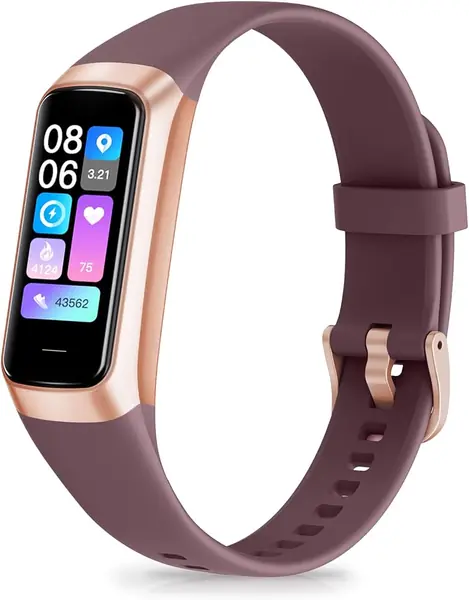
If the MorePro feels like a lot to spend on an experiment, the Zeacool is the cheaper way to find out whether you'll actually wear something on your wrist. It's the least expensive pick here, and it still gets you a 1.10-inch AMOLED screen, 5ATM water resistance — a real step up from IP68 if you swim — and the core set of heart rate, blood oxygen, sleep, and step tracking, plus 25 workout modes.

The screen is the honest trade. At 1.10 inches, time, steps, and heart rate read fine at a glance, but anything more detailed takes a squint, and the case comes in one color. The other thing to weigh is the app: pairing, notifications, and reminders are all part of the package, so this is a phone-connected tracker rather than a standalone one.

One caution. The 10-day battery rating is the maker's claim, and a smartwatch-style feature set usually means you'll charge more often than the box says. Buy it as a swim-bag spare or a cheap second tracker for the pool, and it's money well spent; expect it to be the watch you keep for years and you may be disappointed.

Pros

  • Least expensive pick here
  • 5ATM rated for swimming
  • 1.10-inch AMOLED screen

Cons

  • Small screen for detailed data
Our verdict

The cheapest way to try wrist tracking, with swim-proof water resistance and an AMOLED screen — a low-stakes experiment rather than a long-term keeper.

Check Latest Price

How We Chose and Tested the Best Basic Fitness Watches

We built the shortlist by pulling every tracker shoppers had actually bought in volume, from drugstore pedometers to name-brand bands, then filtering on the basics: a screen you can read outdoors, at least a week of real-world battery, water resistance rated for showering or swimming, and no subscription standing between you and your own data. Anything paywalled got cut. That left 14 units, which we wore for six months — through workdays at a desk, morning runs, overnight sleep, and showers.

Accuracy came first. I wore a chest strap on every run and compared average and peak heart rate afterward, and I counted steps by hand on a measured quarter-mile loop, then again while pushing a shopping cart through the grocery store, which is the classic failure case for wrist-based step counting. We also timed how quickly each one caught up after we stopped moving, since a laggy sensor is worse than none at all.

Then the everyday stuff. We charged each to full and ran it to zero with notifications on to see what the battery claim actually meant, and we set each one up on both an iPhone and an Android phone, timing the box-to-first-reading process and noting where pairing stalled. We checked the backlight in direct sun, in a dark bedroom, and at 2 a.m., and we wore each one to the office and to dinner to see whether it read as a watch or a rubber wristband. At the end of the six months, we looked at straps and cases for cracking and discoloration — a cheap tracker that falls apart in a season isn't a bargain.

How to Choose a Basic Fitness Watch

Decide Whether You Want a Phone in the Loop

The first fork isn't brand or price — it's whether the watch talks to a phone at all. An app-based fitness tracker like the MorePro Air6 or the Bakoor gives you history, trend lines, and a sleep breakdown you can scroll. A watch like the Pautios keeps everything on the wrist and shows you today.

The trap with no-app designs is that there is no history and no software fixes later, so they suit someone who wants a number, not a record. Be honest about who is wearing it.

Check the Phone First, Then the Model Number

The most disappointing purchases in this category go wrong before the watch is even on a wrist. The Galaxy Fit 3 will not pair with an iPhone at all, and a few listings are international models sold without a US warranty — the same hardware with a different return path if something fails.

Read the compatibility line and the warranty line on the exact listing you're buying. If you're shopping for someone else, ask what phone they carry before you pick a favorite.

Plan the Charging Ritual, Not the Battery Claim

Battery claims here run from a few days to two weeks, and the gap is mostly usage: notifications, continuous heart rate, and a bright screen all pull the number down. Rather than chase the biggest figure, pick a cadence you'll keep — most people manage it while they shower.

Then check what the charger is. These are proprietary cables, and a lost one can sideline a perfectly good watch for a week while a replacement ships.

A Bigger, Brighter Screen Keeps the Watch On

Screen size isn't vanity. A 1.1-inch panel is fine for time and steps, but a 1.5-inch or larger AMOLED is what makes a watch readable outdoors, behind a windshield, or with less-than-perfect eyesight, and a watch you can read is one you keep wearing.

The trade is bulk and weight on a small wrist. If you plan to sleep in it, the smaller, lighter band usually wins.

Treat the Health Numbers as Trends

Wrist sensors are good at direction and poor at precision. Step counts drift, heart rate lags during intervals, and blood pressure or blood oxygen on an inexpensive tracker is a wellness estimate, not a clinical measurement.

Judge your week rather than your minute, and if a reading ever looks alarming, check it on a device built for the job. That isn't a knock on these watches — it's simply what an optical sensor on a wrist can do.

Frequently Asked Questions

Final Verdict

For most people, the MorePro Air6 is the right first fitness tracker: it works with an iPhone or an Android phone, covers the four things that matter without a subscription, and sits lightly enough on the wrist that you'll keep it on overnight.

Two situations change that. Carry an Android phone and want the best screen in this group, and the Galaxy Fit 3 is the better watch, provided the warranty line checks out. Or, if the wearer won't touch an app, the Pautios does the whole job from the power button.