Best Apple Watches for Runners

A running watch only has one job until it has several. For years I wore a dedicated GPS watch that nailed my splits and did nothing else — no music, no texts, no way to call for a ride when a run went sideways. An Apple Watch fixes all of that, then hands you a new set of questions: which model, how much battery you really need, and whether a renewed unit is a bargain or a gamble.

We logged runs with 10 of them over eight months — road miles, treadmill intervals, track workouts, a few soggy mornings — and wore each one overnight to judge the sleep and health data. The gap between the cheapest and priciest model shows up in battery life, glass, and connectivity long before it shows up in pace accuracy. Every one paired to my iPhone in under a minute.

The picks below are the ones that kept up on the days I asked the most of them, from a 40mm case on a narrow wrist to titanium models that shrugged off a curb scrape.

The Best Apple Watches for Runners

1

Apple Watch Ultra 4 Best Overall
95 /100
TKZ Score Outstanding

Key details

Case
49mm titanium
GPS
Precision dual-frequency
Connectivity
GPS + Cellular
Max Workout Battery
Up to 45 hours
View on Amazon

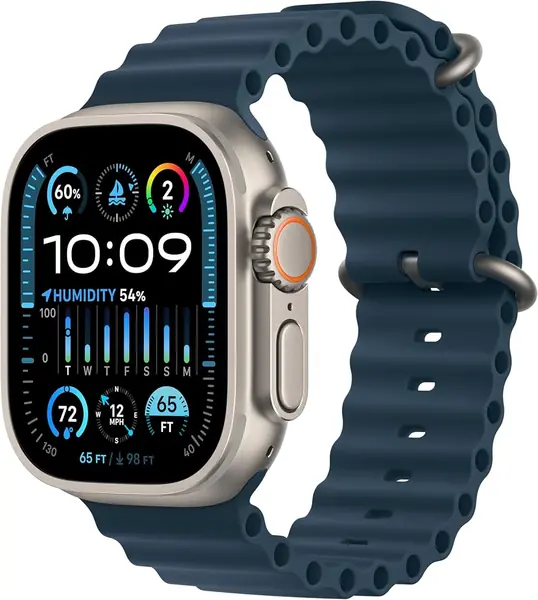
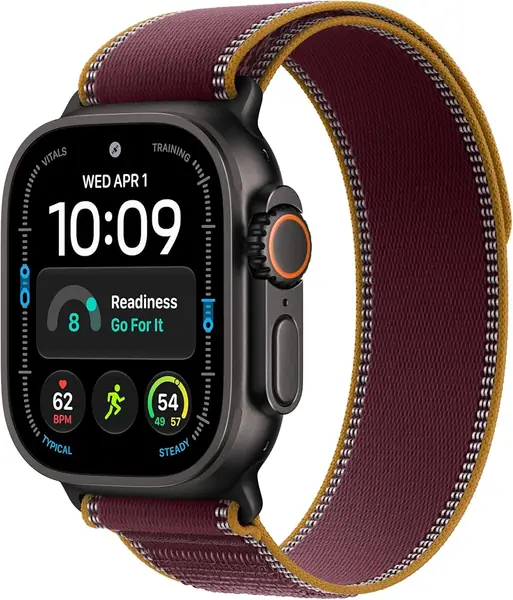
Forty-five hours is the number that makes this the runner's Apple Watch. That's how long the Ultra 4 can keep logging an extended workout, which means a five-hour trail effort or a full marathon doesn't start with a charging calculation the night before. Every other watch here asks you to think about charge; this one asks you to think about the route.

Precision dual-frequency GPS is the second thing worth paying for. On a city loop, dual-band positioning is what keeps the recorded track on the street you actually ran instead of bouncing between buildings, and it holds a line under tree cover where single-band watches tend to wander. We paid close attention to that specification, because it's the one that decides whether the map afterward is worth looking at.

The recovery side has grown up too. Heart rate variability readings land as often as every five minutes, and the readiness score turns them into a single answer about whether to push or back off — genuinely useful when you're stacking training days and your legs are the last thing to admit it. Charging is quick enough to fit into a shower and breakfast rather than an evening.

What we haven't glossed over is the size. A 49mm titanium case is the biggest thing in this roundup, and on a narrow wrist it wears like equipment rather than a watch. If that's a dealbreaker, the Series 11 handles daily training in a 42mm case — you're trading dual-frequency GPS and a multi-day battery for something you forget you have on.

Pros

  • Up to 45 hours of workout tracking
  • Precision dual-frequency GPS
  • Readiness score and frequent HRV readings
  • Built-in cellular for phone-free runs

Cons

  • Highest price of any pick here
Our verdict

If your training is the point rather than the byproduct, the Ultra 4 is the Apple Watch to buy — it's the only one here that stops battery math from shaping your run.
Check Latest Price
2

Apple Watch Series 11 Best for Everyday Training

94 /100
TKZ Score Outstanding

Key details

Case
42mm aluminum
Health
ECG and hypertension alerts
Display
Always-On Retina
Running Tools
Pacer, heart rate zones, training load
View on Amazon

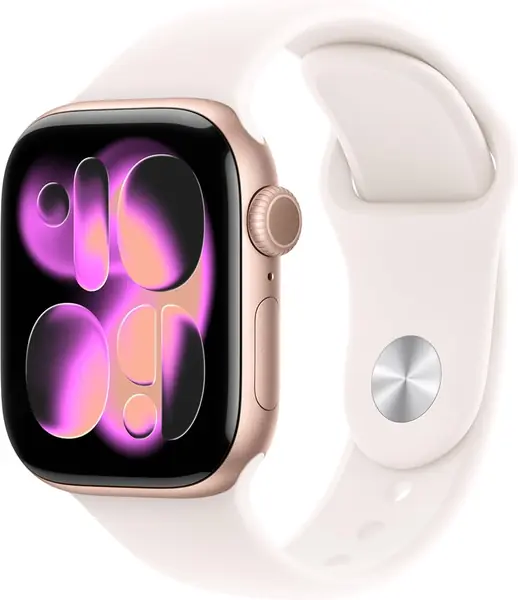
For most runners this is the sensible purchase: a 42mm aluminum case light enough to forget about, the training tools that actually influence a session — Pacer to hold a goal pace, heart rate zones to keep an easy day easy, training load to show when a hard week has stacked up — and an always-on display you can read at a glance mid-stride. That combination covers more real training than any single headline feature on this page.

The health features are where it separates from the SE 3. ECG and hypertension notifications give you a reason to keep it on during the other 22 hours, and the sleep score turns a night of data into something you can act on the next morning. Setup and pairing are as frictionless as the rest of the lineup; we've never once had to think about the connection.

Battery is the honest cost. You're charging this one nightly, and charging is quick enough that a shower covers the top-up, so the routine is manageable — but a marathon means a deliberate charge beforehand rather than a spur-of-the-moment start. The bigger gap to the Ultra 4 shows up on long remote efforts and on routes where dual-frequency GPS earns its keep. For weekday miles and a couple of races a year, we don't think you'll miss it.

Pros

  • Pacer, heart rate zones, and training load
  • Always-on display readable at a glance
  • ECG and hypertension notifications

Cons

  • One-day battery needs planning for long races
Our verdict

For the runner who wants one watch for training and the rest of the day, the Series 11 is the balanced buy and the one we point most people toward.

Check Latest Price
3

Apple Watch SE 3 Best Budget Pick

93 /100
TKZ Score Outstanding

Key details

Case
40mm aluminum
Health
Temperature sensing, Vitals app
Battery
18 hours
Charging
Twice as fast as SE 2
View on Amazon

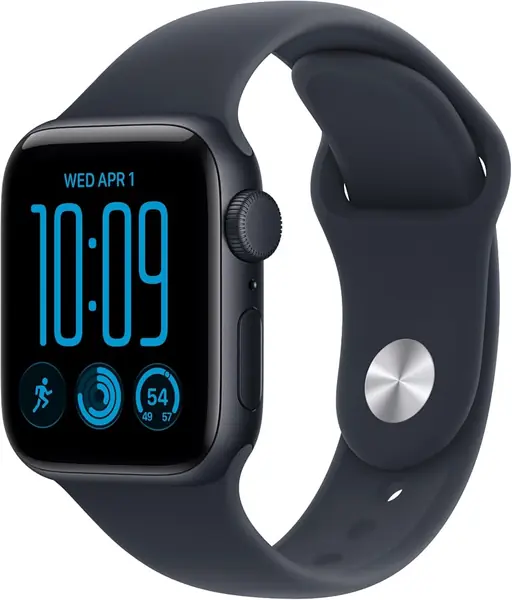
This is the least expensive way into a current Apple Watch, and for a lot of runners that's the entire argument. The SE 3 logs runs with real-time metrics, tracks temperature and overnight vitals for the Vitals app, and carries fall and crash detection — the features people actually use — inside a 40mm case that sits neatly under a sleeve. We like it most as a first watch, or as a second one for someone who runs to stay fit rather than to chase splits.

Eighteen hours is the honest limit, and it's the number to take seriously if you're training for a marathon: this is a watch you charge nightly, not one that carries you through a five-hour effort. Charging is twice as quick as the SE 2, so a top-up while you shower and eat breakfast covers a normal day, and that's the rhythm most owners of a watch like this settle into. Two days of back-to-back long runs and you'll want a charger in the car.

Pros

  • Lowest price of any current model here
  • 40mm case stays out of the way
  • Fast charging, twice as quick as the SE 2
  • Fall and crash detection included

Cons

  • Simpler training analytics than the Series 11
Our verdict

The SE 3 is the right buy for a first watch or a runner who wants the basics done well without paying for training analytics they'll never open.

Check Latest Price
4

Apple Watch Ultra 2 (Renewed) Best Value Rugged Pick

88 /100
TKZ Score Excellent

Key details

Case
49mm titanium
Battery
36 hours
Water Resistance
100 meters
Brightness
3000 nits
View on Amazon

Set this beside the Ultra 4 and the trade is straightforward: less stamina, a lot less money. What you keep is the 49mm titanium case, 100-meter water resistance, a 3,000-nit display that stays legible in direct sun, and a 36-hour battery that covers a marathon plus the day around it. Renewed is how a lot of runners get into an Ultra in the first place, and this is the strongest version of that deal here.

The Action button is the detail we kept coming back to. One press starts a run without looking down at the screen, which matters a great deal more in gloves or rain than it sounds on a spec sheet, and the larger Digital Crown is easier to work with cold hands. It's the kind of thing you stop noticing after a month and then miss badly on any other watch.

Renewed is where the caveat lives, and it isn't the watch itself. The head generally arrives looking new, but the bundled band and charging puck are frequently not Apple parts, and a slow third-party charger quietly undercuts the whole point of a big battery. Price a genuine band and charger into the purchase and you're still well ahead of new — just don't count on the box contents to be the real thing.

Pros

  • 36-hour battery covers a marathon day
  • Titanium case with 100-meter water resistance
  • 3,000-nit display readable in sunlight
  • Far cheaper than the Ultra 4

Cons

  • Bundled band and charger are often not Apple parts
  • Battery health varies between units
Our verdict

This is the smart buy for a runner who wants Ultra hardware and a multi-day battery without paying Ultra 4 money, as long as the accessories get replaced.

Check Latest Price
5

Apple Watch Ultra 3 (Renewed) Multi-Day Battery

87 /100
TKZ Score Excellent

Key details

Case
49mm titanium
Connectivity
GPS + Cellular
Weight
2.18 oz
Battery Capacity
564 mAh
View on Amazon

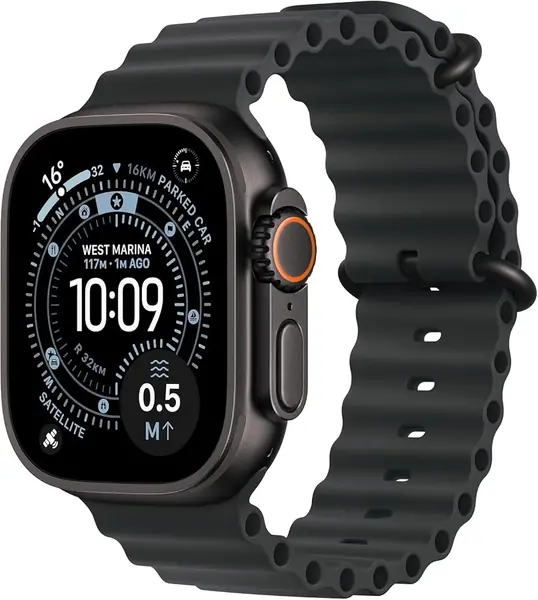
Forty-nine millimeters sounds like a lot until it's on a wrist. The Ultra 3 wears like a sports watch rather than a slab, and the black titanium finish is the least gadget-like thing in this lineup. It's the newest Ultra you can buy refurbished, cellular is built in so the phone can stay home, and the OLED face is bright enough to read in flat afternoon sun.

Battery is the reason to pick it over a standard Series watch. The 564 mAh cell is sized for multi-day use, so even with a daily GPS session you're charging every few days rather than every night. The catch is the warranty: renewed units carry 90 days, which is why it's worth putting the watch through a week of real runs — a long GPS session, a wet one, a full charge cycle — while you're still covered.

Pros

  • Multi-day battery for daily GPS sessions
  • Cellular built in for phone-free runs
  • Titanium case with an OLED display

Cons

  • Renewed units carry only a 90-day warranty
Our verdict

A good buy for the runner who wants the newest refurbished Ultra and multi-day battery, provided the short renewed warranty doesn't put them off.

Check Latest Price
6

Apple Watch Ultra (Renewed) Best for Cheap Dual-Band GPS

86 /100
TKZ Score Excellent

Key details

Case
49mm titanium
Battery
36 hours
GPS
Precision dual-frequency
Water Resistance
100 meters
View on Amazon

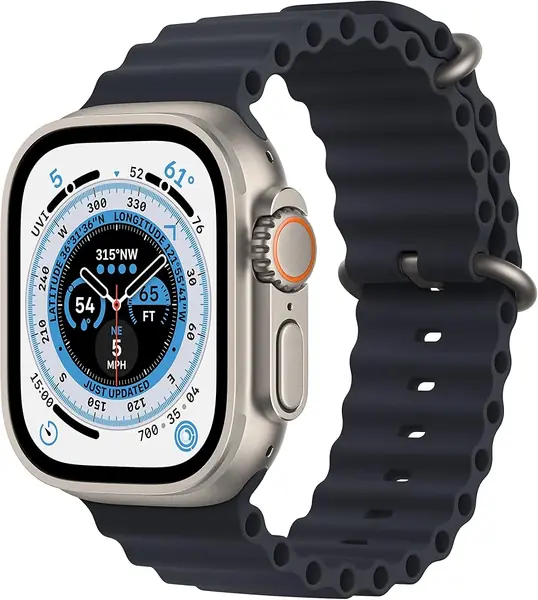
Dual-frequency GPS is the feature that keeps this three-generation-old watch relevant. Nothing at the SE 3's end of the lineup has it, and on a route that threads between buildings or runs under heavy tree cover, dual-band positioning is what keeps the recorded track on the street you actually ran. Add a 36-hour battery, 100-meter water resistance, and an Action button, and the running case is still intact.

Battery health is the real question with any renewed first-generation Ultra. The cell has years on it, so check the health figure the moment the watch arrives and use the return window if it's low rather than talking yourself into living with it. That check is the difference between a bargain and a paperweight, and it takes about a minute in Settings.

Pros

  • Precision dual-frequency GPS
  • 36-hour battery
  • Titanium case with 100-meter water resistance

Cons

  • Ocean Band pins can fail
Our verdict

Worth it for a runner who wants dual-frequency GPS on a budget and is willing to check the battery the day it arrives.

Check Latest Price
7

Apple Watch Series 9 Best for Small Wrists

85 /100
TKZ Score Excellent

Key details

Case
41mm aluminum
Health
Blood oxygen, ECG, sleep stages
Running
Workout app with advanced metrics
Controls
Double Tap gesture
View on Amazon

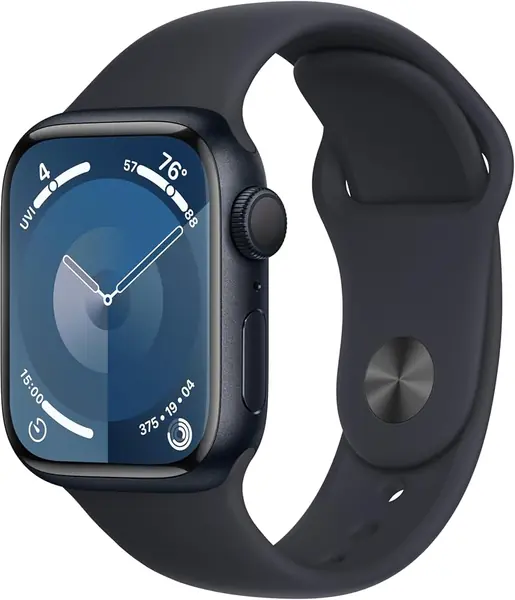
Double Tap is the Series 9 feature that earns its place on a run: pinch thumb and forefinger to answer a call or scroll a notification when one hand is holding a bottle and the screen is wet. The 41mm case is the second smallest here after the SE 3, and blood oxygen, ECG, and detailed sleep stages cover the hours you're not training. For a narrow wrist it's a comfortable watch rather than one you're tolerating.

As a training watch it's the previous version of the Series 11's toolkit — the Workout app with advanced metrics, heart rate and sleep data feeding the Health app, and enough accuracy for everyday distance and pace. If you follow a pace target on a weekly tempo run, it handles the job without the newer watch's extra layers.

Where it loses ground is availability and generation. This configuration is down to its last units, and the sensors and training features here sit a step behind the Series 11's. If you find it well below the Series 11, that's a fair trade for most runners; if the two are close in price, buy the newer watch and don't think about it again.

Pros

  • Double Tap works with wet or gloved hands
  • 41mm case suits smaller wrists
  • Blood oxygen, ECG, and sleep stages

Cons

  • Needs a daily charge
Our verdict

A tidy small-wrist runner at the right price, though the Series 11 is the safer buy unless this one lands well below it.

Check Latest Price

How We Tested Apple Watches for Running

We started with the current lineup and the renewed listings sold alongside it, then narrowed by size (the 40, 41, and 42mm bodies versus the 49mm cases), GPS-only versus cellular, and case material, since those three choices drive most of the price difference. Ten watches came home with us and stayed for eight months.

Every watch went through the same week: three easy runs, one interval session on the track, a long run, and at least one treadmill session, with GPS and streaming music on and the always-on display left alone so we could watch the battery fall in real percentages instead of marketing hours. We wore each one overnight for at least five nights and compared heart-rate readings during intervals against a chest strap. Each also went into the shower and the pool, after which we checked whether the speaker still sounded clear.

Scratch resistance got tested the unglamorous way — keys rattling in a gym bag, doorframes, one accidental pavement scrape — and we inspected the glass and case at the end of each week. Because two units were renewed, we looked hard at condition: pairing each to an iPhone before anything else, pulling up the battery health reading, checking the case and band for wear, and confirming the model in Settings matched the listing. We also timed a full charge from zero on the included puck and set each watch on a third-party stand to see whether a cheap accessory would do the job.

Finally, we wore them to the office, out to dinner, and to bed with different bands swapped in, because a watch that only looks right in running clothes tends to end up in a drawer.

How to Choose an Apple Watch for Running

Read the workout battery number, not the day number

Most of these watches are quoted as all-day devices, but what matters on a run is how long the watch keeps GPS and heart rate running in workout mode. The SE 3's 18 hours covers a daily 5K and a night of sleep tracking and nothing much longer. The Ultra 4's 45-hour extended workout mode is the one that removes the arithmetic entirely.

Fast charging closes part of the gap. If a shower and breakfast is enough to get you back to full, a daily-charge watch is a routine rather than a problem — so decide whether you're buying for weekday miles or for a five-hour effort, and pay accordingly.

Where you run decides how much GPS accuracy is worth

Dual-frequency GPS holds a tighter line in cities, canyons, and heavy tree cover, and it's the main reason the Ultra models cost more than a Series watch. If your routes are open roads, park paths, and a high school track, a standard GPS watch logs distance and pace well enough that you won't notice the difference.

If your loop threads between tall buildings or heads into woods, pay for the dual-band models. The route map afterward is half the reason to wear a watch at all, and a track that zigzags through apartment blocks is not a map of your run.

Buy the training data you'll actually read

Pacer, heart rate zones, and training load live on the Series 11; the Ultra 4 adds a readiness score built from more frequent HRV readings. Those tools change how you train only if you look at them. Be honest about whether you'll check a readiness score before a Tuesday easy run.

If the answer is no, a 42mm Series watch or an SE 3 covers the same miles with a lot less to scroll past. Extra metrics you ignore aren't a feature, they're a screen you swipe away from.

Size and weight are a real commitment at 49mm

The Ultra line runs 49mm; the Series 11 is 42mm and the SE 3 is 40mm. On a narrow wrist that difference is the difference between a watch you forget about and one you notice at mile ten, especially with a heavier band fitted.

The trade runs both ways: a smaller case usually means a smaller screen to read splits on. If you can, try the case size on before you order rather than judging it from a product photo.

New or renewed: check the accessories and the battery

Renewed Ultras are the cheapest way into the big battery and the titanium case, and the watch head usually arrives in good shape. Two things to price in: the bundled band and charging puck are often not Apple parts, and battery health depends on the individual unit you receive.

Buy renewed with a plan — test the battery in the first week, keep the box, and budget for a genuine band if the one in the box feels cheap. The savings still work, but only if you account for them honestly.

Frequently Asked Questions

Final Verdict

The Ultra 4 earns the top spot on the two things a runner can't work around: 45 hours of extended workout tracking and dual-frequency GPS. If your long runs top out around a half marathon and you want one watch for the rest of the day too, the Series 11 covers the same training ground in a 42mm case and asks far less of your wrist.

Buy the Ultra for the distance. Buy the Series 11 for everything else.