Best Wireless Headphones with Good Bass of 2026

Bass is the easy part of headphone tuning and the hard part to get right. Any pair can push the low end until a kick drum thumps your chest, but go too far and vocals turn woolly, cymbals disappear, and a two-hour commute becomes a headache. The ones worth buying give you the thump and keep the rest of the song intact.

A few years of listening taught me that bass lives or dies by the seal. Break the seal on an earcup and the low end evaporates, which is why fit matters as much as any driver spec. Noise cancellation turns out to be a bass feature too — every bit of engine rumble it erases is volume you don't have to add.

Over the past eight months, my team and I have worn 14 pairs through commutes, gym sessions, and long afternoons at a desk. Somewhere in the list below is the pair that suits how you listen — and how much low end you actually want.

The Best Wireless Headphones with Good Bass

1

Skullcandy Crusher Evo Best Overall
95 /100
TKZ Score Outstanding

Key details

Battery Life
Up to 40 hours
Bass Control
Adjustable Crusher slider
Quick Charge
10 minutes for 4 hours
Noise Handling
Passive isolation
View on Amazon

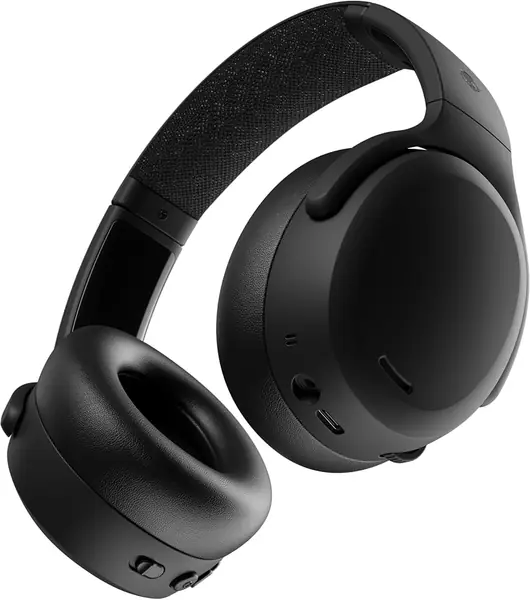
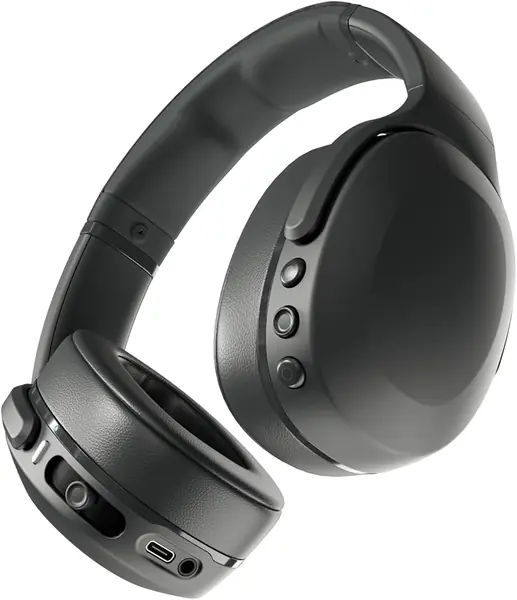
The slider on the left ear cup is the reason this pair exists. Push it up and a second set of bass drivers joins the two 40mm full-range ones, so a kick drum stops being a sound and becomes something you feel along your jaw; pull it back and the Crusher Evo turns into a fairly even-tempered set of over-ear headphones that handles podcasts and calls without booming. Only Skullcandy's own Crusher ANC 2 hands you the same control, and it costs meaningfully more.

Everything around that slider is built for long use. The battery is rated at 40 hours, and ten minutes on USB-C buys another four — the sort of thing you notice the week you forget to charge the night before. It folds flat into a hard case that ships in the box alongside a 3.5mm cable, and the app runs a short hearing analysis that shapes the output to your ears. We came back to the flatter settings for spoken word: the full-bass position is fun for about two songs and then it's exhausting.

Where it gives ground is quiet. The cups seal and the heavy bass masks a lot, but there's no adjustable cancellation circuit here, so a packed bus still gets through on quieter tracks — that's exactly what the extra money on the ANC 2 buys. The sliding rails in the headband are also a hair trap, worth knowing if you have long hair and habitually pull the cups on one-handed.

Pros

  • Adjustable bass slider, subtle to seismic
  • 40 hours with a 10-minute top-up
  • Folds flat into an included hard case
  • Soft pads stay comfortable for long sessions

Cons

  • Passive isolation only, no adjustable ANC
  • Headband rails catch long hair
Our verdict

We think this is the pair to buy if bass is what you're chasing: the slider gives you as much as you want, and the battery and folding case make it easy to live with.
Check Latest Price
2

Soundcore Q20i Best Value

94 /100
TKZ Score Outstanding

Key details

Battery Life
40 hours with ANC
Noise Control
Hybrid ANC, 4 mics
Pairing
Two devices at once
Bass Feature
BassUp with app EQ
View on Amazon

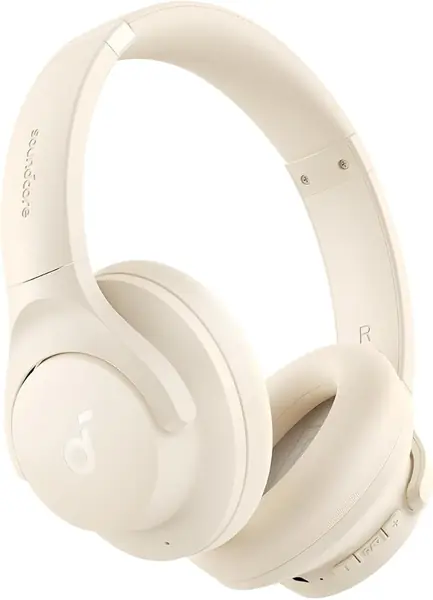
The Q20i is the argument that you don't have to spend much to get most of the way there. For a fraction of what the Bose costs you get four microphones doing genuine hybrid cancellation, a rated 40 hours with noise cancelling switched on, and simultaneous pairing with a laptop and a phone — a small thing until you're taking a call in the middle of a playlist.

BassUp is the headline, and we think it earns the name at moderate settings: warm and forward without swallowing the vocal. The app's EQ presets matter more than the marketing does, and the trick most people miss is the included 3.5mm cable — plugged in, the low end takes another step up over what Bluetooth delivers, which makes these a good match for a laptop with a headphone jack.

Two things to plan around. The headband runs loose on smaller heads, so expect the shortest setting and a slight forward tilt, and the cups hold heat, which puts a practical limit of about an hour in a warm room. A case isn't in the box either, so add one first if these will travel.

Pros

  • Real hybrid ANC at a budget price
  • BassUp plus EQ presets in the app
  • Stays paired to two devices at once
  • Wired mode pushes the bass further

Cons

  • Cups hold heat after an hour
  • No case included in the box
Our verdict

This is the one we point to when the budget is tight: real cancellation, a 40-hour battery, and BassUp that goes further the moment you plug in the cable.

Check Latest Price
3

Bose QuietComfort Best Noise Cancellation

93 /100
TKZ Score Outstanding

Key details

Battery Life
Up to 24 hours
Noise Control
Active noise cancellation
EQ
Bass, mid, treble sliders
Weight
8.47 oz
View on Amazon

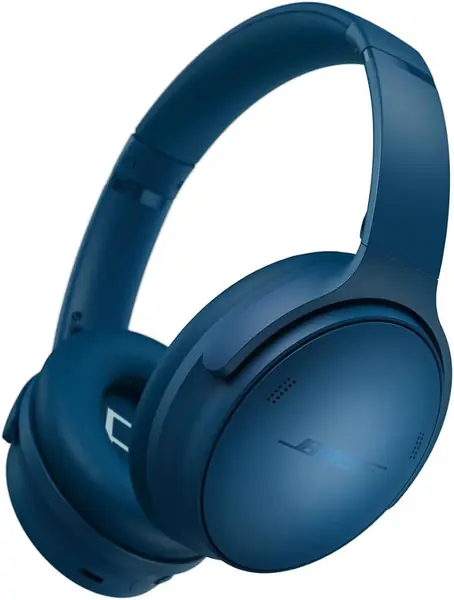
The Crusher Evo makes more bass; the QuietComfort makes less noise. If the loudest part of your day is a train, a shared office, or a cabin at altitude, that's the trade worth making, and this is the pair that makes it best.

We were also impressed by how little the quiet costs you in comfort. At 240 grams with plush, roomy cushions, these are the pair here that disappears for a four-hour stretch, and the adjustable EQ gives you separate bass, mid, and treble sliders rather than one blunt preset. Add bass and you get weight and warmth; you don't get the physical shove of the Skullcandy slider, which is the right call for anyone who listens to more than one kind of music.

The friction sits elsewhere. Pairing is easy, but stutter and dropped connections are the weak spot on this model in a way they aren't on the JBL, and the two listening modes — Quiet and Aware — are the genuinely useful part of the software. You pay the most for this one, and what you're buying is silence and padding rather than low end.

Pros

  • The strongest cancellation in this group
  • Plush 240 g build that lasts for hours
  • Separate bass, mid, and treble sliders
  • Quiet and Aware modes plus a 3.5mm cable

Cons

  • Bluetooth stutter and dropouts
  • Priciest pick in this group
Our verdict

Buy it for the quiet and shape the bass yourself; when the noise around you is the bigger problem, this is the pair we hand over.

Check Latest Price
4

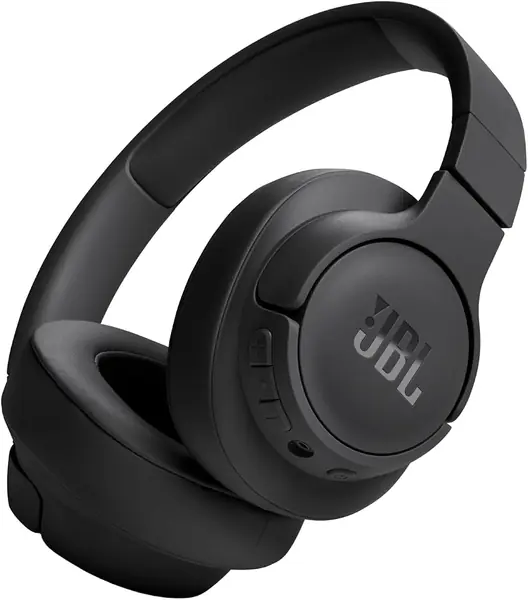
JBL Tune 720BT Best Battery Life

92 /100
TKZ Score Outstanding

Key details

Battery Life
Up to 76 hours
Weight
7.76 oz
Bass Feature
JBL Pure Bass
Bluetooth
5.3 with multipoint
View on Amazon

Seventy-six hours is the number that separates the Tune 720BT from everything else here. Charge it on a Sunday and it lasts most of a month of commuting; two hours on USB-C fills it back up, so the cable lives in a drawer rather than in your bag. We think that alone justifies the money for anyone who has watched a pair die halfway through a journey.

The sound is the JBL house tuning — warm, bass-forward, and friendly to pop and hip-hop without the bloom that smothers detail. The free app adds preset EQ modes and a custom curve if the default is too polite for you, and Bluetooth 5.3 with multipoint means a laptop call doesn't cost you your music. At 220 grams and folding flat, it's the pair in this group that's easiest to carry.

Two things to know first. There's no active cancellation here — the cups seal and the tuning masks, which is fine in an office and not fine on a plane. And the cups run on the small side: on a larger head they sit closer to a big on-ear than a true over-ear, comfortable for some and cramped for others.

Pros

  • 76 hours on a charge
  • Pure Bass tuning with app EQ presets
  • 220 g and folds flat for a bag
  • Bluetooth 5.3 with multipoint

Cons

  • No active noise cancellation
  • Cups run small for larger heads
Our verdict

We recommend it to anyone who charges on a schedule and hates doing it: 76 hours covers a month of commutes, and the tuning is warm enough that you won't miss a slider.

Check Latest Price
5

Skullcandy Crusher ANC 2 Best Bass and Noise Cancellation

91 /100
TKZ Score Outstanding

Key details

Battery Life
Up to 60 hours
Noise Control
Adjustable 4-mic ANC
Pairing
Multipoint
Bass Control
Adjustable Crusher slider
View on Amazon

This is the pair for the person who wants the Crusher slider and a quiet cabin on the same trip. Skullcandy kept the dual bass drivers and the physical slider, added four-mic cancellation you can dial up or down, and rated the battery at 60 hours with cancellation off — well beyond the Bose's 24.

The app carries the rest of the value: a Personal Sound profile built from a hearing analysis, a Stay-Aware mode that drops the cancellation for a conversation, and multipoint that keeps a phone and a laptop connected at once. We noticed the protective case in the box, which the Evo also includes and the Soundcore doesn't — small thing, real difference if these live in a bag.

Cancellation is the compromise. It's a real system that flattens engine drone and air conditioning, but it doesn't touch the Bose, and the cups seal well enough that the bass covers the remainder. The fit is also the loosest here: a sweaty gym session is enough to have them sliding off.

Pros

  • Crusher bass slider with adjustable ANC
  • 60 hours with ANC off
  • Multipoint pairing and a hard case
  • Stay-Aware mode for quick conversations

Cons

  • Cancellation trails the Bose pick
  • Slides off during sweaty workouts
Our verdict

If you want the Crusher bass and a quiet cabin in one pair, this is the one we hand over; the extra money goes to cancellation and battery, not more thump.

Check Latest Price
6

Beats Solo 4 Best On-Ear

90 /100
TKZ Score Outstanding

Key details

Battery Life
Up to 50 hours
Fit
On-ear
Audio
Personalized spatial audio
Charging
USB-C Fast Fuel
View on Amazon

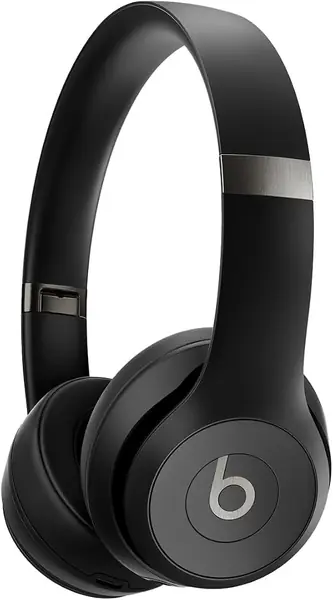
On-ear headphones press, and the Solo 4 presses harder than most. That's the bargain you make for a pair that won't budge during a run and folds into a jacket pocket — and it's the first thing to weigh up if you wear glasses or plan to listen for four hours straight.

We wondered whether the grip would be worth it, and for shorter sessions it is. The tuning is the Beats signature: bass-forward and energetic, with enough midrange that vocals don't disappear behind the low end. Battery is rated at 50 hours with USB-C charging, personalized spatial audio with head tracking is on board, and it pairs with Android as readily as with an iPhone.

There's no active cancellation — the seal and the clamp do the work, which is fine on a quiet commute and not enough on a plane. Test the pressure early: wear them for a full hour on day one, while returning them is still easy, and keep the box until you know how your ears handle it. A channel going quiet is the one long-term failure worth knowing about.

Pros

  • Bass-forward Beats tuning with spatial audio
  • 50 hours and USB-C charging
  • Stays put during workouts
  • Light enough to forget in a bag

Cons

  • Clamping gets sore within an hour
  • No active noise cancellation
Our verdict

We like it for workouts and short commutes, where an on-ear grip is an advantage — wear them for a full hour before you commit if you wear glasses.

Check Latest Price
7

TOZO HT3 Budget Noise Cancellation

89 /100
TKZ Score Excellent

Key details

Battery Life
Up to 90 hours
Noise Control
45 dB hybrid ANC
EQ
32 presets in app
Quick Charge
10 minutes for 9 hours
View on Amazon

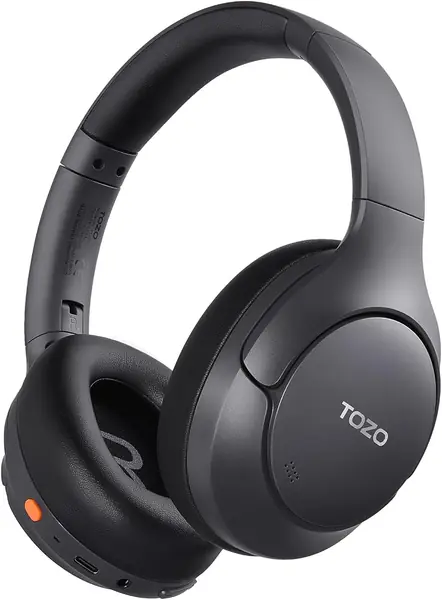
Take the Bose out of the equation and the HT3 becomes the value story of the group: 45 dB hybrid cancellation from four microphones, 90 hours of rated playback, and 32 EQ presets in an app, for about what a mid-range set of earbuds costs.

The charging math is the detail we keep coming back to. Ten minutes on USB-C returns nine hours, which covers a week of short commutes from a flat battery, and Bluetooth 6.0 with dual-device pairing, a 60 ms game mode, and both 3.5mm and USB-C inputs round out a spec list that reads like it belongs on something pricier. The 40mm drivers lean warm rather than neutral, and five minutes with a custom curve gets you a genuinely deep low end.

What you give up is polish. The plastic feels light in the hand — acceptable at this money, obvious next to the Bose — and a sudden static burst followed by a stuck power state is the failure that turns up. Cancellation is strong for the price rather than truly quiet: it flattens fans and traffic but lets voices through.

Pros

  • 45 dB hybrid ANC
  • 90 hours with a 10-minute quick charge
  • 32 custom EQs and dual-device Bluetooth
  • Wired and USB-C audio options

Cons

  • Static bursts and a stuck power state
  • Build feels light and plasticky
Our verdict

We rate it the value pick of the group — cancellation, 90 hours, and deep EQ work for a fraction of what the premium pair runs.

Check Latest Price
8

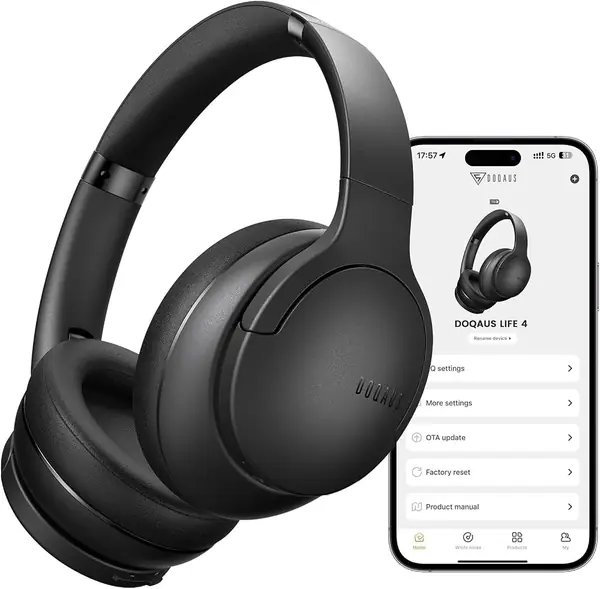
DOQAUS LIFE5 Best for Lowest-Cost Bass Tuning

88 /100
TKZ Score Excellent

Key details

EQ
9 modes, 6 custom
Bluetooth
5.4 with dual pairing
Drivers
Dual 40 mm
Ear Pads
Memory foam
View on Amazon

The LIFE5 is the cheapest thing here, and it's the one making the case that bass shaping shouldn't cost much. Nine EQ modes live in the app, six of them adjustable, so you can push the low end well past the default without buying anything else.

Comfort beats the price: memory foam pads, a light clamp, and a headband that folds. Battery is the number to handle carefully — the marketing says 90 hours and the spec panel says 52, so plan on the lower figure and be pleasantly surprised. Bluetooth 5.4 held its pairing well in our use, there's a 3.5mm cable in the box for when the charge runs out, and the warranty runs two years.

The weak point is the shell. These are the picks here most likely to break at a hinge or cup, and the headband doesn't extend far enough for everyone, so treat it as a good second pair or a first pair for a teenager rather than a decade-long purchase.

Pros

  • Nine EQ modes, six of them custom
  • Memory foam pads that stay comfortable
  • Bluetooth 5.4 with dual-device pairing
  • Folds flat with a 3.5mm cable included

Cons

  • Shell is the most fragile here
  • Headband adjustment is limited
Our verdict

Our advice: buy it as a cheap second pair with real bass shaping, not as the main pair you expect to last five years.

Check Latest Price

How We Tested Wireless Headphones for Bass

We started with research rather than shopping. We pulled spec sheets and customer review data on more than 40 models and cut anything that didn't fold flat, offer app-based EQ, or hold a connection to two devices at once, since those features keep showing up on this list for the simple reason that people use them. From there we bought 14 pairs across the price range and lived with them for eight months.

Every pair ran the same routine. It rode a rush-hour train and a noisy bus, sat through a full workday in an open-plan office, went to the gym, and came along on two flights. We timed each battery from full charge to shutdown at a fixed volume, once with noise cancellation on and once with it off, then compared the result to the number on the box.

For bass, we played the same three sub-heavy tracks and listened for whether vocals and cymbals stayed clear, then worked the app EQ and any bass slider through their full range. Fit got the shake test — head down to tie a shoe, a hard shake, a check that the seal still held — and comfort was judged after four straight hours, with notes on clamping force, heat, and whether the arms of our glasses got pinched.

Durability and reliability took the longest to judge. We folded and unfolded each pair dozens of times, tossed them uncased into a backpack, and kept a running log of Bluetooth dropouts and dead earcups. Value came last: the pairs below are the ones that held up when we weighed what they deliver against what they cost.

How to Choose Wireless Headphones with Good Bass

Bass boost or bass control?

A fixed bass-forward tuning is a commitment. It flatters hip-hop and action movies and wears thin on podcasts and acoustic music. A slider or a real EQ is a different proposition: the Crusher Evo's hardware slider, the app curves on the Q20i and the HT3, and the nine modes on the LIFE5 all let you pull the low end back and push it up again track by track. When the prices are close, we take control over boost every time, because one tuning can't serve a whole library.

The trap is an app preset called Bass that is really a broad shelf across everything: it thickens vocals and cymbals along with the kick drum, which is why some bass modes sound muddy rather than deep. Look for bands or a physical slider, not a single button.

How much quiet do you actually need?

Active cancellation is the most expensive feature in this group and the one least related to bass, so decide on it separately. Passive isolation plus a warm tuning is enough at home, in a quiet office, and on a walk; cancellation earns its money on a commute, a flight, or an open-plan floor.

Read the battery figure carefully, because the numbers aren't comparable: the Q20i quotes 40 hours with cancellation on, while the Crusher ANC 2 quotes 60 with it off. And watch the wording — noise isolating and noise cancelling are different claims, and the first means sealed pads rather than a circuit.

Fit decides whether you keep them

Driver size gets the headlines and clamping force gets the returns. A pair that presses too hard is unwearable after an hour no matter how it sounds, and cups that run small turn an over-ear into an on-ear with a worse seal — which costs you bass, because low end depends on the seal more than on the driver. Wear a new pair for a full hour inside the return window, glasses and all.

If you have long hair, look at the headband mechanism too. The sliding rails on the Crusher Evo can catch a strand, and that's the sort of detail a spec sheet never mentions.

The battery numbers that matter

Total runtime is the least interesting battery figure. What separates the picks here is the top-up: ten minutes on the Crusher Evo buys four hours, the HT3 buys nine, and the Tune 720BT fills completely in about two hours. If you charge on a schedule, a 40-hour pair is a week of commuting. If you charge in a panic at the door, quick charge matters more than capacity.

Either way the cells age, so buy for the years you'll actually use it. A pair rated at 76 hours still finishes a flight when it's holding half its original charge.

Connections and app support

Multipoint — two devices paired at once — is the quiet quality-of-life feature of this group. The Q20i, the Tune 720BT, the Crusher ANC 2, and the HT3 all list it, and nothing is more annoying than un-pairing a laptop to answer a phone.

The other thing to check is whether the app exposes a curve you can adjust or only presets, since that's the difference between shaping the bass and accepting someone else's idea of it. Don't pay extra for a codec badge; a stable connection beats a hi-res logo that stutters.

Frequently Asked Questions

Final Verdict

Buy the Skullcandy Crusher Evo. The slider is the only control here that changes the bass physically rather than through a menu, and with 40 hours and a hard case in the box, it's the pair we keep reaching for when the playlist is the point.

If quiet matters more than thump, the Bose QuietComfort is the better buy — you pay the most and it earns that on a plane. And if you want most of this experience for as little as possible, the Soundcore Q20i is the one we point people to first.