Best Wired Over-Ear Headphones of 2026

I went back to a cable three years ago and never seriously shopped for wireless again. My earbuds died forty minutes into a long train ride, and a borrowed pair of studio headphones got me home — and sounded better doing it. Wired over-ears don't need charging, don't squeeze your music through Bluetooth, and the good ones can be repaired instead of replaced. The trap is that a pair can sound terrific and still clamp your skull like a vise or come with a cord too short to reach across a desk.

Over the past six months, my team and I have lived with 12 wired over-ear models — folding DJ pairs, closed-back studio workhorses, and inexpensive desk headphones with inline mics — judging sound, fit, weight, isolation, cord length, and how they survived daily abuse. Two things kept separating the winners: a detachable cable, since that's the first part to fail and the cheapest to replace, and both plug sizes in the box so you're not hunting for an adapter. Worth knowing before you read on: none of these cancel noise actively. A good pad seal does more than you'd expect, and the picks below are for anyone who'd rather trust a cable than babysit a battery.

The Best Wired Over-Ear Headphones

1

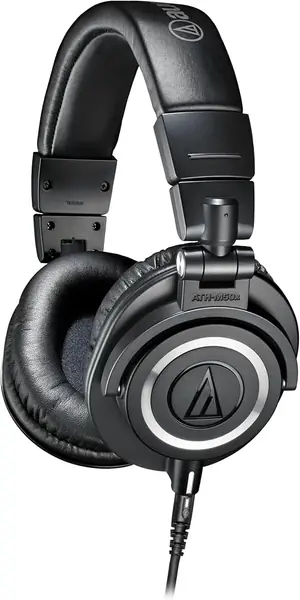
Audio-Technica ATH-M50x Best Overall
95 /100
TKZ Score Outstanding

Key details

Cable
Detachable
Weight
10.2 oz
Driver Size
45 mm
Impedance
38 ohm
View on Amazon

The detachable cable is the first thing we appreciate about the ATH-M50x, and it is the reason this is our top pick for most people. A short cable can stay on a phone or laptop, a coiled cable can reach across a desk, and a damaged cable is a replacement rather than a dead end. That practicality matters as much as the 45 mm drivers, which give the M50x a clear, full sound with enough bass to be fun without smothering vocals.

We found the M50x easy to listen to across genres. The closed cups keep sound in and take the edge off a noisy room, though they are not active noise cancelers. The swiveling earcups and folding hinge make it easy to pack, and the headband adjusts widely enough to share.

The M50x is not a neutral reference in the way the Sony MDR7506 is. It has more low-end and a more energetic top end, which we prefer for casual listening. If you need maximum isolation, the Sennheiser HD 280 Pro is the better tool; if you want a lighter studio sound, the Sony is the one.

At 38 ohms, it also runs loud enough from a phone without a dedicated amp, which is not true of every studio-style pair here. That is the quiet advantage that keeps it in a bag rather than on a desk.

Pros

  • Full, detailed sound across genres
  • Detachable cable is easy to replace
  • Folds for backpack storage

Cons

  • Clamp is firm on larger heads
Our verdict

We recommend the ATH-M50x as our top pick for most people: detailed sound, a detachable cable, and a folding body that travels well.
Check Latest Price
2

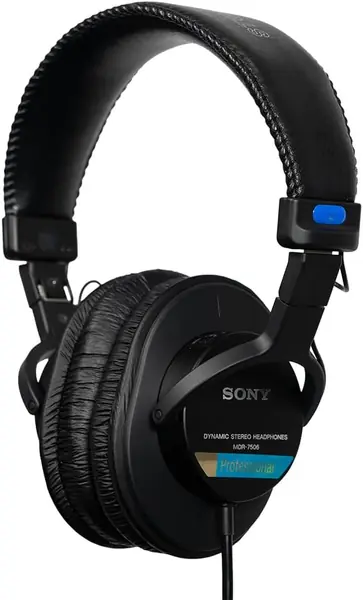
Sony MDR7506 Best Value

94 /100
TKZ Score Outstanding

Key details

Cable
9.8 ft, fixed
Weight
8 oz
Driver Size
40 mm
Frequency Response
10 Hz - 20 kHz
View on Amazon

At 8 ounces, the Sony MDR7506 is the lightest full-size pair in this group, and that is the first thing we notice when we pick it up. The folding hinge and soft case make it a studio headphone that can live in a backpack, and the closed cups keep the sound from leaking into the room.

We think it is the best value here for critical listening. The 40 mm drivers deliver a clear, lean sound with strong detail, and the presentation is closer to a window on the recording than a bass-heavy nightclub. If you want warmth and thump, the OneOdio A71 is the more entertaining listen; if you want to hear what the mix is doing, the Sony is the sharper tool.

The fit is snug, which helps isolation but may press on larger heads. The pads are soft enough for a desk session, and the folding action is genuinely useful when the headphones leave the house.

The MDR7506 is not a basshead headphone, and it does not pretend to be. It is a reference pair for people who want clarity first, and the lean tuning is the point rather than a defect.

Pros

  • Clear, detailed reference sound
  • Light 8-ounce body
  • Folds into included soft case

Cons

  • Fixed 9.8-foot cord is awkward with phones
Our verdict

We think the MDR7506 is the value pick for critical listening, with a light, folding body and clear sound, as long as you can live with the fixed studio cord.

Check Latest Price
3

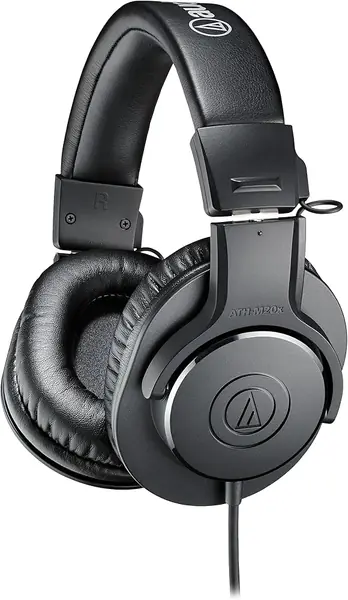
Audio-Technica ATH-M20x Best Budget

93 /100
TKZ Score Outstanding

Key details

Cable
Single-side 3.5 mm
Weight
7.41 oz
Driver Size
40 mm
Impedance
47 ohm
View on Amazon

At 47 ohms, the ATH-M20x is easy to drive from a phone, and that is the practical reason it is our budget pick. It does not need a dongle with extra power or a desktop amp to reach a comfortable volume.

The 40 mm drivers are tuned with a little extra low end, and the result is a clear, friendly sound for podcasts, videos, and everyday music. The closed-back cups take the edge off a noisy room, and the single-side cable keeps the wire out of the way. The 3.5 mm plug works with a phone, laptop, or controller, and the included 6.3 mm adapter opens up a mixer.

The suspension headband and soft pads make the M20x comfortable for a long session, and the 210-gram weight is easy to forget. It is not as detailed or as punchy as the M50x, but it is also less demanding of your phone and your budget.

We reach for the M20x when we want a wired pair that can live on a desk and still travel in a bag. The plastic build is not luxurious, but the sound is balanced enough that we do not feel we are settling.

Pros

  • Clear, balanced sound for the money
  • Easy to drive from a phone
  • Light 210-gram build

Cons

  • Clamp and pads can feel tight
Our verdict

We recommend the ATH-M20x for tight budgets: it is easy to drive from a phone, isolates decently, and sounds more balanced than its price suggests.

Check Latest Price
4

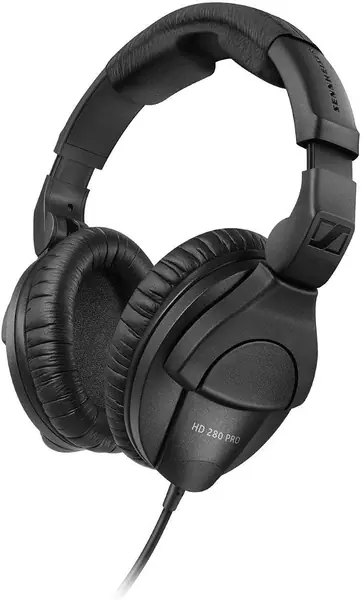
Sennheiser HD 280 Pro Best for Noise Isolation

92 /100
TKZ Score Outstanding

Key details

Cable
3.3-9.8 ft coiled
Weight
1.3 lb
Impedance
64 ohm
Noise Isolation
Up to 32 dB
View on Amazon

The HD 280 Pro's claim of up to 32 dB of attenuation is the number that separates it from the rest of this group. In a room with a humming computer or a TV in the next room, that passive isolation is the feature we notice first.

The 64-ohm, closed-back design has a clear, controlled sound with a fairly even response. Vocals stay forward, and the bass does not muddy the mids, which makes it easy to follow a mix. The replaceable pads, headband, and cable are a real ownership advantage: the parts that wear out can be swapped instead of ending the pair.

We recommend it when blocking noise matters more than comfort. The clamp is firm and the 1.3-pound weight makes it a desk headphone more than a walking one, so it suits a studio, an open office, or a shared room better than a commute.

If you need to hear a doorbell or a coworker, this is too much isolation. For travel, the lighter Sony MDR7506 is easier to pack; for a noisy desk, the Sennheiser is the one that earns its space.

Pros

  • Up to 32 dB passive isolation
  • Replaceable pads, headband, and cable
  • Clear, controlled monitor sound

Cons

  • Coiled cable adds bulk and limits reach
Our verdict

We recommend the HD 280 Pro when blocking noise matters most; its strong isolation and replaceable parts make it a durable choice for a loud desk or studio.

Check Latest Price
5

OneOdio A71 Best for DJ Monitoring

91 /100
TKZ Score Outstanding

Key details

Cable
6.6-9.8 ft coiled, detachable
Weight
13.3 oz
Driver Size
40 mm
Frequency Range
20 Hz - 40 kHz
View on Amazon

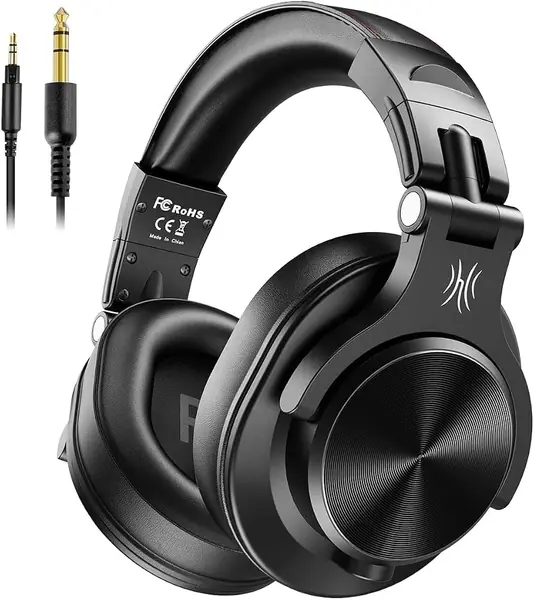
The 90-degree swiveling earcups are the A71's best trick: you can drop one cup behind your ear to hear a cue or a coworker without taking the headphones off. That is useful at a desk, not just in a DJ booth.

We like the A71 for DJ-style monitoring on a budget. The 40 mm drivers have a bass-forward sound that is fun for music and useful for beatmatching, and the coiled detachable cable plus both 3.5 mm and 6.35 mm plugs mean it works with a phone or a mixer.

The pads are soft and the headband adjusts, and the share port is a small extra that makes the A71 useful for listening with someone else. It is not as neutral as the Sony or as refined as the M50x, but it is more entertaining than either for casual bass-heavy listening.

The A71 is the pair we keep for mixing on a laptop and monitoring a drum machine, where the swivel and coiled cable earn their keep. It is a tool with a little fun built in, not a reference monitor.

Pros

  • Swiveling cups for one-ear monitoring
  • Coiled detachable cable with both plugs
  • Soft pads and strong value

Cons

  • Clamp feels tight on larger heads
  • Plastic joints are a durability risk
Our verdict

We like the OneOdio A71 for DJ-style monitoring on a budget, especially if you want swiveling cups and a coiled cable without paying studio-brand prices.

Check Latest Price
6

FIFINE HD8 Best for Home Recording

89 /100
TKZ Score Excellent

Key details

Cable
Two 9.8 ft detachable
Weight
9.35 oz
Driver Size
50 mm
Impedance
32 ohm
View on Amazon

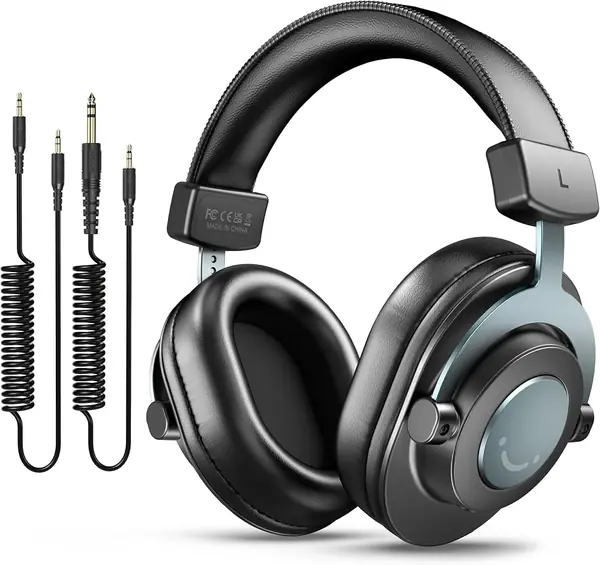
The FIFINE HD8 comes with two detachable coiled cables, one ending in 3.5 mm and one in 6.35 mm, and that is the detail that makes it useful for a home setup.

The 50 mm drivers give it a balanced monitor sound with stable mids and a clear top end. The sound is not bass-heavy, so it suits spoken word and acoustic tracks as well as music. The closed-back cups take down some room noise, and the pads are soft enough for a long recording session.

The two cables mean you can leave one plugged into an interface and take the other with a laptop, and the detachable design makes a failed cable a swap rather than a repair. The adjustable headband and lightweight body keep it from feeling like a studio anchor.

We recommend it for podcasters and home recordists who want a simple wired monitor without paying studio-brand prices. The two cables also mean it can move between a mixer and a phone without an adapter hunt. The 32-ohm impedance means a laptop or phone can drive it without extra gear.

Pros

  • Two detachable cables in the box
  • Comfortable pads for long sessions
  • Balanced 50 mm monitor sound

Cons

  • Fit runs tight for some
Our verdict

We recommend the FIFINE HD8 for podcasters and home recordists who want two detachable cables, comfortable pads, and a clean monitor sound at a low cost.

Check Latest Price
7

Aechorhy 2-in-1 Headphones Best for USB-C Phones

86 /100
TKZ Score Excellent

Key details

Cable
Tangle-free nylon
Driver Size
40 mm
Connection
3.5 mm and USB-C
View on Amazon

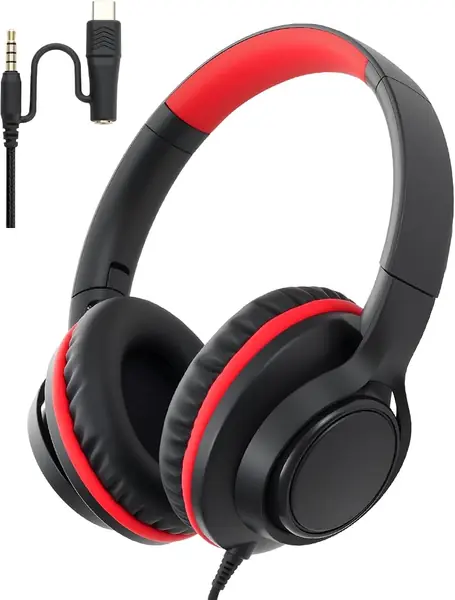
The Aechorhy's appeal is built into its cable: one pair carries both a USB-C plug and a 3.5 mm plug, so it can move between a newer phone and an older laptop without a dongle.

The 40 mm drivers produce a basic, clear sound, and the foldable body is easy to toss in a bag. The earcups fold inward, and the adjustable headband extends for larger heads. The inline mic and volume control make it useful for calls and classes, though this is not a headphone for critical listening.

We recommend it for USB-C phone owners who want a cheap spare pair, not as a primary audiophile headphone. The dual plug is the reason to buy it; the 3.5 mm end is the reason it can stay useful after your next phone upgrade.

Pros

  • Built-in USB-C and 3.5 mm plugs
  • Folds for travel
  • Low-cost spare pair

Cons

  • Long-term durability is unproven
Our verdict

We recommend the Aechorhy only for USB-C phone owners who want a cheap spare pair; its dual plug is genuinely useful, but the long-term build is unproven.

Check Latest Price

How We Chose and Tested the Best Wired Over-Ear Headphones

We started by pulling every wired over-ear model that kept turning up in professional reviews and owner feedback, then filtered for the things that change daily use: detachable or replaceable cables, both 3.5mm and 6.35mm plugs in the box, replaceable earpads, whether the cups fold, and what the extra spend actually bought in materials. Twelve made the cut, and each one lived with us for six months — at desks for editing, on commutes, in a basement drum room, and on calls that ran long past the point of comfort.

For sound, we played the same short reference playlist through every pair — dense mixes, solo piano, spoken-word tracks — and noted where each one put its emphasis: forward mids, a boosted low end, or a treble peak that turned cymbals harsh. Swapping between two pairs mid-song caught differences a single listen hides.

Fit got the most argument. We weighed each pair on a kitchen scale, wore them in three-hour stretches, and had both a glasses wearer and a wide-headed tester log clamp force and earpad pressure, because a pair that feels fine at twenty minutes often doesn't at two hours.

Durability meant coiling and uncoiling every cable until we lost count, tugging the plugs, folding the collapsible models into bags, and measuring each cord end to end — the short coiled ones turn into a real problem at a desk. Isolation we tested where it matters, on a loud train car and next to a running blender, listening for how much got through.

How to Choose Wired Over-Ear Headphones

Start With Fit and Clamp Pressure

Over-ear means the cups surround your ears, but the shape of the headband and the clamp force decide whether you can wear them for an hour or an afternoon. Plush pads can still press if the cups are shallow, and a light headphone can feel heavy if the band digs in. We prefer an adjustable headband and pads that can be replaced; the Sennheiser HD 280 Pro is the clearest example here, with replaceable pads and headband padding. The ATH-M20x is the lighter daily option at 210 grams, while the HD 280 Pro is 1.3 pounds and feels like a desk tool.

Decide How Much Isolation You Need

All the picks here are closed-back, so they block some outside noise and keep your music from leaking into the room. The amount varies a lot. The Sennheiser HD 280 Pro is the isolation specialist, with a claimed 32 dB of attenuation, while the lighter Sony and Audio-Technica models rely on a snug closed cup rather than a heavy clamp. If you work in a noisy room, isolation is worth more than a little extra comfort. If you need to hear a doorbell or a coworker, a lighter pair is the safer choice.

Match the Cord and Plug to Your Phone

The cable is where wired headphones become practical or annoying. A detachable cable can be replaced when it fails, and it lets you keep a short phone cable and a long desk cable on hand; the ATH-M50x, OneOdio A71, and FIFINE HD8 all use detachable designs. A fixed 9.8-foot cord, like the Sony MDR7506's, is a studio convenience but clumsy on a phone. Check the plug, too: most pairs use 3.5 mm, studio models add a 6.35 mm adapter, and the Aechorhy carries both USB-C and 3.5 mm for newer phones.

Read the Sound Signature, Not the Driver Number

A 40 mm driver can sound bassier than a 50 mm driver, so do not treat the diameter as a promise. Studio monitor headphones are usually tuned for a clearer, flatter response, which is why the Sony MDR7506 and Audio-Technica models suit critical listening. The OneOdio A71 is more bass-forward and fun, while the ATH-M50x sits in between with a fuller low end than the Sony. If you mostly listen to music and podcasts, pick the tuning you enjoy; if you mix or edit, pick the clearer one.

Frequently Asked Questions

Final Verdict

We recommend the Audio-Technica ATH-M50x for most people because it gets the fundamentals right: clear, detailed sound, a detachable cable that is easy to replace, and a folding body that travels well. If you want to spend less, the Sony MDR7506 is the better value for critical listening, while the Sennheiser HD 280 Pro is the one to choose when isolation matters more than weight. The ATH-M20x remains the budget pick when the M50x is out of reach.