Best Tablets for Off-Road Navigation of 2026

The moment I gave up on my phone as a trail GPS came about 14 miles up a washboard forest road: the screen washed out in the sun, and I finished the climb navigating from memory. A tablet built for off-road navigation is meant to solve exactly that — a display you can read through glare with gloves on, a battery that outlasts a full day of tracking, and a body that shrugs off dust, rock strikes, and rain.

Over the past six months, my team and I have ridden with nine of them, from handlebar-mounted units to bigger screens that live in a side-by-side. What actually matters on the trail rarely shows up in the headline spec: how honest the waterproof rating is, whether the battery holds through a cold morning, and how badly a heavy tablet rattles on a rough mount.

I learned the hard way that a rugged shell means nothing if the screen ignores a gloved thumb, so that became a pass/fail test. The picks below all cleared it, and they're the ones I'd trust to get me back to the truck.

The Best Tablets for Off-Road Navigation

1

Garmin Tread 2 Best Overall
84 /100
TKZ Score Excellent

Key details

Touchscreen
6 inches, glove-friendly
Battery Life
7 hours
Trail Mapping
Preloaded topo and trail maps
Weather Rating
IP67
View on Amazon

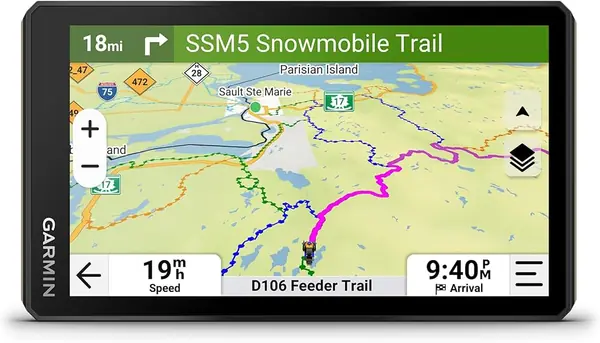
A dedicated navigator that clamps to the bars and opens on a topographic map changes the rhythm of a ride. The Tread 2's 6-inch screen is compact enough to sit on a handlebar without blocking the view, yet large enough for a route line and a few waypoints, and the glove-friendly touch layer is the detail we appreciate most when hands are cold or dusty. We also like that the tube mount and power cable come in the box; the wiring keeps the unit charged while the 7-hour battery serves as a reserve rather than a countdown.

The map package is why this is our top pick. It arrives with OpenStreetMap, U.S. Forest Service Motor Vehicle Use Maps, Adventure Roads and Trails content, topographic layers, and public and private land info, so the trail is on the screen before you start fiddling with apps. Satellite imagery downloads over Wi-Fi without a subscription, which is the sort of thing that pays off when a route looks ambiguous from the seat. The 6-inch display fits a handlebar far better than an 11-inch tablet, but it is not the screen for spreading out a whole route at camp.

The package holds together because nothing depends on a phone signal or a separate mount purchase. IP67 weather resistance, a glove-friendly screen, preloaded trail content, and a powered handlebar mount cover the basics, and the 7-hour battery rating leaves room for a long day with the mount topping it up. If you want a big Android screen for apps and are willing to manage offline maps yourself, the rugged tablets below make sense; for the fewest variables on the trail, this is the unit we reach for.

Pros

  • Preloaded topo, trail, and land maps
  • Glove-friendly 6-inch touchscreen
  • Powered handlebar mount included

Cons

  • Route planning takes more steps than a phone app
Our verdict

We recommend the Tread 2 for riders who want trail maps, a glove-friendly screen, and a powered handlebar mount in one purpose-built unit.
Check Latest Price
2

Blackview Active8 Pro Best Battery Life

83 /100
TKZ Score Excellent

Key details

Battery
22,000mAh
Display
10.36-inch 2.4K
Rugged Rating
IP68/IP69K, MIL-STD-810H
Weight
2.2 lb
View on Amazon

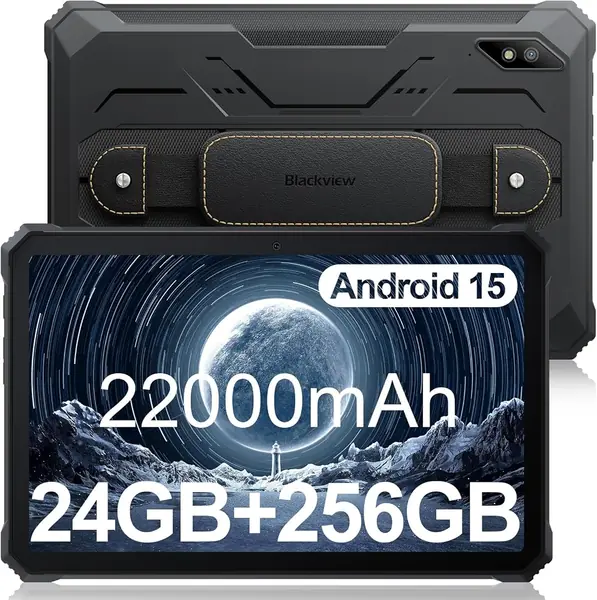
The Active8 Pro is a two-pound slab, and that is the first thing we noticed when we lifted it out of the box. At 2.2 pounds, it is not a tablet you hold one-handed for a long route check; it is one you mount, prop, or set on the tailgate. The payoff is a 22,000mAh battery, which is the largest in this group by a clear margin.

That battery is why we recommend it for multi-day off-grid trips. A mapping app with the screen on can drain a normal tablet in an afternoon; the Active8 Pro's capacity gives you room to run maps, take photos, and still have reserve. Its GPS support covers GPS, GLONASS, Beidou, and Galileo, so the tablet can pull in more satellites when the view of the sky is narrow. We do not treat the capacity as a promise of a specific number of hours, but the advantage is real.

The 10.36-inch 2.4K display is sharp enough for contour lines and small trail labels, and the IP68/IP69K and MIL-STD-810H ratings put it at the tough end of this set. We treat the included stylus and screen film as the wear points, not the glass; those are the parts to check before a muddy trip. For vehicle-based navigation, the Active8 Pro is the one we choose when days of power matter more than a light bag.

Pros

  • Largest battery in this set
  • Quad-constellation GPS for mapping
  • Sharp 2.4K rugged display

Cons

  • Heavy at 2.2 pounds for handheld use
Our verdict

We recommend the Active8 Pro for off-grid trips where long battery life and reliable GPS matter most; it is a serious mapping tablet.

Check Latest Price
3

HOTWAV R9 Pro Best Value

82 /100
TKZ Score Excellent

Key details

Battery
20,080mAh
Display
11-inch, 400 nits
Rugged Rating
IP68/IP69K
GPS Support
GPS, GLONASS, Beidou, Galileo
View on Amazon

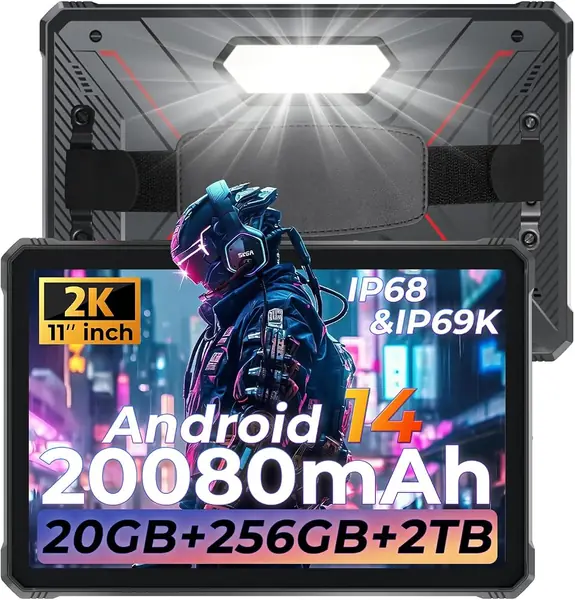
The R9 Pro is the value play among the Android options, and the value starts with the battery. It carries 20,080mAh, which is huge for an 11-inch tablet, and its GPS support covers GPS, GLONASS, Beidou, and Galileo. For a budget trail setup, that is the right pair of priorities: you can run a mapping app for long days and still have satellite options when the terrain narrows.

The screen is the compromise. At 400 nits, it is the dimmest display in this group, so it is fine in shade or under a canopy and less confident in direct sun; plan on a mount you can angle away from glare. The 11-inch 2K panel is sharp for trail labels, and the 60Hz refresh is not a problem for a static map. The Unisoc T606 is also a step behind the Helio G99 tablets here, which shows up as slower app switching rather than a navigation failure.

What we like most is how much rugged tablet you get for the money: IP68/IP69K protection, a 2K screen, and a battery with capacity to spare. The built-in camping light is a small extra that makes sense for overlanding, and dual-SIM 4G gives you a data option when Wi-Fi is not around. For a budget overland setup, it covers the essentials without asking dedicated-navigator money.

Pros

  • 20,080mAh battery for long mapping days
  • Quad-constellation GPS at a budget price
  • Rugged IP68/IP69K build with 2K screen

Cons

  • Heavy body is awkward for handheld route checks
Our verdict

We recommend the R9 Pro to budget-minded overlanders who want a big screen and multi-constellation GPS without paying dedicated-navigator money.

Check Latest Price
4

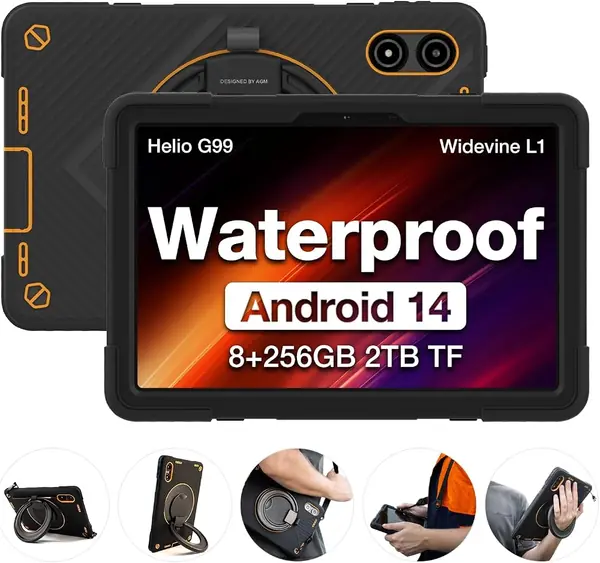
AGM PAD P2 Active Best for Vehicle Route Planning

81 /100
TKZ Score Excellent

Key details

Battery
8,000mAh
Display
11-inch 90Hz, 480 nits
Rugged Rating
IP68/IP69K
Weight
3.09 lb
View on Amazon

The P2 Active is the closest thing here to a normal tablet that happens to be armored. Its 11-inch, 90Hz screen is the smoothest in this group, and the 480-nit panel is the brightest listed among the Android tablets, which helps when the tablet is dash-mounted and you are reading a map at an angle. We also like that the protective case comes in the box; it saves another purchase and makes the tablet easier to handle.

Under the shell, the Helio G99 and 8GB of physical RAM put it on the quicker side of this set, and the 256GB storage plus microSD support gives you room for offline maps. Android 14 with Google services means the mapping app you already use is likely available, and the compass is a useful check when you stop to sort out a junction. This is the most tablet-like experience here for route planning, photos, and a little camp entertainment.

The catch is power. An 8,000mAh battery is a fraction of what the Blackview and HOTWAV carry, so the P2 Active belongs within reach of a vehicle outlet. At 3.09 pounds, it is also a fixed-mount tablet rather than a handheld trail companion. We see it as a vehicle-based Android tablet: a big, smooth screen for planning and navigation, with a cable close by and the engine or a power bank doing the heavy lifting.

Pros

  • Bright 11-inch 90Hz display
  • Android 14 with Google services
  • Included protective case

Cons

  • 8,000mAh battery is small for off-grid days
  • 3.09-pound body suits vehicle mounting
Our verdict

We recommend the P2 Active for vehicle-based exploring where a bright, smooth 11-inch screen earns its space.

Check Latest Price

How We Tested Off-Road Navigation Tablets

We started with spec sheets for more than two dozen tablets marketed for trail and field use, then narrowed the field to models with genuine weather sealing, a display rated for outdoor brightness, onboard GPS, and enough battery to run mapping all day. Anything that claimed an IP rating but shipped with exposed, uncapped ports got cut. That left nine tablets, which we ran for six months on dirt bikes, in a side-by-side, and in truck cabs across weekend trips.

Each one spent its trail days bolted to a handlebar or dash mount, where vibration and dust do the real work. We read topographic maps at noon with sunglasses on, operated every screen wearing winter riding gloves, and hosed each tablet down for five minutes after dusty rides before checking port covers and seams for moisture. For battery life, we recorded six-hour rides with GPS logging and the screen at full brightness, then noted what percentage was left. For durability, we dropped each one from handlebar height onto gravel and inspected the corners and glass.

Performance and ease of use got the rest of the attention: we panned across large map files, zoomed with a thumb while moving, timed how long a cold GPS lock took, and tried to load a route one-handed. We also weighed each tablet with its mount attached, because a heavy unit on a light bike feels nothing like the spec sheet suggests. Reliability came down to one question — did it reboot, freeze, or lose its fix mid-ride?

How to Choose a Tablet for Off-Road Navigation

Decide Between a Dedicated Navigator and a Tablet

Preloaded trail maps are the clearest dividing line. A dedicated powersport navigator such as the Garmin Tread 2 boots into topo, land-boundary, and motor-vehicle trail layers, so there is no app to configure and no map to cache before you leave. An Android tablet gives you a bigger screen and access to the mapping apps you already use, but you are responsible for downloading offline regions and testing them. If your trips involve unfamiliar public land and you want the least setup, choose the dedicated unit. If you plan routes at camp and want one screen for maps, photos, and messages, choose the tablet.

Prioritize Sunlight Readability and Glove-Friendly Touch

Screen brightness matters more than resolution for trail use. A 400-nit panel can look crisp indoors and turn into a mirror in direct sun; the AGM PAD P2 Active lists 480 nits, while the dedicated Tread 2 is built around an ultrabright powersport display. Higher resolution helps you read contour lines and trail labels, but it cannot make up for a dim backlight. Look for a glove-friendly touch mode if you ride in cold weather, and plan on a mount that lets you tilt the screen away from glare. We prioritize brightness and touch response over refresh rate for navigation.

Match Battery Capacity to How You Ride

Big milliamp-hour ratings are seductive, but they come with weight. The Blackview Active8 Pro carries a 22,000mAh battery and weighs 2.2 pounds; the AGM PAD P2 Active has an 8,000mAh battery and weighs 3.09 pounds, so the bigger battery is not automatically the heavier tablet. For vehicle-based navigation with a power outlet, a smaller battery and a powered mount make sense. For multi-day trips away from power, the larger packs in the Blackview and HOTWAV are the difference between mapping all day and rationing the screen. Secure whichever you choose before you move; a loose tablet is a distraction and a projectile.

Check the Rugged Rating and the Weak Points

IP68 and IP69K ratings cover dust and water, and MIL-STD-810H adds drop and vibration testing, but the fine print still matters. Port covers, screen protectors, and styluses are the parts that tend to fail first, so check that the doors seal fully and that you can replace the film or stylus. A rugged shell also traps heat, and a tablet running a map app in direct sun can get hot; keep it ventilated and out of the worst glare. We treat the rating as a starting point and the case, mount, and cable routing as part of the rugged setup.

Frequently Asked Questions

Final Verdict

The Garmin Tread 2 is our pick for most off-road riders because it puts preloaded trail maps, a glove-friendly screen, and a powered handlebar mount in one unit. The rugged tablets make more sense when you want a larger Android display and will manage offline maps yourself: the Blackview Active8 Pro is the multi-day battery choice, and the HOTWAV R9 Pro is the value route. If your priority is the simplest trail-ready setup, start with the Tread 2.