Best Tablet Keyboards of 2026

The email that should take five minutes takes twenty because you're hunting letters across a glass screen, and the tablet that was supposed to set you free has you propped against a couch cushion, pecking. A keyboard is the fix — the right one, anyway. A cheap board turns a good tablet into a bad laptop; a well-matched one makes the setup feel deliberate.

My team and I have spent six months typing on 12 of them: folio cases that snap on magnetically, slim standalone boards that ride in a tote, and keyboard-and-trackpad combos aiming to replace a laptop. Two things separated the keepers from the clutter — whether it truly fit the tablet, and whether it stayed connected. Backlighting, key sound, and weight break ties rather than decide.

A detachable keyboard beats a marginally nicer one fused to its case, because you'll want the tablet bare for reading and video. Watch the footprint, too — a board half an inch wider than your tablet won't slide into the sleeve you already own. The picks below earned a permanent spot in my bag.

The Best Tablet Keyboards

1

Arteck HB098 Compact Bluetooth Keyboard Best Overall
92 /100
TKZ Score Outstanding

Key details

Connectivity
Bluetooth
Weight
7.65 oz
Battery
2 AAA batteries (included)
Dimensions
11.2"L x 4.7"W x 0.2"H
View on Amazon

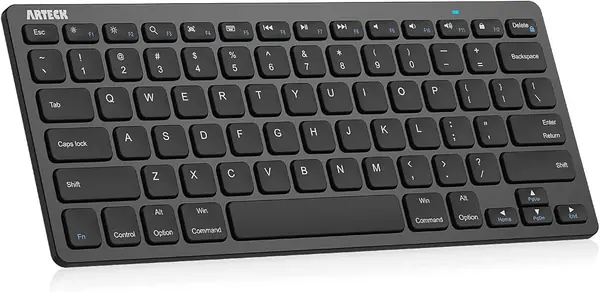
A tablet keyboard earns its place by what it spares you: weight in the bag, charging anxiety, and a cramped typing session. The Arteck HB098 is the one we reach for first because it handles all three without asking for much. It measures 11.2 by 4.7 by 0.2 inches and weighs 7.65 ounces, so it slides into a tablet sleeve and disappears. The 78-key layout is compact but covers the keys you need for email and notes.

The battery is the quiet advantage. Arteck includes two AAA cells and rates them for up to four months of use, which means the keyboard lives in a bag without a charging cable. When the cells finally fade, you swap them and keep moving. That is a different ownership experience from a rechargeable deck that needs a top-up before a trip.

The plastic deck keeps the weight down and does not pretend to be a metal case. This is a keyboard to toss in a sleeve and use on a table, not a desk centerpiece. The compact footprint is the point: it leaves room for a tablet and a drink on a small cafe table, and it does not turn a carry-on into a workstation.

Still, the HB098 gets the fundamentals right: it pairs over Bluetooth, works with iOS, Android, Mac, and Windows, and includes the hot keys most tablet users need. The result is a keyboard that feels settled rather than fussy, which is exactly what a tablet accessory should be.

Pros

  • Just 7.65 ounces and 0.2 inch thick
  • Up to four months on included AAA batteries
  • Works across iOS, Android, Mac, and Windows

Cons

  • Not rechargeable; needs AAA replacements
  • Compact key spacing takes adjustment
Our verdict

We recommend the Arteck HB098 as the best tablet keyboard for most people: it is light, widely compatible, and runs for months on ordinary AAA batteries.
Check Latest Price
2

Logitech Pebble Keys 2 K380s Best for Multiple Devices

91 /100
TKZ Score Outstanding

Key details

Connectivity
Bluetooth
Weight
14.6 oz
Battery
2 AAA batteries
Device Switching
Up to 3 devices
View on Amazon

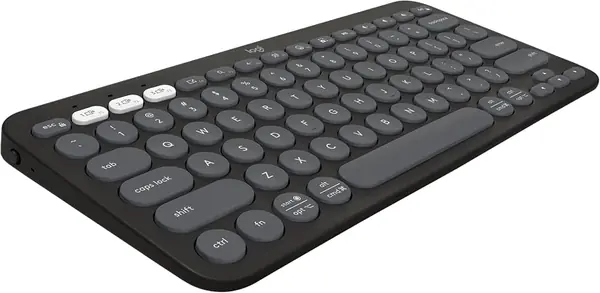
Three devices, one keyboard, and a row of Easy-Switch keys is the whole pitch for the Logitech Pebble Keys 2. Tap a key and the K380s jumps from an iPad to a phone to a computer, which is the feature we value most on a shared desk. The round, scooped keys are quiet, and the 10.98-by-4.88-inch footprint is small enough to move around.

We prefer it to the cheapest decks for a setup that moves between devices, because re-pairing is the part of Bluetooth life that gets old fastest. The K380s keeps three devices paired and lets you switch without opening settings. Its 415-gram body also feels more planted than the featherweight keyboards here.

Bluetooth is the weak point. The connection can drop when you switch devices or leave the keyboard idle, and a Smart Connector case avoids that whole class of annoyance. If your work depends on a rock-solid link, the Combo Touch is the safer iPad choice; if you need one keyboard for several devices, the K380s is still the more flexible tool.

It is not the lightest option here, and its 415-gram body is the reason. What it does well is make multi-device typing feel ordinary. We keep it on the desk for that reason, and we accept the occasional reconnect as the cost of the convenience.

Pros

  • Switch between three paired devices
  • Quiet, scooped keys
  • Sturdy 415 g body

Cons

  • Heavier than the lightest decks here
Our verdict

The Logitech Pebble Keys 2 is our pick for anyone who types across a tablet, phone, and computer and wants one quiet keyboard to switch between them.

Check Latest Price
3

Logitech Combo Touch Best iPad Keyboard Case

90 /100
TKZ Score Outstanding

Key details

Connectivity
Smart Connector
Weight
1.26 lb
Keyboard
Backlit, full-size
Trackpad
Precision trackpad
View on Amazon

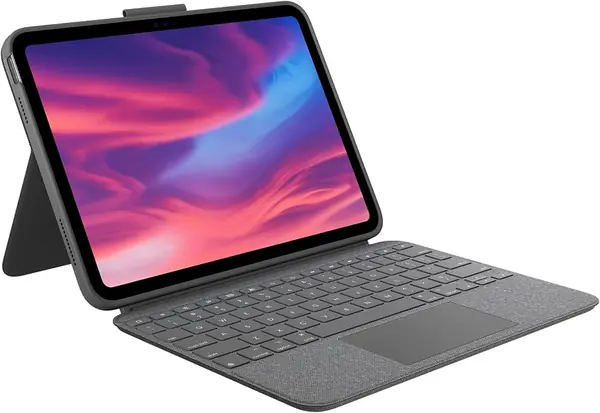
The Combo Touch is the first keyboard case here that made an iPad feel less like a tablet with a keyboard and more like a laptop that happens to have a touchscreen. The large precision trackpad is the reason: it handles taps, scrolling, and text selection without reaching for the screen. Add the backlit full-size keys and the Smart Connector, and the case covers the workday without a charging cable.

The Smart Connector is the practical detail we appreciate most. The keyboard powers from the iPad, so there is no separate battery to manage and no Bluetooth pairing to babysit. The case also folds into four modes for typing, reading, sketching, and viewing, and the woven fabric shell protects the tablet when it is closed.

The trade-off is the fit. The snug case that keeps the tablet secure can make removal feel like a two-hand job. If the tablet stays in the case most days, that is a fair exchange for protection and a trackpad. If you pop it out constantly, a standalone deck will feel less fussy.

We also like that the keyboard detaches when you want to read or sketch, so the case can be a workstation and then get out of the way. That flexibility is what makes the bulk easier to accept.

Pros

  • Large precision trackpad
  • Backlit full-size keyboard
  • Smart Connector power, no charging
  • Protective four-mode case

Cons

  • Adds noticeable weight and bulk
Our verdict

We choose the Logitech Combo Touch when an iPad 10th-gen or A16 owner wants a trackpad, backlight, and protection in one case.

Check Latest Price
4

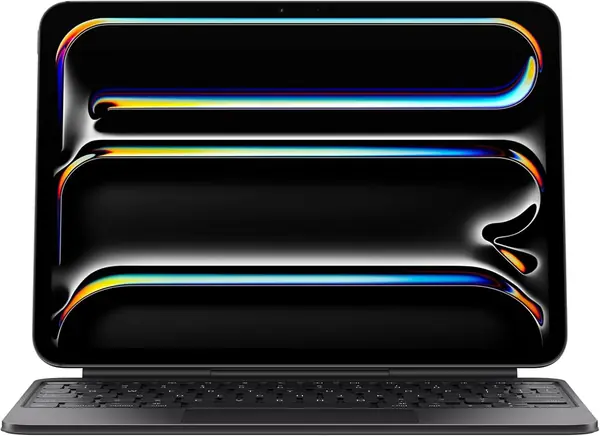
Apple Magic Keyboard Case for iPad Pro 11-inch Best Premium iPad Pro Case

89 /100
TKZ Score Excellent

Key details

Weight
1.6 lb
Keyboard
Backlit scissor keys, function row
Trackpad
Glass, haptic feedback
Compatibility
iPad Pro 11-inch (M4 and M5)
View on Amazon

The price is the first thing you notice about Apple's Magic Keyboard for iPad Pro 11-inch, and it is the right place to start. This is not a universal accessory; it is a case, stand, and keyboard built around the M4 and M5 iPad Pro 11-inch. If you own a different iPad, the fit is not there, and no amount of aluminum changes that.

For the right tablet, though, the premium buys a laptop-like experience we have not seen matched here. The aluminum deck and glass haptic trackpad feel substantial, the backlit scissor keys include a function row, and the cantilever hinge adjusts smoothly for typing or viewing. USB-C pass-through charging is the practical extra that keeps a port free.

The compromises are weight and balance. At 1.6 pounds, the case makes the iPad a heavier package, and the magnetic attachment can feel top-heavy on a lap or a soft surface. This is a keyboard for a desk, a table, or a stable tray table, not for perching on a couch arm.

The value question is real, and it only resolves in favor of buyers who already own the matching iPad Pro and use it for daily work. For everyone else, a standalone deck or the Combo Touch is the more sensible spend. The Magic Keyboard is less an accessory than a commitment to using the iPad Pro as a main computer.

Pros

  • Laptop-like aluminum build and haptic trackpad
  • Backlit scissor keys with function row
  • USB-C pass-through charging

Cons

  • Very expensive for an accessory
Our verdict

For iPad Pro 11-inch owners who use the tablet as a daily work machine, this Magic Keyboard is the one we recommend.

Check Latest Price
5

Arteck Universal Backlit Bluetooth Keyboard Best Backlit

88 /100
TKZ Score Excellent

Key details

Connectivity
Bluetooth
Weight
5.9 oz
Battery
Rechargeable, up to 6 months
Backlight
7 colors, 2 brightness levels
View on Amazon

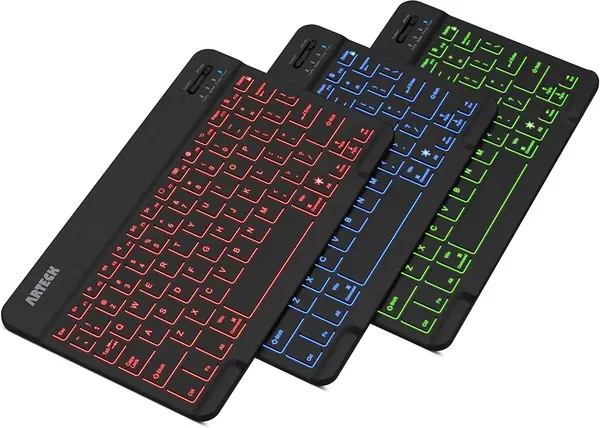
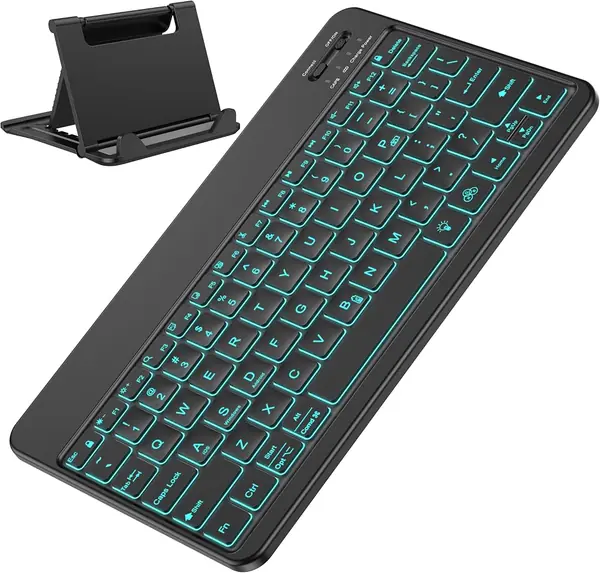
Seven colors of backlight sounds like a novelty until you are typing in a dark hotel room or a dim bedroom. The Arteck Universal Backlit puts the light where it matters, with two brightness levels and a color cycle that is easy to change. It is the keyboard we reach for when the room is dark and we do not want to turn on a lamp.

The rest of the deck is deliberately simple. The 78-key layout is compact, the body is 9.7 by 5.9 by 0.24 inches, and the weight is 5.9 ounces, so it travels without drama. Arteck rates the rechargeable battery for up to six months with the backlight off, and the Bluetooth connection handles iOS, Android, Mac, and Windows.

The compact key spacing is the trade-off. The 78-key layout is smaller than a desktop board, and large hands may feel the difference. We accept that because the backlight is genuinely useful, not just decorative. If you touch-type for hours, a wider deck will be kinder.

For a student, a night owl, or anyone who writes after the lights go down, the Arteck gives you the feature you want without the bulk of a keyboard case. The color cycle is fun; the real win is seeing the keys without turning on a lamp.

Pros

  • Seven-color backlight with two brightness levels
  • Rechargeable battery rated up to six months
  • Light 5.9-ounce body

Cons

  • Battery can stop holding a charge over time
Our verdict

We keep the Arteck Backlit in the conversation for dim rooms: it lights the keys, runs on a rechargeable battery, and stays light in a bag.

Check Latest Price
6

OMOTON Ultra-Slim Bluetooth Keyboard Best Budget iPad Keyboard

87 /100
TKZ Score Excellent

Key details

Connectivity
Bluetooth
Weight
5.64 oz
Battery
2 AAA batteries (not included)
Dimensions
11.2"L x 4.7"W x 0.2"H
View on Amazon

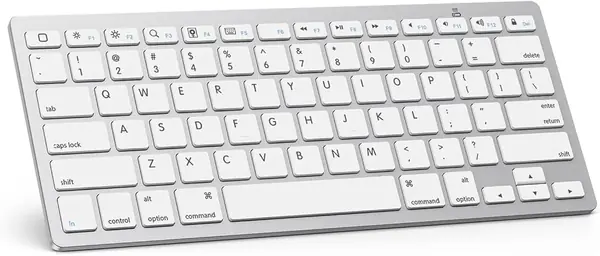
The OMOTON Ultra-Slim is the budget keyboard we recommend when the job is simple: a tablet, a bag, and a few paragraphs at a time. It is 0.2 inch thick and 160 grams, with a 78-key layout and 12 iOS shortcut keys. That combination is why it has stayed relevant while fancier decks have come and gone.

The typing experience is the surprise. The keys have a light, quiet scissor action, and the 11.2-inch width gives them more room than the smallest decks here. It is still a compact keyboard, not a desktop replacement, but it is comfortable enough for email and notes without feeling like a toy.

We stop short of calling it a long-term workhorse. The keycaps can pop off with heavy use, so if you type hard every day, spend more for a sturdier deck. If you want a spare keyboard for a tablet, this one is easy to justify.

The low price is the point, and the light build is the reason it disappears into a bag. Keep it in a sleeve, treat it as light-duty gear, and it will do the simple job well. It is not the keyboard we choose for a full day of writing, but it is the one we leave in the bag for the day the screen keyboard will not do.

Pros

  • Very light 160 g and 0.2 inch thick
  • 12 iOS shortcut keys
  • Budget-friendly spare keyboard

Cons

  • Not rechargeable; AAA batteries not included
Our verdict

The OMOTON Ultra-Slim is our budget pick for light note-taking, not for someone who types hard all day.

Check Latest Price
7

FINTIE 10-Inch Ultrathin Bluetooth Keyboard Tight Bag Space

86 /100
TKZ Score Excellent

Key details

Connectivity
Bluetooth
Battery
Rechargeable, Type-C
Dimensions
9.74"L x 5.91"W x 0.26"H
Keys
78
View on Amazon

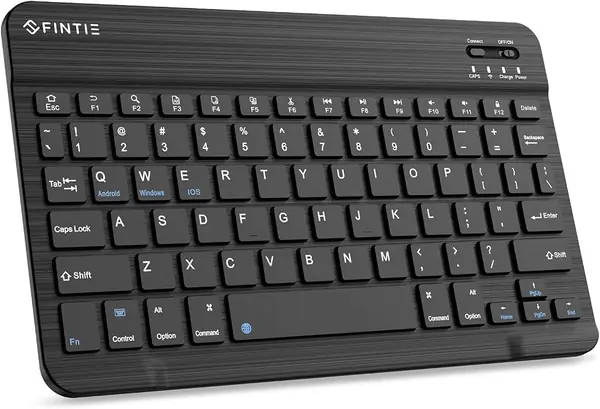
The FINTIE 10-Inch is the keyboard we tuck into a bag when space is tight. It measures 9.74 by 5.91 by 0.26 inches, so it takes up less room than the wider 11.2-inch decks here, and the Type-C charging port means one cable handles it and a modern tablet. The magnetic detachable design is a nice touch for travel, though it is not a substitute for a proper case.

The keys are scissor-style and quiet, and the 78-key layout covers the basics without adding a number pad. It pairs over Bluetooth with iOS and Android, and the compact body is light enough to forget in a tote. For quick notes, email, and search, the size is an advantage.

The trade-off is key size. At 9.74 inches wide, the deck is smaller than a full-size keyboard, and the keys can feel cramped for large hands. If you mostly type short notes, that is manageable; if you write for hours, choose a wider deck.

We see it as a travel spare rather than a primary keyboard. It is not the deck we choose for a full day of writing; it is the one we keep in the bag for the days when typing on glass will not do. That is a narrow job, and the FINTIE does it well.

Pros

  • Rechargeable over USB-C
  • Quiet scissor keys
  • Slim enough for a small bag

Cons

  • Battery life varies
Our verdict

Travelers who need a rechargeable backup keyboard with a tiny footprint are the buyers we have in mind for the FINTIE 10-Inch.

Check Latest Price
8

OMOTON Rechargeable Backlit Tablet Keyboard Best for Small-Desk Travel

84 /100
TKZ Score Excellent

Key details

Connectivity
Bluetooth
Battery
Rechargeable, Type-C
Backlight
Yes
Stand
Foldable, 5 angles
View on Amazon

The foldable stand is what makes the OMOTON Rechargeable Backlit more than another cheap backlit keyboard. It flips out to hold a tablet or phone at one of five angles, so you can set up a tiny workstation without packing a separate stand. For a small desk or a hotel room, that is a useful piece of design.

The keycaps are 27 percent larger than standard, which matters on a 78-key deck because it cuts down on accidental presses. The backlight is adjustable, the keyboard charges over USB-C, and the battery is rated for up to 200 hours with the backlight off. Those are the numbers that make it a credible travel keyboard.

The compromises show up in the connection and the key action. Bluetooth can disconnect, and the keys need a firm press. If you mostly type in short bursts, or use the stand more than the keys, those are easy trade-offs.

We recommend it when the stand is the feature that sells you. It turns a tablet into a small workstation in a way a flat deck cannot, and the backlight is a bonus for dim rooms. The stand is the part that earns its space in a bag; without it, this is just another budget keyboard.

Pros

  • Built-in foldable stand with five angles
  • Backlit keys with adjustable colors
  • Oversized keycaps

Cons

  • Backlight shortens battery life
Our verdict

Our pick for a small desk or a travel setup is the OMOTON Rechargeable Backlit, because the built-in stand earns its space.

Check Latest Price

How We Tested Tablet Keyboards

We started with research — spec sheets, compatibility lists, and the price bands where tablet keyboards actually sell, from budget standalone boards to full case-and-trackpad setups. Anything that paired with only one operating system, or had no clear way to recharge, got cut. That left 12 units to buy and live with, and each was judged against its own price tier, so a budget board wasn't penalized for skipping the trackpad.

Testing ran six months, in the places these keyboards actually live: a kitchen table during deadline weeks, a couch, a commuter train, hotel rooms, and a dark bedroom where I typed with the lamp off to find out whether backlighting was usable or just bright.

We timed pairing from a cold start, then switched each board between a tablet and a phone mid-sentence to see whether it kept up. On every unit we typed the same 300-word passage at speed and logged dropped keystrokes and lag after the keyboard woke from sleep. Each one got weighed, slid into a tote alongside a laptop and a water bottle, then attached to a tablet we held upside down and shook to check whether the magnetic hold was real.

Key sound had its own pass: in a quiet room I typed through a mock video call and noted which boards clacked loud enough to register on a mic. We ran backlights at full brightness until the battery died, then compared that against the same board with lighting off. Detachable models came on and off daily, and everything was tossed into bags to see whether keycaps wiggled or cases flexed at the hinge.

How to Choose a Tablet Keyboard

Match the Keyboard to Your Tablet

The first split is between a keyboard case and a standalone deck. A case like the Logitech Combo Touch is built for specific iPad generations, so check the model number before ordering: the 10th-gen and A16 version will not fit an iPad Pro 11-inch, and Apple's Pro case is cut for the M4 and M5 models. A standalone deck such as the Arteck HB098 pairs over Bluetooth and works across iPadOS, Android, Mac, and Windows, which makes it the better choice if you change tablets or share the keyboard.

For a standalone keyboard, check the listed width against your tablet. The HB098 is 11.2 inches wide; the FINTIE is 9.74 inches. Both are compact, but the wider deck leaves more room for your hands, while the narrower one fits a smaller bag.

Decide Between a Case and a Deck

Keyboard cases solve two problems at once: protection and typing. The Combo Touch adds a trackpad, backlight, and a back panel that guards the tablet, but it also adds 572 grams and a snug fit that can make removal stiff. A standalone deck keeps the tablet light and works with the case you already own. We reach for a case when the tablet leaves the house every day and a deck when the keyboard needs to serve several devices. Neither is universally better; the daily carry decides it.

Look Closely at Key Size and Layout

Compact keyboards usually have 78 keys, not the 104 you get on a desktop board. That saves space, but it also squeezes the keys together. The OMOTON Ultra-Slim is 11.2 inches wide, while the FINTIE is 9.74 inches; the difference is noticeable when you touch-type. Larger keycaps help, as on the OMOTON stand keyboard, which claims 27 percent bigger keys than standard. The trap is treating compact as a typing style. Compact in a listing means it fits a bag, not that it will feel like a laptop. If you write for hours, choose the wider deck or try the key spacing before you commit.

Choose Your Battery Routine

AAA keyboards are the low-maintenance option if you dislike charging: the Arteck HB098 includes two AAA cells and is rated for up to four months, while the OMOTON Ultra-Slim takes two AAA batteries that are not included. Rechargeable decks such as the Arteck Backlit and FINTIE use USB-C, but backlighting shortens runtime and batteries can stop holding a charge over time. We prefer AAA for a keyboard that lives in a bag and USB-C for a desk keyboard you remember to plug in. Check whether batteries are included before you leave the house with a new keyboard.

Pay for the Features You Will Use

Backlighting earns its keep if you type in dim rooms; the Arteck Backlit gives you seven colors and two brightness levels. A trackpad is worth the money only if you use the iPad as a laptop replacement, because it changes navigation and text selection but adds bulk and cost. Multi-device switching matters if the keyboard moves between a tablet, phone, and computer; the Logitech Pebble Keys 2 pairs with three devices and switches with a key. We prioritize the feature you will touch every day over the one that looks good in a spec list.

Frequently Asked Questions

Final Verdict

Start with the Arteck HB098 if you want one keyboard for a tablet, a phone, and the occasional laptop session; it is the least fussy way to add real keys. If you own an iPad 10th gen or A16 and want a trackpad, the Logitech Combo Touch is the better buy. iPad Pro 11-inch owners who use the tablet as a work machine should go straight to Apple's Magic Keyboard. The rest of the list is for a specific constraint: backlighting, a tight bag, or a built-in stand.