Best Outdoor Bluetooth Speakers of 2026

Last July, a friend's phone speaker gave up somewhere around the second round of burgers, and the cookout went quiet in the worst way. That's when a real outdoor Bluetooth speaker earns its keep—loud enough to carry over a grill and a dozen conversations, tough enough to shrug off a splash, light enough that nobody thinks twice about grabbing it on the way out.

My team and I have spent the past eight months with 12 of them, hauling them to backyard cookouts, pool decks, a river float, and a muddy camping trip. Spec sheets lie politely: a 24-hour playtime claim is measured at a volume you'd never use outdoors, and wattage says nothing about how clean the sound stays when you crank it.

What separates the keepers is how well they hold a Bluetooth connection from the far end of the yard, whether the bass holds together at party volume, and whether they still take a charge after a summer of sunscreen and sand. Size, weight, and whether the thing floats matter more than most shoppers expect—the picks below are the ones we'd hand you first.

The Best Outdoor Bluetooth Speakers

1

Soundcore Boom 2 Best Overall
96 /100
TKZ Score Outstanding

Key details

Playtime
24 hours
Waterproof Rating
IPX7, floats
Output
80 watts
Weight
3.7 lb
View on Amazon

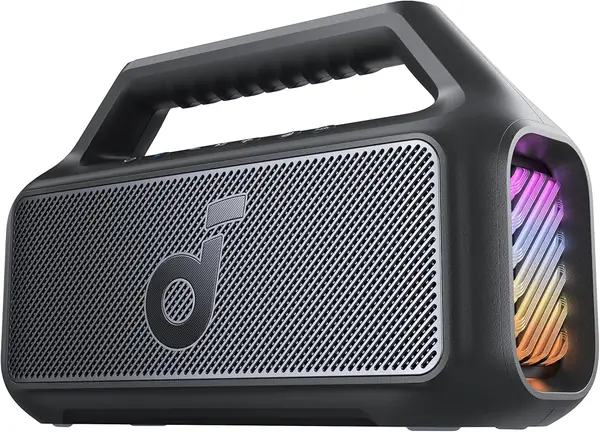
A speaker that floats changes how you use it. The Soundcore Boom 2 is rated IPX7 and built to bob back up, so a knock off the paddleboard is a laugh rather than a loss, and that more than any single number is why it's the pick we hand to most people. You get 80 watts through a dedicated 4-inch subwoofer, a claimed 24 hours, and a built-in powerbank, for less than either Bose on this list.

Outdoors is where that subwoofer earns its keep. Open air eats bass, and most portable speakers go thin the moment the walls come down; the Boom 2 keeps a bottom end you can feel across a yard, and the Pro EQ in the app lets you dial back the bass-forward tuning when you're playing something that isn't a party. We spent the first afternoon flattening the EQ and the second one turning BassUp back on.

The practical numbers hold up their end: 24 hours of playtime, a 5.5-hour recharge, and enough battery to top up a phone overnight. At 3.7 pounds and nearly a foot wide it takes a whole end of a tote bag, which we noticed the first time we packed for a beach day. This is a speaker you carry to the water, not one you carry up a trail.

One caveat before you take it to the sand: IPX7 rates water only. The X means dust isn't rated at all, so grit is a bigger threat than the surf, and a rinse and a proper dry beat letting sand work into the grille. No other speaker here pairs a floatable body, a dedicated subwoofer, and a powerbank in one box.

Pros

  • Floats and survives full immersion
  • Dedicated 4-inch subwoofer holds bass outdoors
  • 24-hour playtime with a built-in powerbank

Cons

  • IPX7 leaves dust unrated for beach sand
  • 3.7 pounds and nearly a foot wide
Our verdict

Our default outdoor speaker: it floats, shrugs off a dunking, and backs a real subwoofer with 24 hours and a powerbank.
Check Latest Price
2

Bose SoundLink Flex (2nd Gen) Best for Travel

95 /100
TKZ Score Outstanding

Key details

Playtime
12 hours
Waterproof Rating
IP67
Output
7.5 watts
Weight
1.3 lb
View on Amazon

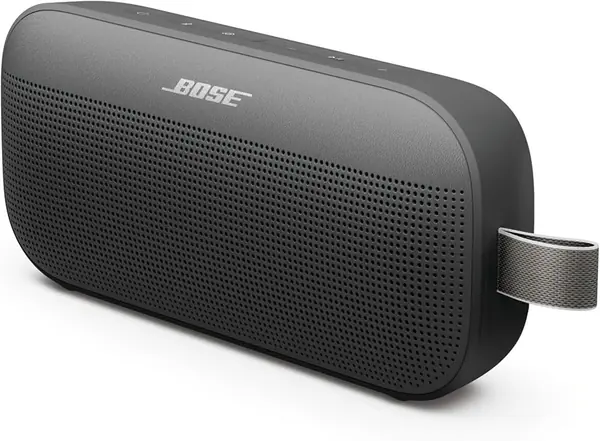
Nothing about the SoundLink Flex looks tough. It's a smooth slab about the size of a paperback, and then you notice the rating: IP67, dust-tight and waterproof, in a silicone-wrapped body that shrugs off being tossed into a bag. At 1.3 pounds and roughly two inches thick, it's the one here that genuinely disappears into a carry-on.

We reach for it when the trip involves a flight. The utility loop clips onto a backpack strap, 12 hours covers a day out, and the rubberized base stays put on a picnic table that isn't quite level. What it gives up is volume and low end: 7.5 watts through a small driver is patio volume, not yard volume, and you hear the difference beside the Boom 2 as soon as there are people talking.

Twelve hours is also on the short side for this group, and the battery is the part to test early, because a full-volume afternoon tells you more about your unit than any spec sheet does. The consolation is that it's the best-looking speaker here by a distance; the fabric-and-silicone slab looks as settled on a kitchen counter as it does on a blanket.

Pros

  • Fits a carry-on at 1.3 pounds
  • IP67 seals out dust as well as water
  • Non-slip silicone base stays level

Cons

  • 12-hour runtime trails the bigger picks
  • 7.5 watts won't carry a yard
Our verdict

Buy it if the speaker travels by plane: it packs like a paperback, seals out dust and water, and still sounds bigger than it looks.

Check Latest Price
3

JBL Charge 6 Best for Charging Your Phone

94 /100
TKZ Score Outstanding

Key details

Playtime
28 hours
Output
45 watts
Phone Charging
Built-in powerbank
Water Resistance
Waterproof and dustproof
View on Amazon

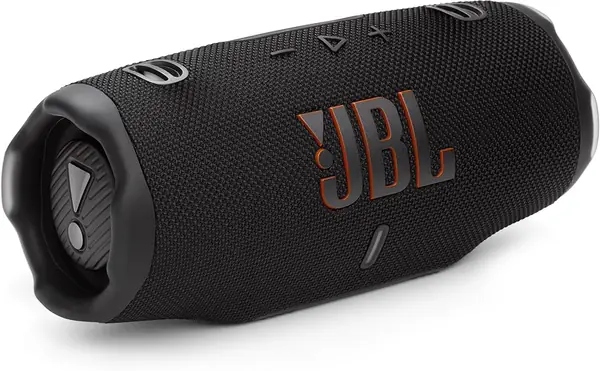
The Charge 6 is the speaker you bring when the phone is the thing most likely to die. Its built-in powerbank hands battery back to a phone, and across a two-night camping trip that's worth more than another ten watts of sound.

It's also the toughest-feeling unit here: waterproof, dustproof, and drop-proof, with a removable strap that makes the trip from car to house in one hand. Sound is classic JBL, forward and punchy and happy at volume, and 45 watts is enough for a deck full of people without the strain you hear from smaller speakers pushed hard.

Two things to plan around. There's no USB-C cable in the box, so bring your own, which is a strange omission on a speaker at this level. And the battery deserves a real test in the first weeks: the long runtime claim assumes moderate volume, and a charge that stops holding is the failure to catch while the return window is still open.

What it won't do is vanish into a daypack the way the Go 4 or the Flex will; at 2.2 pounds with the strap it's a deliberate carry. For long trips with a car at one end of them, that's a fair trade, and the phone charging is the reason to make it.

Pros

  • Charges a phone from its own battery
  • Waterproof, dustproof, and drop-proof
  • 45 watts with a removable carry strap

Cons

  • No USB-C charging cable in the box
  • Runtime drops sharply at high volume
Our verdict

Buy it if your phone runs out before your music does: this one gives power back, takes a drop, and still sounds like a JBL.

Check Latest Price
4

JBL Go 4 Best Ultra-Portable

93 /100
TKZ Score Outstanding

Key details

Playtime
7 hours, plus 2 boost
Waterproof Rating
IP67
Weight
0.42 lb
View on Amazon

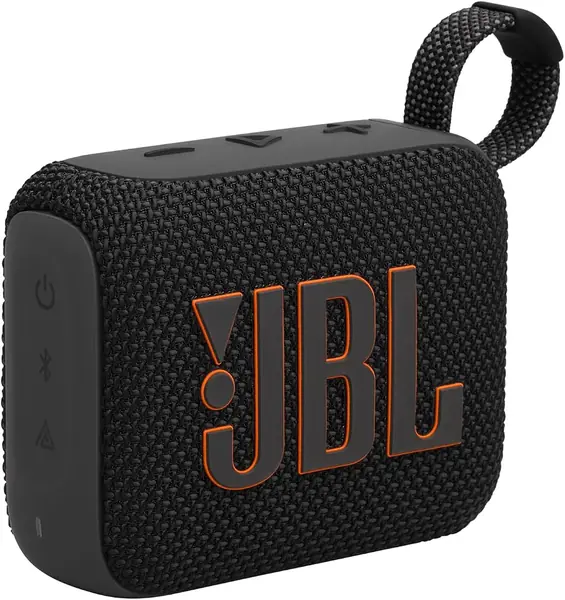
At 0.42 pounds, the Go 4 weighs less than the charger you bring for it. It's IP67, it has a built-in loop that clips onto a backpack strap or a belt, and it's small enough to vanish into a jacket pocket, which is the entire reason it's the speaker that actually comes along.

Seven hours, plus two more with Playtime Boost, is the shortest run in this group: enough for a round of golf or an afternoon at the river, not a weekend. It's also mono, so a single unit is a personal speaker, and a second one paired over Auracast is what turns two of them into stereo.

For a hotel room, a shower, a picnic blanket, or a kid's backpack, nothing here is easier to live with, and it's built partly from recycled plastic and fabric without feeling like a compromise. Just don't ask it to hold a yard. A palm-size driver has a ceiling, and outdoors you'll hear exactly where that ceiling is.

Pros

  • 0.42 pounds with a clip-on loop
  • IP67 dustproof and waterproof
  • Playtime Boost stretches it to nine hours

Cons

  • Seven-hour runtime is the shortest here
  • Mono until you add a second unit
Our verdict

The one to buy for a pocket: it costs little, survives everything, and clips to a strap so it comes along without a decision.

Check Latest Price
5

Anker soundcore 2 Best Budget

91 /100
TKZ Score Outstanding

Key details

Playtime
24 hours
Waterproof Rating
IPX7
Output
12 watts
Battery
5,200 mAh
View on Amazon

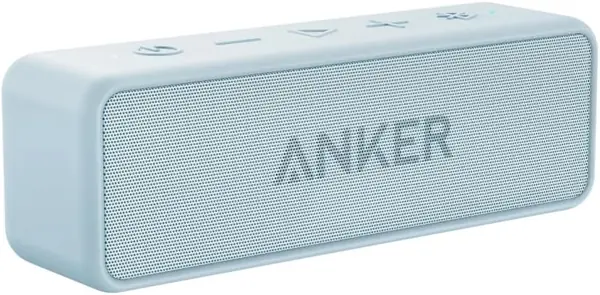
Twelve watts doesn't sound like much for an outdoor speaker, and the soundcore 2 is the plainest thing here: a rounded blue box with a few buttons on top. It's also the cheapest speaker we'd trust at a beach, with IPX7, a claimed 24 hours from a 5,200 mAh battery, and wireless stereo pairing, for less than any other speaker here rated for full immersion.

Two of them are the real play. Wireless stereo pairing makes a pair a genuine left-right set, and two soundcore 2s still come in under a single mid-range speaker here. Split them across a campsite, or put one at each end of a long table, and the space fills in a way one small box never manages.

It won't fill a yard, and 12 watts of bass is more of a suggestion than a punch. What it will do is survive a dropped canoe, run all day, and cost little enough that nobody panics when it lands on a dock. That's the honest job description of a budget outdoor speaker, and this one has been doing it long enough that the design has nothing left to prove.

Pros

  • IPX7 waterproofing with 24-hour playtime
  • Two units pair for real stereo
  • Least expensive dunk-proof pick here

Cons

  • 12 watts suits a patio, not a crowd
Our verdict

Buy two. It's the cheapest speaker here that survives a dunking, and a pair costs less than any single mid-range pick.

Check Latest Price
6

Bose SoundLink Max Best Big Sound

90 /100
TKZ Score Outstanding

Key details

Playtime
20 hours
Waterproof Rating
IP67
Weight
4.9 lb
Handle
Removable rope handle
View on Amazon

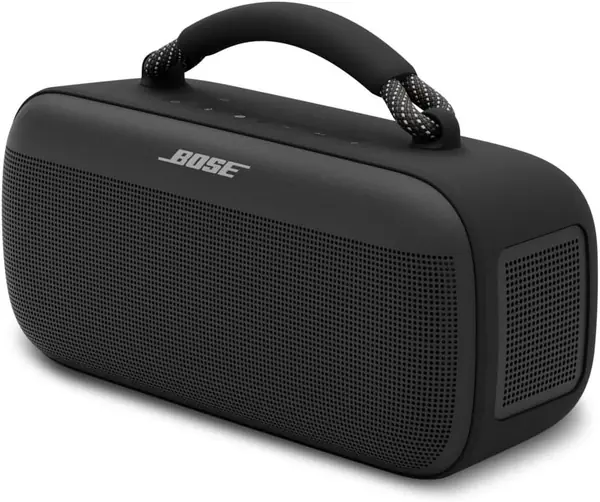
The SoundLink Max wears a climbing-rope handle, and that isn't decoration. At 4.9 pounds it's the heaviest speaker here, and the rope is how you get it from the car to the table in one trip without hugging it.

The sound is the reason to carry it. This is the fullest, warmest speaker in the group, and it holds together at volume in a way the palm-size units simply can't: bass you feel through a deck, vocals that stay clear when the grill is going. A 3.5mm input is a quiet bonus that takes a projector or a small mixer without a dongle, and the USB-C port can charge a phone.

Two reservations. Twenty hours is respectable but it trails cheaper speakers here, and the price is the highest in this group by a wide margin. The power button and the charging circuit are the parts to exercise while the warranty is fresh, because a premium speaker that stops taking a charge is an expensive kind of annoying.

If it lives on a patio or a boat and never rides in a backpack, this is the best sound you can carry out of the house, and the rope handle means you'll actually move it around instead of leaving it where it landed. If it's going in a bag, the Flex is the smarter buy.

Pros

  • Fullest, warmest sound in this group
  • 3.5mm input takes a projector or mixer
  • IP67 body that is shock and rust resistant

Cons

  • The priciest speaker in this group
  • 20-hour runtime trails cheaper picks
Our verdict

Buy it if the speaker lives on the deck rather than in a bag, and you want the fullest sound in this group by a clear margin.

Check Latest Price
7

BassBloom ROAR 3 First Speaker

89 /100
TKZ Score Excellent

Key details

Playtime
24 hours
Waterproof Rating
IPX6
Weight
1.1 lb
Battery Display
Percentage readout
View on Amazon

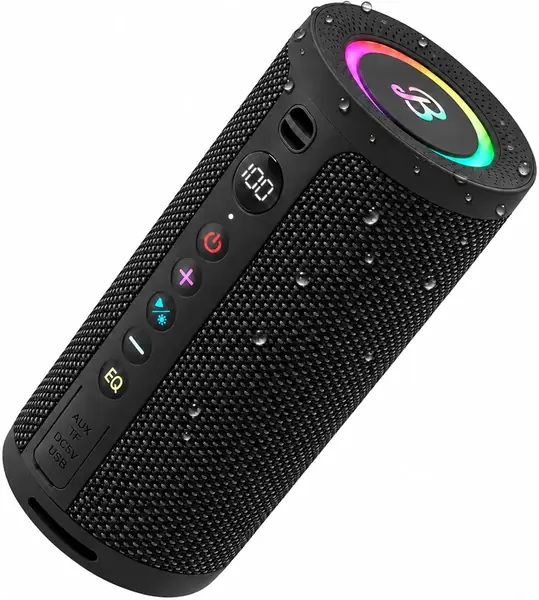
A percentage readout on a battery-powered speaker sounds like a gimmick until you're breaking camp and guessing whether you have enough left for dinner. The ROAR 3 shows the number in plain digits, and that turns out to matter more than the light show.

At the bottom of the price range, the display is what separates it from every other cheap speaker: IPX6, Bluetooth 5.4, a claimed 24 hours, TWS pairing for a second unit, and RGB light, all in 1.1 pounds with a carry strap. Our reservation is the rating itself, since IPX6 handles rain and jets of water but not immersion, so this is a patio, picnic, and campsite speaker rather than a pool toy.

The bass is the other surprise. It holds up at low volume, which is exactly where budget speakers usually go thin, and it gets loud enough to be the only speaker at a small gathering. At this price, the readout and the strap are worth more than another watt.

Pros

  • Battery percentage shown in plain numbers
  • 1.1 pounds with a carry strap
  • Bass holds up at low volume

Cons

  • IPX6 handles splashes but not a dunking
Our verdict

A fine first outdoor speaker, and the battery readout makes it the easiest cheap one to live with on a trip.

Check Latest Price
8

Houl Zallee Outdoor Speaker Best for River Trips

88 /100
TKZ Score Excellent

Key details

Playtime
32 hours
Waterproof Rating
IPX7, floats
Output
90W peak, 50W RMS
View on Amazon

Ninety watts peak, 32 hours, IPX7, and it floats. On paper the Houl Zallee reads like the biggest outdoor speaker here, and it undercuts the Bose SoundLink Max while claiming more playtime than anything else in this group.

The hardware backs the ambition: two tweeters, two woofers, four drivers, and dual passive radiators in an ABS and metal body with a carry handle, shock-resistant and rated to survive a dunking. Thirty-two hours is four more than the next longest claim here, and it's one of only two speakers in this group that floats, which is the difference between a speaker you set beside the water and one you take onto it.

Read the wattage carefully. Ninety is the peak figure and 50 is the sustained RMS one, and the gap between them is a good reminder to check how any speaker's power is quoted before comparing it to another brand's number. What you're buying here is endurance and buoyancy in one box. For day trips the Boom 2 does the same job and costs less; for a long paddle with no outlet at the end, this is the one that finishes the trip.

Pros

  • 32-hour playtime, the longest here
  • IPX7 and it floats
  • Four drivers in an ABS and metal body

Cons

  • Costs more than the top pick
  • Peak wattage overstates sustained output
Our verdict

Buy it for a multi-day river trip where nothing else will run from Friday to Sunday, and you want it to float.

Check Latest Price

How We Tested Outdoor Bluetooth Speakers

We built the shortlist from customer reviews and best-seller pages, then filtered hard: nothing without a real water-and-dust rating, nothing whose quoted playtime looked like a rounding error, and nothing you couldn't reasonably carry to a pool, a trailhead, or a tailgate. That left 12 units spread across the price range and size classes.

Those 12 have been in rotation for eight months. They've lived on pool decks and picnic blankets, ridden in bike baskets and kayak wells, sat through a rainy campsite and a sandy beach day, and DJ'd more than one backyard dinner. We also let each one drift in the shallow end to see which ones actually float and which sink politely to the bottom.

At every stop we did the same things: played the same three tracks and walked to the far corner of the yard to hear how much detail survived, pushed the volume until the sound broke up and noted where that happened, and paired two speakers together to count dropouts through a fence and around a wall. Battery life got timed from full to dead at a realistic 60 percent volume, which is why our numbers rarely match the box.

We weighed each speaker, stuffed it into a backpack pocket and a bike bottle cage, and hosed the sand off afterward to see what still worked. Reliability got the ugly tests—a waist-high drop onto concrete, an afternoon in a hot car, a lot of jostling against keys—and at the end we stacked price against what each one actually delivered.

How to Choose an Outdoor Bluetooth Speaker

Water Ratings Answer Two Different Questions

An IP rating carries two digits, and outdoor shoppers tend to read only one of them. IPX7 means the speaker survives a dunking but says nothing about dust, because the X is an unrated first digit. IP67 covers immersion and dust both, which matters more on a beach than on a pool deck. IPX6 handles jets of water but not submersion, and IPX4 is a splash on the patio and nothing more.

If the speaker is going in the water, ask for a 7 or an 8. If it's going on sand, the first digit is worth having too. Then check the port cover, because on most waterproof speakers the seal is the waterproofing.

Runtime Is a Volume Setting, Not a Guarantee

The hour counts on the box are measured at moderate volume. Open air and party volume burn through them noticeably faster, so treat a 24-hour claim as a long weekend rather than three days of music. Recharge time matters just as much: 5.5 hours for the Soundcore Boom 2 and 5 hours for the SoundLink Max mean a dead speaker is out for a night, not an hour.

Aim for a claimed runtime roughly double the length of your longest outing, and charge the night before rather than at the trailhead.

Watts Tell You Less Than Bass Does

A wattage figure is a rough size guide, not a volume promise. A well-tuned 7.5-watt speaker can sound cleaner than a cheap 30-watt one, and peak figures describe a burst rather than sustained output. What actually changes outdoors is low end, because open air swallows bass. That's why a dedicated subwoofer, like the 4-inch driver in the Soundcore Boom 2, does more for a yard than another 20 watts on a small driver.

Match the speaker to the space: palm-size for a blanket, 45 watts and up for a deck full of people.

Weight Decides Whether It Leaves the House

The spread in this group runs from 0.42 pounds to 4.9, and that difference decides how the speaker gets used. Under a pound and a half with a loop or strap, it goes in a pack and comes out at lunch. Three to four pounds is a bag speaker, fine when a car is involved and a nuisance on a hike. Near five pounds, it lives where you set it down.

Be honest about which of those is your summer. A great speaker left on a shelf is worse than a mediocre one in your bag.

Multi-Speaker Pairing Is Brand-Locked

Stereo pairing only works inside one brand. JBL's Auracast links JBL speakers to each other, Bose pairs with Bose, and the budget models run their own TWS protocol. A JBL will not pair with a Bose however good the deal is.

So if you plan to add a second unit later, one for the campsite and one for the boat, pick the brand first and confirm both models use the same pairing system. The JBL Go 4 and the Charge 6 both use Auracast, for instance. Buy one now and a matching one next summer if money is tight.

Frequently Asked Questions

Final Verdict

Start with the Soundcore Boom 2. It's the only speaker here that combines a floatable, fully waterproof body with a dedicated subwoofer, 24 hours of claimed playtime, and a powerbank, and it costs less than either Bose. For most people that's the whole decision.

Change one requirement and the answer moves. If the speaker has to fit in a carry-on, the Bose SoundLink Flex 2 is more than two pounds lighter and just as weatherproof, at the cost of volume. If it never leaves the deck, the SoundLink Max is the best sound here and the 4.9 pounds stop mattering.