Best Midrange Earbuds of 2026

The middle of the earbuds market is where most of us actually shop — past the throwaway pairs that go quiet in a season, short of the flagships that cost as much as a phone. It's also where the box numbers stop meaning much: battery life is usually the case, not the buds, and noise cancellation only works as well as the tip you happened to seal in your ear.

My team and I wore 12 pairs through six months of commutes, gym sessions, and grocery runs. The spec sheet predicted surprisingly little — a modest-looking pair sounded warm and stayed put on a run, while a busier model with adaptive noise cancellation and spatial audio needed a different ear tip before the bass and the quiet showed up.

Comfort worked the same way: the pairs I forgot about after three hours were never the heaviest or the fanciest. Below you'll find picks for commuters, gym regulars, people on calls all afternoon, and anyone who just wants buds that connect on the first try and survive the bottom of a bag. We judged sound, noise cancellation, comfort, battery life, fit, connectivity, and how they held up over months rather than on day one.

The Best Midrange Earbuds

1

soundcore P31i Best Overall
90 /100
TKZ Score Outstanding

Key details

Battery
10 hrs, 50 with case
Noise Cancellation
Adaptive ANC up to 52 dB
Water Resistance
IP55
Audio
LDAC, Hi-Res certified
View on Amazon

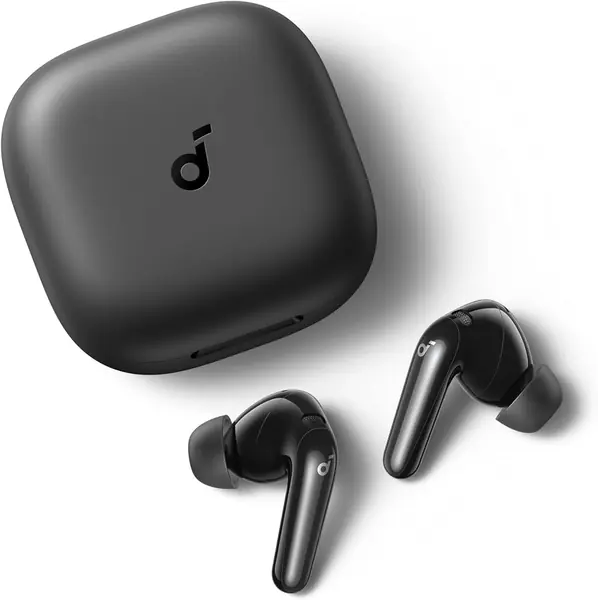
Two numbers explain why this is the pair we recommend first: adaptive noise cancellation rated to 52 dB, and LDAC, the hi-res codec Android phones can actually use. Real cancellation and a hi-res codec rarely turn up together at the bottom of the midrange, and nothing else here asks you to give something back to get both. IP55 sealing, six microphones for calls, ten hours per charge and fifty with the case round it out.

Wearing them is the part that takes work. The nozzle sits deep, and a deep fit is exactly where earbuds start dividing people: with the right tip from the four in the box the seal is solid and the bass has something to push against; with the wrong one you'll spend the afternoon pushing them back in. Start with the largest tip that seals without pressure, then work down. The effort pays off, because a proper seal does half the noise cancelling for you.

The case is glossy enough to slide off a tray table, and pairing took a second attempt the first time we set them up. Both are small annoyances rather than dealbreakers. The soundcore app is where EQ and firmware updates live, so give it five minutes on day one instead of discovering it a month in.

There's also real-time translation across more than 100 languages, which you'll either use constantly on work trips or forget exists. We're glad it isn't the headline. The reason to buy is cancellation that holds up on a train, sound you can shape to taste, and battery that outlasts a week of short walks between charges.

Pros

  • Adaptive ANC rated to 52 dB
  • LDAC hi-res audio support
  • 50 hours total with the case

Cons

  • Deep fit is hit-or-miss for smaller ears
  • Occasional pairing hiccups
Our verdict

We recommend the P31i to anyone who wants real noise cancellation and hi-res audio without flagship money, provided you take two minutes to get the tip size right.
Check Latest Price
2

Apple AirPods 5 Best for iPhone

89 /100
TKZ Score Excellent

Key details

Noise Cancellation
ANC with Adaptive Audio
Case
Wireless charging
Chip
Apple H2
Extras
Live Translation
View on Amazon

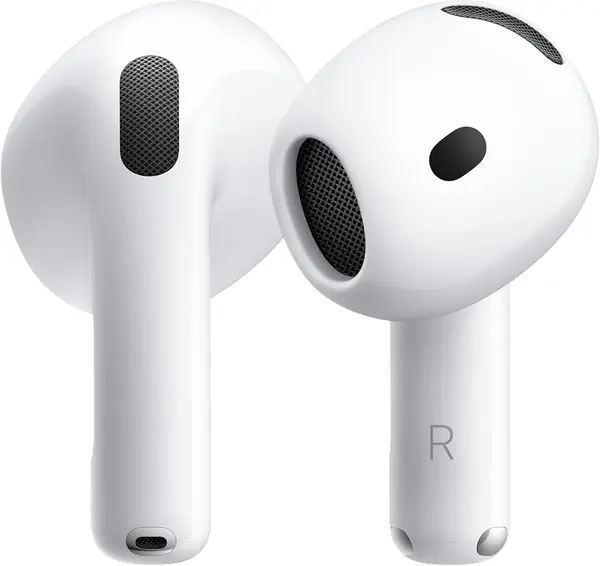
Open the case next to an iPhone and they're connected before they're in your ears; move to a Mac and the audio follows without a menu. Nothing else on this list is that frictionless, and it's most of what you're paying for.

We think the value here is real but narrow. If your day runs through Apple devices, the H2 chip, Active Noise Cancellation, Adaptive Audio and Live Translation add up to a genuinely easier pair of earbuds, and the settings you'd otherwise dig for are simply handled. If you carry an Android phone, almost every one of those extras is unavailable to you, and the P31i costs a fraction of the money while doing the important parts well.

Cancellation is the strongest here: the blend between noise cancelling and transparency adjusts without you touching anything, and a conversation doesn't require removing a bud. Fit is the soft spot. The shape either sits in your ear or it doesn't, and unlike a tip-based design there's no second option to switch to, so try a pair in person or buy where returns are easy.

Battery is the other question mark, and runtime is the most uneven part of the package. Keep the case topped up; wireless charging makes that easy, and a case that sits on a pad overnight is one less cable to think about.

Pros

  • Effortless pairing across Apple devices
  • Strong ANC with Adaptive Audio
  • Wireless charging case

Cons

  • Fit doesn't suit every ear
  • Battery life is the most uneven part
Our verdict

We recommend AirPods 5 to iPhone owners who want the least fiddly pairing, the best noise cancellation here, and a wireless charging case that simply works.

Check Latest Price
3

soundcore P30i Best Value

88 /100
TKZ Score Excellent

Key details

Battery
10 hrs, 45 with case
Noise Cancellation
Adaptive ANC up to 42 dB
Case
Doubles as phone stand
Water Resistance
IP54
View on Amazon

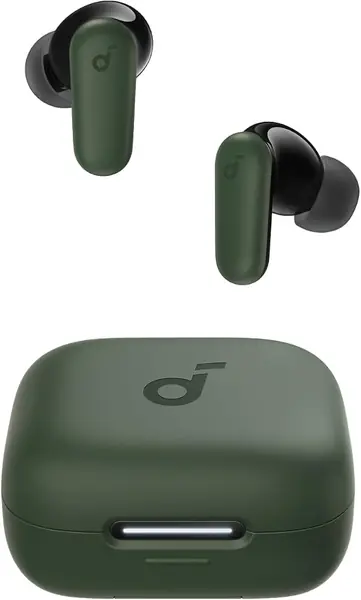
The back panel of the case flips open into a phone stand, which sounds like a novelty until you're on a plane with a tray table and nowhere to prop your phone. We used it more than any other feature on these earbuds, and it isn't the only thing they get right: 42 dB of adaptive cancellation, 10 mm drivers with soundcore's BassUp tuning, IP54, and 45 hours with the case.

Cancellation at this price is the surprise. It won't match the P31i's 52 dB rating, but the adaptive system handles an office or a bus without the pressure feeling that cheaper cancellation systems produce. Fit is friendlier than most here too: these are on the small side, the case is slim enough to disappear in a pocket, and a seal is easy to find with the tips in the box.

Bass is where taste comes in. BassUp pushes the low end hard, which is fun on hip-hop and a little thick on acoustic records; the EQ in soundcore's app is the fix, and it's worth ten minutes of setup. Controls are touch-based and responsive, and transparency mode is clear enough to hold a conversation without pulling a bud out.

Two things to know before you buy. The stand needs a flat, steady surface, so it's great on a tray table and useless on a bus. And if the connection stutters in the first weeks, don't sit out the return window hoping firmware will fix it.

Pros

  • Adaptive ANC rated up to 42 dB
  • Case doubles as a phone stand
  • Small shape that suits smaller ears

Cons

  • Stand needs a flat, steady surface
  • Connection dropouts can appear
Our verdict

We recommend the P30i to anyone shopping on value: real adaptive noise cancellation, a case that doubles as a phone stand, and a small shape that suits smaller ears.

Check Latest Price
4

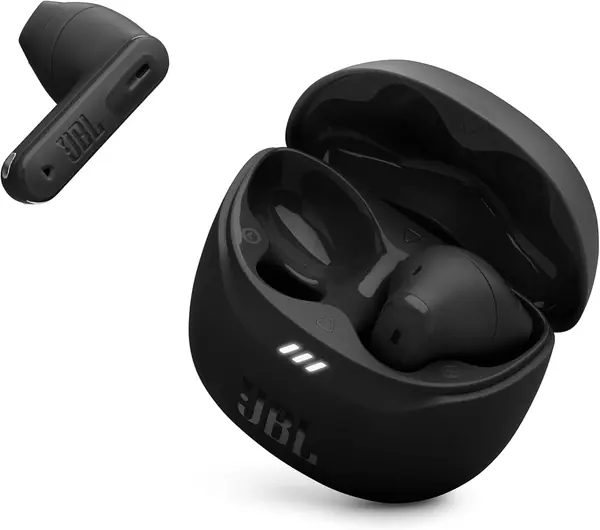
JBL Tune Flex 2 Best for Flexible Fit

87 /100
TKZ Score Excellent

Key details

Battery
48 hrs with case
Noise Cancellation
Adaptive ANC, Smart Ambient
Drivers
12 mm dynamic
Ear Tips
Closed and open sets
View on Amazon

Two sets of ear tips come in the box, and they aren't spares. One seals into the canal for full isolation; the other rests at the opening for an open-ear feel that lets traffic and conversation through. It's the only pair here that changes its whole character with a tip swap, and after a week we stopped thinking of it as a gimmick: closed tips for a flight, open tips for a bike path.

Behind that sits a 12 mm driver, JBL's Pure Bass tuning, spatial sound, and six microphones. Adaptive noise cancellation and Smart Ambient handle the outside world, and the app adds Personi-Fi, a hearing-profile EQ that shapes output around your own ears. Battery is rated at 12 hours per charge and 48 with the case with cancellation off, or 8 and 32 with it on.

Where we land is that these are the pair for someone who wants one set of buds for the office and the street and doesn't mind fiddling to get there. The cancellation is good rather than great: it takes the edge off a train rather than removing the engine, and the open tips leak sound in both directions, so a quiet carriage isn't their setting. That's a fair trade for the flexibility.

The practical caution is that two tip systems mean more to get wrong, and the open tips only work when they sit exactly right. Give both a proper session before you settle on an everyday configuration.

Pros

  • Two tip modes change isolation and sound
  • 12 mm drivers with app EQ
  • 48 hours with the case

Cons

  • Cancellation is average next to the ANC picks here
  • Open tips leak sound both ways
Our verdict

We recommend the Tune Flex 2 to anyone who wants one pair for both focused listening and awareness, since the swappable tips earn their fiddling.

Check Latest Price
5

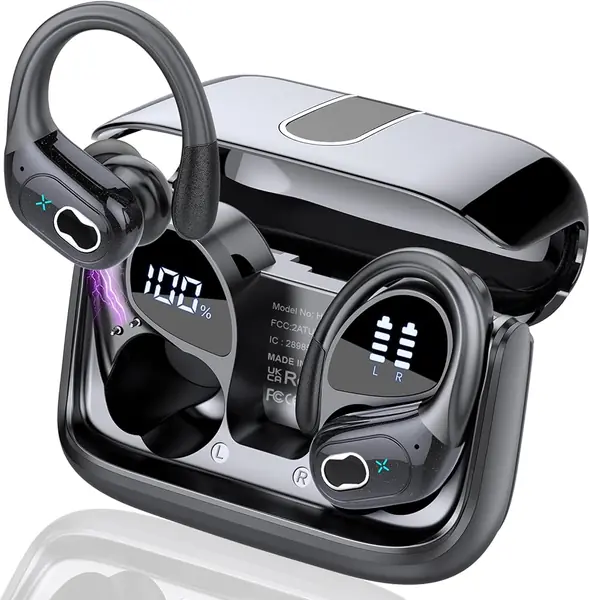
Aptkdoe HD65 Best for Workouts

86 /100
TKZ Score Excellent

Key details

Battery
15 hrs, 75 with case
Drivers
14.2 mm dynamic
Water Resistance
IPX7
Fit
Over-ear hooks
View on Amazon

There's no active noise cancellation here, and the noise cancelling mic in the title means the microphones work to keep your voice clear on calls, not to quiet a room. We're spelling that out because it's the one misunderstanding that would put someone on the wrong pair. What you get instead is hardware built for movement: TPU ear hooks that curve over the top of the ear, IPX7 waterproofing, and a 14.2 mm driver.

The hooks are the reason to care. Buds that sit loose in the canal work their way out when you sweat; these wrap over the ear and stay where you put them, and they sit comfortably alongside glasses, which isn't a given with hook designs. The case has an LED display for charge level, and the controls are physical buttons rather than touch, so they work with damp fingers and don't fire when you adjust the bud.

Battery is rated at 15 hours per charge and 75 with the case, the longest total here by a wide margin, and several long shifts between charges is realistic. Sound is loud and bass-forward rather than delicate: right for podcasts, audiobooks, and gym playlists, less so for careful listening.

If you run, lift, or work outdoors, this is the pair we point to. If you want silence on a plane, it isn't the one; the seal blocks some noise, but nothing here adapts to cancel it. Buy them for the fit and the water resistance, and treat the sound as good enough rather than special.

Pros

  • Ear hooks stay put through movement
  • IPX7 waterproof rating
  • 75 hours total with the case

Cons

  • No ANC, only call noise reduction
  • Bass-forward sound favors podcasts over detail
Our verdict

We recommend the HD65 to runners and gym-goers, because hooks that stay put, IPX7 waterproofing, and 75 hours with the case matter more than cancellation when you're moving.

Check Latest Price
6

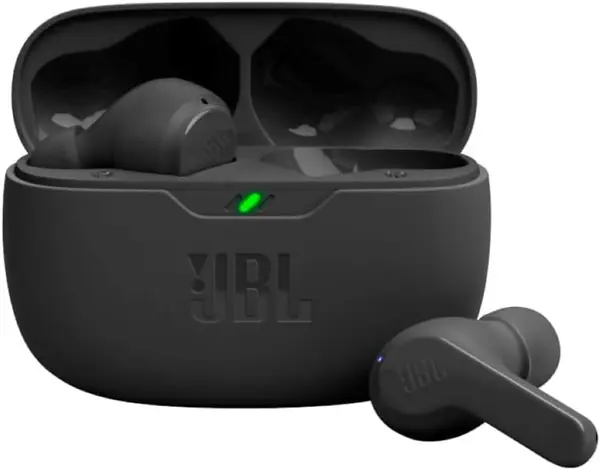
JBL Vibe Beam Best for Bass

85 /100
TKZ Score Excellent

Key details

Battery
8 hrs, 32 with case
Drivers
8 mm dynamic
Ambient
Smart Ambient, TalkThru
Noise Control
Passive isolation
View on Amazon

JBL's Deep Bass tuning is the entire promise: 8 mm drivers in a closed, stick-shaped bud, with 32 hours in total (8 in the buds, 24 in the case). There's no active noise cancellation. The closed design blocks some sound, and Smart Ambient and TalkThru let the world back in without removing a bud.

We like these for one job, and they do it well: loud, bassy, uncomplicated listening with a battery that goes a week of short trips between charges. If that's your commute, nothing here gives you more low end for the money. If you want quiet on a plane, spend more.

The catch is fit. The stick shape and closed nozzle sit deep and don't suit smaller ear canals; ours sealed on the medium tips, though the first few days involved a lot of swapping. If buds routinely work loose on you, this is the pair to be cautious about, and the hooks on the HD65 solve a problem this design can't.

Controls are touch-based and basic, the case is small enough for a jeans pocket, and the connection held steady in our use. It's a straightforward pair with no setup ritual, which is either the appeal or the dealbreaker depending on what you want from earbuds.

Pros

  • Deep, punchy JBL bass
  • 32 hours with the case
  • Smart Ambient and TalkThru

Cons

  • Stick shape slips on smaller ears
  • Noise control is passive only
Our verdict

We recommend the Vibe Beam to bass-first listeners on a tight budget who want long battery and don't need noise cancellation, as long as the stick shape suits their ears.

Check Latest Price
7

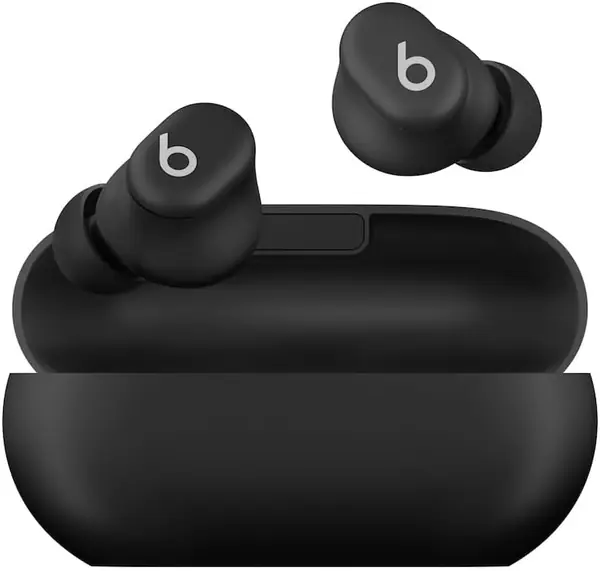
Beats Solo Buds Compact Carry

84 /100
TKZ Score Excellent

Key details

Battery
Up to 18 hrs
Case
Beats' smallest case
Ear Tips
Four sizes, XS to L
Charging
5 min for 1 hr
View on Amazon

Beats built these around the case, the smallest the brand makes, and it disappears into a coin pocket in a way nothing else here does. Beats rates them at 18 hours of listening, plus an hour of playback from five minutes on the charger. That 18 hours is the buds' own runtime, with no case top-up added to the figure.

Sound is the other half of the story. A custom acoustic architecture and dual-layer drivers aim audio down the canal, and the low end is fuller than the price suggests, though bass-heavy tracks can push them into distortion. The microphone is the standout: calls come through clearly, which is the thing budget-leaning pairs most often get wrong.

Where these earn their place is portability and calls, and where they don't is quiet. There's no active noise cancellation, and fit is the least predictable part of the package, so the four tip sizes are doing real work. We think they make sense as a second pair; anyone treating them as a primary set will miss the cancellation the rest of this list offers.

The laser-cut vents are the detail we didn't expect to matter. Sealed buds build pressure over a long day, and these relieve it, which is why they stay comfortable through an afternoon of calls.

Pros

  • Smallest case in this group
  • Clear call quality
  • Four tip sizes with pressure-relief vents

Cons

  • No active noise cancellation
  • Fit doesn't hold for every ear
Our verdict

We recommend the Solo Buds to anyone who wants the smallest case here and strong call quality, and who can live without active noise cancellation.

Check Latest Price

How We Chose and Tested 12 Pairs of Midrange Earbuds

We started by gathering the midrange models with real review volume behind them, then filtered out anything whose claims didn't survive a spec check — no ear tip options, no published water-resistance rating, no companion app. From a longer list we landed on 12 pairs and spent six months living with them: on buses and trains, on runs and gym floors, at the kitchen table during conference calls, and in the grocery store with a cart in one hand.

Battery runs were logged from full to dead in the buds themselves, counted separately from the case, and we noted whether a 20-minute top-up got us through a commute. For fit, we cycled through every included tip size, shook our heads, and ran in place; anything that needed constant re-seating got marked down no matter how good it sounded. Noise cancellation was judged on a noisy bus and beside a running dishwasher, listening for what leaked through — low engine rumble versus voices.

Comfort was a three-hour desk wear test plus a soreness check after a long walk. Controls got a hands-busy test: skipping tracks with a glove on, answering a call mid-walk, and digging into the app to see which settings required pulling out the phone. We toggled spatial audio and adaptive noise cancellation on and off mid-track to hear what actually changed. For connectivity, we left the phone in one room and walked to the other, then paired a laptop and a phone at once to see which pair switched cleanly and which dropped. Value and reliability we settled at the end, comparing what the cheaper pairs gave up, whether the pricier ones did anything the middle couldn't, and how hinges, case lids, and finishes looked after weeks in a bag.

How to Choose Midrange Earbuds

Fit Comes Before Any Specification

Fit is the one thing a spec sheet can't settle, and it's where nearly every pair here draws a line. Tip-based designs like the P31i and P30i give you three or four sizes to work with; hooks like the HD65 wrap over the ear and don't depend on the canal at all; stick-shaped buds like the Vibe Beam sit deeper and suit fewer ear shapes.

If buds have always worked loose on you, start with hooks or a small shell, and buy somewhere you can return. Glasses wearers should check that a hook or a shell clears the arms of their frames before committing.

Read the Battery Numbers Twice

The headline is total playtime with the case, and it's the number you'll use least. What matters day to day is hours per charge, because that's when the buds go back in the case. Noise cancellation drags those figures down: the Tune Flex 2 runs 12 hours per charge with cancellation off and 8 with it on.

Not every maker stacks the numbers the same way either. The Solo Buds' 18-hour rating is listening time on the buds, with no case top-up added to the figure, so compare per-charge hours first when a long commute is the reason you're buying.

Know What Noise Cancelling Means in the Title

Plenty of listings advertise a noise cancelling mic, which is a call-quality feature, not ANC. Real cancellation is a separate system: the P31i rates its adaptive ANC at 52 dB and the P30i at 42 dB, while the HD65 has none at all.

Depth matters most on a train or a plane and least on a quiet walk, where a good seal does more work than any processor. If you run outdoors, put transparency modes and a secure fit ahead of depth.

Check the Codec, the App, and the Warranty

Hi-res codecs only pay off on phones that support them: LDAC needs Android, and an iPhone gets more from the Apple ecosystem than from a codec badge. The companion app matters too, since JBL's adds Personi-Fi on the Tune Flex 2 and soundcore's carries the EQ and firmware updates. A pair with no app can't be retuned later.

Then read the warranty, which varies more than you might expect: one year on the JBL pairs, 18 months on the P31i, two years on the P30i and the HD65. Buy from a seller whose return window you can actually use in the first month.

Frequently Asked Questions

Final Verdict

Buy the soundcore P31i. Adaptive cancellation rated to 52 dB, LDAC audio, and 50 hours with the case is the strongest combination on this list, and it undercuts almost everything else here on price.

The one reason to look elsewhere is fit. If in-ear buds have always worked their way loose on you, the Aptkdoe HD65's hooks solve a problem no specification can, and a runner will get more out of them than out of any cancellation figure.