Best Earbuds for Sleeping of 2026

A snoring partner, a truck idling outside at 5 a.m., a hotel wall thinner than a curtain — the fix seems obvious until you roll onto your side and one earbud digs into your ear. Sleep earbuds are built for that eight-hour stretch against a pillow: small enough to disappear, quiet enough to mask what wakes you, and still alive when your alarm goes off. The wrong pair means sore ears and a dead battery at 3 a.m.

Worth knowing before you shop: in this category, "noise cancellation" usually means masking — a steady sound bed or a snug seal — not the active cancellation you'd get from a pair built for commuting. Battery numbers are also slippery, since some makers quote the buds alone and others quote the charging case.

My nightstand drawer is a graveyard of failed pairs, and over the past four months my team and I slept in 13 sets — side rolls, naps, red-eyes, and one memorably loud hotel — to figure out which ones actually leave you rested. What follows is what those nights taught us.

The Best Earbuds for Sleeping

1

Ozlo Sleepbuds 2 Best Overall
88 /100
TKZ Score Excellent

Key details

Weight Per Earbud
0.06 oz
Sleep Sounds
50+ built-in
Ear-tip Sizes
Four (XS to L)
Battery Per Charge
14 hours
View on Amazon

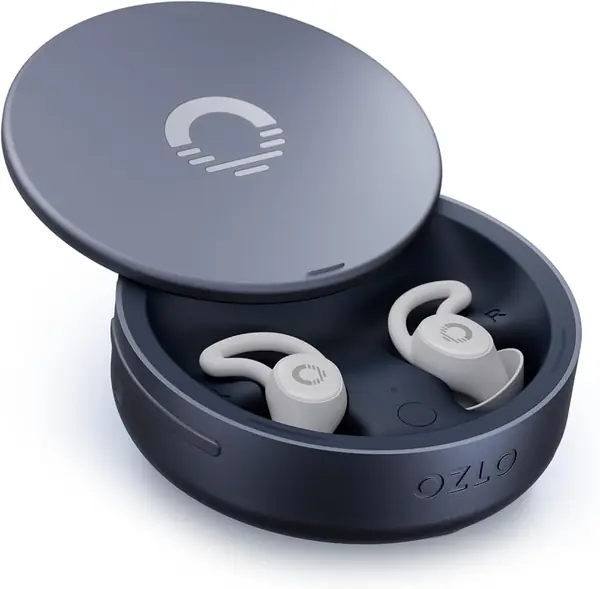
A sleep earbud has one job before it has any other: it has to disappear against the pillow. The Ozlo Sleepbuds 2 are built for that with a 1.6-gram bud that sits nearly flush and four ear-tip sizes from XS to L. We noticed the difference most when rolling from one side to the other; there is no stalk to catch and no hard edge digging in. The 14-hour per-charge battery is the other half of the pitch, because a pair that dies at 3 a.m. is not a sleep product.

That combination is why the Ozlo is our top pick. What we appreciate most is that it does not depend on your phone for the sounds that do the work. There are 50+ built-in sleep sounds, a sleep timer that fades audio, and an in-ear alarm that wakes only you. The smart case measures bedroom noise, light, and temperature overnight, which sounds like a gimmick until you want to know why one week of sleep felt worse than another. We paid closer attention to the case's charging routine than its insights, but the combination is genuinely purpose-built rather than a daytime earbud with a sleep label.

The trade-off is Bluetooth. Built-in masking sounds play reliably, but streaming a podcast or music from your phone is the least dependable part of the package, and the connection can need a fresh start. That matters less for sleep than for a commuting pair, since you can set the built-in sounds and leave the phone alone. If your nightly routine is a podcast, the connection is the thing to test during the return window.

Pros

  • 14 hours per charge covers a full night
  • 1.6 g buds sit flush for side sleeping
  • 50+ built-in sleep sounds work without a phone

Cons

  • Premium price for a single-purpose pair
Our verdict

For all-night masking, the Ozlo Sleepbuds 2 are our top pick: the 14-hour battery and 1.6-gram fit let us roll over without a charging interruption, and the built-in sounds work without a phone.
Check Latest Price
2

Monster Sleep Ear100 Best for Travel

87 /100
TKZ Score Excellent

Key details

Bluetooth
6.0
Noise Control
ENC
Playtime
Up to 32 hours
Water Resistance
IPX6
View on Amazon

The Monster Sleep Ear100 is the value alternative to our top pick, and the difference is easiest to see in the battery claims: 32 hours total versus the Ozlo's 14 hours per charge. That sounds like a rout until you notice the wording. The 32-hour figure is a total playtime claim, not a promise of 32 hours in your ears at once, so we read it as case-assisted travel endurance rather than one-night stamina. At a much lower price, it makes sense as the pair we pack when we don't want the premium set in a hotel room.

The rest of the package is built for movement: Bluetooth 6.0 for quick pairing, IPX6 for rain or a splash, and an ENC microphone for calls. We like the low-profile side-sleeper shape for a hotel bed or a red-eye, where you may be upright as often as flat. The Monster's pitch is sound quality and calls, so plan to stream white noise or download a sleep soundtrack before you board.

The practical catch is phone dependence. If your goal is to cover a snoring partner, the Monster needs a streamed track, and a Bluetooth dropout at 2 a.m. is exactly the kind of interruption you don't want. For travel noise, a downloaded track and a secure fit are enough; for home use, we rank it behind the purpose-built sleep pairs.

Pros

  • 32-hour total playtime claim for travel
  • IPX6 water resistance for trips
  • Low-profile side-sleeper shape

Cons

  • ENC is tuned for calls, not sleep masking
Our verdict

We reach for the Monster Sleep Ear100 for travel: it is low-profile, IPX6-rated, and has a long playtime claim, though you need to bring your own masking audio.

Check Latest Price
3

Ururtm Wired Sleep Earbuds Best Wired

86 /100
TKZ Score Excellent

Key details

Noise Control
Passive isolation
Weight
0.88 oz
Connection
3.5 mm wired
Cable Length
3.9 ft
View on Amazon

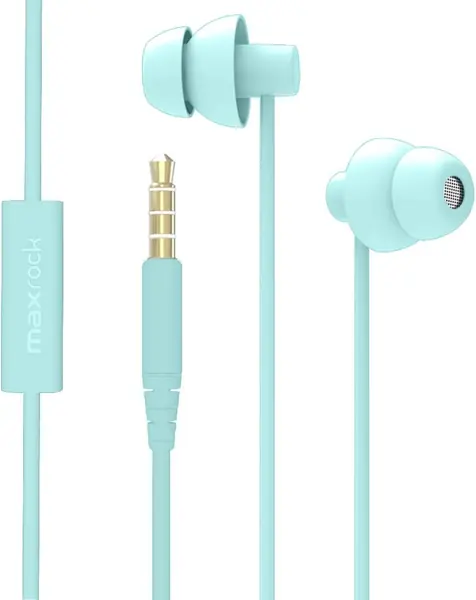
The Ururtm pair takes the most direct route to sleep audio: a 3.9-foot cable, a 3.5 mm plug, and no battery at all. There is nothing to charge, pair, or wake up to a dead-bud notification. The soft silicone housing is the part that matters for side sleeping, because it bends against the pillow instead of pressing a hard plastic shell into your ear. The double-layer tip design gives you two sizes to work with, which is more useful than it sounds if your canals are uneven.

The listing claims 70 to 90 percent passive noise reduction, and that is the right way to read it: this is isolation from a good seal, not active cancellation. We found the silicone comfortable enough to forget about, but a shallow seal lets more snoring through. The inline mic and button handle calls and play/pause, and the included zipper case keeps the cable from becoming a knot in a drawer.

Where the Ururtm gives ground is movement. A cable can tug when you roll, and the soft housing needs a decent seal to do its noise-reducing job. For a bedside radio, an older phone, or a laptop, that is a fair trade for never charging. We keep it on the list because no charging routine is still the most reliable routine here.

Pros

  • No battery to charge or replace
  • Soft silicone housing sits comfortably on a pillow
  • Passive isolation without electronics

Cons

  • Requires a 3.5 mm jack or adapter
Our verdict

We keep the Ururtm Wired Sleep Earbuds for the 3.5 mm holdouts: soft silicone comfort, no battery to recharge, and no pairing routine.

Check Latest Price
4

ZYHKON SU9 Touchscreen Case Control

85 /100
TKZ Score Excellent

Key details

Bluetooth
5.3
Weight Per Earbud
0.11 oz
Charging Case
Touchscreen display
Total Playtime
48 hours
View on Amazon

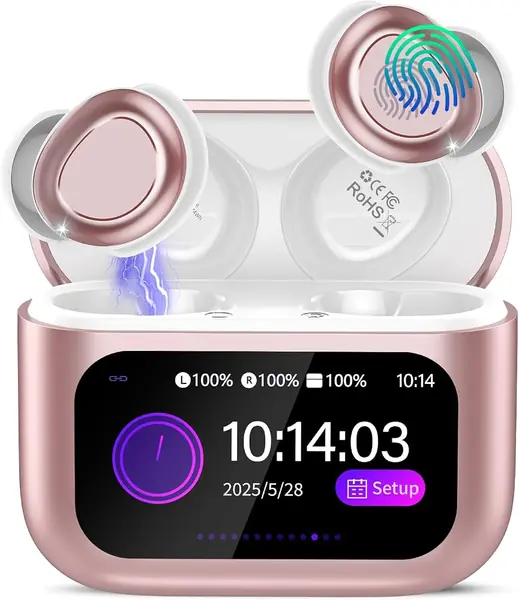
The SU9 is our pick for someone who wants featherlight buds and case controls: a full-color touchscreen handles sleep mode, EQ, and playback without sending you into an app. We like that at bedtime, when a bright phone screen is the last thing you want to pick up. The buds are 3 grams each, among the lightest here, and the in-ear shape is meant to sit low for side sleepers.

The 48-hour playtime claim is the largest in this set, and the case does most of the work; treat it as total time between outlets rather than a single overnight charge. The 13 mm drivers and sealed in-ear fit are aimed at full sound rather than a featherweight, and the touchscreen makes it easy to switch modes without fumbling for a phone. We see it as a desk-to-bedside pair: useful if you listen to music or a podcast as you settle, less so if you want a dedicated masking library.

The SU9 is also the pick here for someone who likes a visible battery readout and controls on the case. It is a listening pair first, so we reach for the Ozlo when blocking a snorer is the priority. The touchscreen is the detail that makes it feel more like a bedside device than a phone accessory.

Pros

  • 3 g per earbud stays light
  • 48-hour total playtime claim
  • Touchscreen case controls sleep mode and EQ

Cons

  • No active noise cancellation
Our verdict

The ZYHKON SU9 is our pick for featherlight buds and case controls; it is a listening pair, not a masking tool for loud snorers.

Check Latest Price
5

sunvito S25 Best for Short Sleep Sessions

84 /100
TKZ Score Excellent

Key details

Bluetooth
6.0
Weight Per Earbud
0.11 oz
Charging Case
LED display
Total Playtime
32 hours
View on Amazon

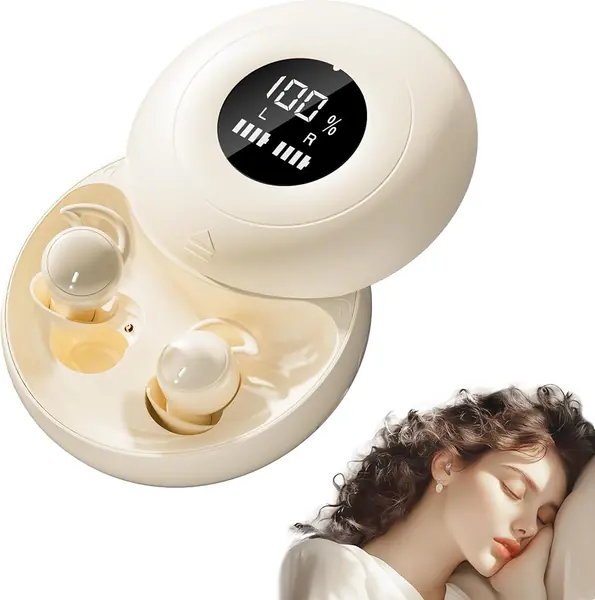
The S25 is for the nap, the short first stretch of sleep, or the sleeper who takes buds out halfway through the night. At 3 grams per bud, it has the same featherweight brief as the ZYHKON, and the 200 mAh case is rated for 32 hours total. The LED display on the case is a small thing we ended up liking: you can see the charge without opening an app or guessing from a blinking light.

Fit is where the S25 asks for patience. The shell is light, but a shallow seal can let it shift, and smaller ear canals may feel pressure from the tip rather than the bud. We treat it as a budget pair for a quiet room and a short session, not a masking tool for a noisy bedroom. The Bluetooth 6.0 connection and touch controls are straightforward, and the case reserve means you can recharge between naps without hunting for a cable.

The S25 is at its best when you are not asking for a full night. It is a bedside pair that lives in a drawer and comes out for occasional nights, and the low weight makes that easy. For nightly masking, we point you to the Ozlo; for a cheap second pair or a travel backup, the S25 is the easier spend.

Pros

  • Featherweight 3 g per earbud
  • 32-hour total case reserve
  • LED charge display

Cons

  • Per-charge playback falls short of a full night
Our verdict

We like the sunvito S25 for naps and short sleep sessions: it is light, has a useful charge display, and costs little, but it is not an all-night pair.

Check Latest Price

How We Tested Sleep Earbuds

We started with every sleep-specific pair we could find, then filtered by three things: how far the shell protrudes from the ear, whether the maker sized it for side sleepers or small ears, and whether reviewers reported genuinely wearing it all night. That left 13 sets, which we tested over four months.

Each pair went into real beds. We wore every set for at least five full nights, plus naps, a red-eye, and a weekend in a hotel room next to an ice machine. For masking, we played a snoring recording at a realistic volume and noted which pairs flattened it and which ones just added a hum on top.

Fit got the most attention, because that's where sleep earbuds fail. We logged whether we could feel the bud against the pillow after rolling onto each side, whether our ears ached by morning, and how many tries it took to seat them while half asleep. We also charged each set to full and ran masking sound until it died, noting whether the case carried a second night's charge.

Sound we judged on music and podcasts before lights out — muddy low end, hissy masking loops, volume steps that jump from barely there to loud. Each set was paired to an older phone and a newer one, with the phone left on the far nightstand to see whether the Bluetooth connection held, and we fumbled with touch controls and companion apps in the dark to count the misses. For durability, cases rode in a bag with keys and took a drop onto a wood floor, and we checked the buds after a sweaty night. Value came down to one question: would we pay for these again?

How to Choose Sleep Earbuds

Start With the Side-Sleeper Profile

A sleep earbud has to sit flush enough that your pillow presses on your ear, not on a plastic stalk. Look for a low-profile in-ear shape, a soft tip, and more than one tip size; the Ozlo's four sizes and 1.6-gram body are the clearest example here, while the Ururtm's soft silicone housing does the same job without electronics. The trap is the word mini. A pair of sleep headphones can look tiny in a photo and still press once your head is on the pillow, so check the profile and the tip, not the label. If you sleep on your side, start with the smallest tip that seals and give yourself a return window.

Read Battery as Per-Charge, Not Total

Sleep earbuds advertise big numbers, but a 32- or 48-hour figure usually includes the charging case. The number that matters overnight is the single-charge playback: the Ozlo lists 14 hours, while the sunvito S25 and several budget pairs are much shorter. If a listing gives only a total, assume it is case-assisted until you find the per-charge figure. For all-night masking, choose a pair that covers your sleep time plus a margin; for naps or short sessions, a smaller battery is a fair trade for a lower price.

Masking Is Not the Same as Cancellation

Noise cancellation is good at steady engine rumble; a snoring partner is a different problem. Built-in masking sounds, such as the Ozlo's 50+ library, cover the low rumble directly and keep working without a phone. Passive isolation from a good seal, as on the Ururtm and ZYHKON, can take the edge off, but it is not the same tool. If snoring is the main issue, prioritize a sleep-sound library or a pair you can stream to reliably; if you want quiet for calls, look at ENC, which is tuned for your voice rather than for masking.

Decide Whether You Want a Cable

A 3.5 mm wired pair removes charging, pairing, and Bluetooth dropouts from the bedtime routine; the Ururtm is the obvious choice here. The cost is a cable that can tug when you roll and a jack that many phones no longer have. Wireless gives you freedom of movement and a charging case, but you take on battery management and the occasional reconnect. If your phone has no headphone jack, price an adapter into the decision before you choose wired.

Frequently Asked Questions

Final Verdict

We recommend the Ozlo Sleepbuds 2 as the default for all-night sleepers. Its 14-hour per-charge battery, 1.6-gram buds, and built-in sleep sounds address the three things that most often wake people up: pressure on the ear, a dead battery, and a phone that needs managing at 2 a.m. It is a purpose-built sleep tool rather than a daytime earbud with a sleep label.

If you want to remove charging from the routine entirely, the Ururtm wired pair is the better buy for a phone or radio with a 3.5 mm jack. For travel, the Monster Sleep Ear100 is the easier pair to pack, as long as you bring your own masking audio.