Best Bluetooth Speakers for Classrooms of 2026

A classroom is a brutal listening room: hard floors, a hum from the HVAC, and a read-aloud that has to reach the kid in the back corner without turning into a shout. A speaker that drops its Bluetooth connection or distorts at full volume does more than annoy—it stops the lesson. What you need is a speaker that keeps speech clear, pairs fast, and survives being toted between rooms and wiped down at the end of the day.

We put 14 classroom-friendly Bluetooth speakers through four months of real school use, from morning meeting to indoor recess. The best value wasn't always the loudest model: a big wattage number on the box doesn't guarantee intelligible speech across a room, and battery life matters more when the outlet is behind a filing cabinet. Stereo pairing is a nice bonus for splitting a class into stations, but only if the two speakers stay in sync; splash resistance and a wipeable shell also beat a light show in my book. The picks below are the ones that held up to that routine, not just the first day.

The Best Bluetooth Speakers for Classrooms

1

OontZ Angle 3 Gen 4 Best Overall
93 /100
TKZ Score Outstanding

Key details

Playtime
Up to 24 hours
Output Power
12W
Bluetooth Range
100 feet
Inputs
Bluetooth and 3.5mm AUX
View on Amazon

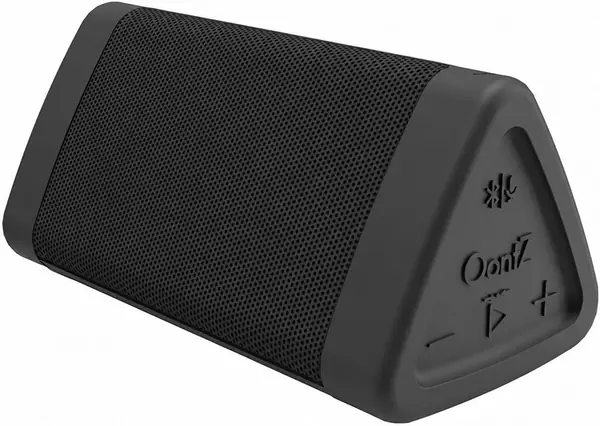
A teacher who walks to the back of the room should not have to worry about the audio dropping. The OontZ Angle 3 Gen 4 gives you a 100-foot Bluetooth range, which is the most useful number on its spec sheet for classroom use: you can leave the phone or tablet on the desk and still control the lesson from the reading corner. That range is why it is our first recommendation for a general classroom.

We recommend it as the default because it gets the classroom basics right: 12 watts of stereo output, up to 24 hours of playtime, and a 3.5mm AUX input for the projector or older desktop that never got Bluetooth. It is not the loudest speaker here, but 12 watts is enough for a standard classroom at a sensible volume; the Ortizan X10 has more headroom for large or noisy rooms.

The controls are simple, the compact body sits steadily on a shelf, and the 9.4-ounce weight makes it easy to move between rooms. We also appreciate that it can charge a phone in a pinch, though that is not why we picked it. The built-in speakerphone is a small bonus for taking a call without unplugging the lesson.

The IPX5 rating handles a splash from a water bottle, not a dunk in a sink. That is the one place we look elsewhere: the Anker Soundcore 2 is the better choice for a sink or science bench. For most classrooms, though, IPX5 is enough, and the OontZ's combination of range, AUX, and battery is why it stays at the top of our list.

Pros

  • 100-foot Bluetooth range
  • 12W stereo output plus AUX input
  • Up to 24 hours of playtime

Cons

No notable drawbacks to flag.

Our verdict

We recommend the OontZ Angle 3 Gen 4 as the classroom default because its 100-foot range, 12 watts, and AUX input handle moving teachers and older classroom gear.
Check Latest Price
2

Anker Soundcore 2 Best for Splash-Prone Rooms

92 /100
TKZ Score Outstanding

Key details

Playtime
Up to 24 hours
Output Power
12W
Bluetooth Range
20 meters
Water Resistance
IPX7
View on Amazon

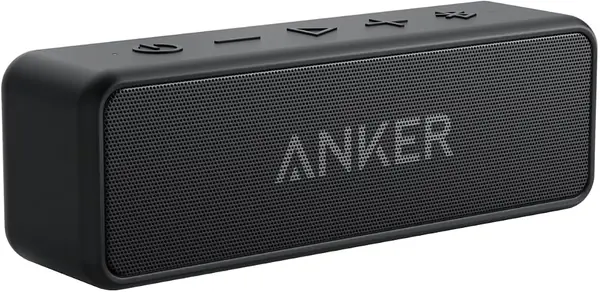
Art rooms and science labs are where a classroom speaker earns its waterproof rating. The Anker Soundcore 2 carries an IPX7 rating, which means it can handle temporary immersion, not just a splash. That is more protection than most classroom speakers need, and it is the reason this one has a place in the roundup.

It also matches the OontZ on the numbers that matter for playback: 12 watts, up to 24 hours of battery, and a compact body that weighs about 14.6 ounces. The 12-watt output is the same as our top pick, so it is a realistic whole-class option rather than a desk toy. The controls are simple, and the speaker is small enough to sit on a shelf without becoming a target.

We recommend the Soundcore 2 for rooms where liquids and curious hands are part of the day. It is not the speaker we choose for a big, noisy room; the Ortizan X10 has more power for that. For a standard classroom with a sink, it is the safer default, and the IPX7 shell wipes clean without special care.

Pros

  • IPX7 waterproof protection
  • 12 watts of stereo sound
  • Up to 24 hours of playtime

Cons

  • Shorter 20-meter Bluetooth range
Our verdict

We choose the Soundcore 2 for art and science rooms where a spilled cup is a real risk: its IPX7 shell and 24-hour battery make it the safer 12-watt pick.

Check Latest Price
3

Ortizan X10 Best for Larger Rooms

91 /100
TKZ Score Outstanding

Key details

Playtime
Up to 30 hours
Output Power
24W
Bluetooth Range
66 feet
Water Resistance
IPX7
View on Amazon

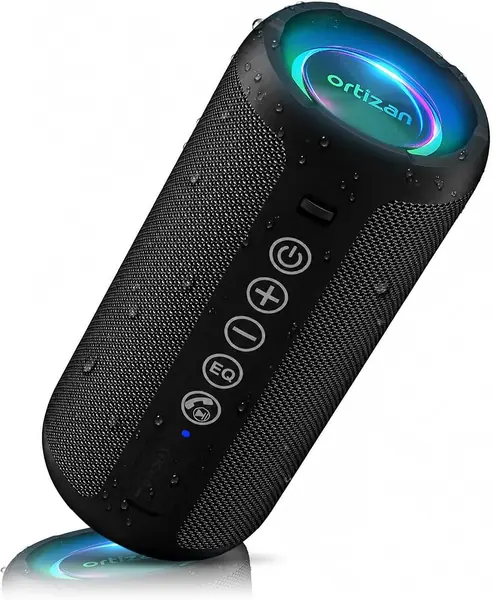
A 24-watt speaker is overkill for a quiet reading corner, but it is the right tool for a large classroom, a gym, or a music-and-movement session. The Ortizan X10 puts 24 watts through two 12-watt drivers and adds a 30-hour battery, so you can run it all day without hunting for an outlet.

We like the X10 for teachers who need more headroom than the 12-watt picks can give. The 66-foot Bluetooth range and the IPX7 rating give it useful flexibility, and the built-in EQ modes let you shift from spoken-word clarity to a fuller sound for music. It also has an AUX input and a TF card slot, which helps when you are working with older classroom equipment.

The trade-off is size. The X10 is a taller, heavier speaker than the compact picks, so it is less likely to live in a teacher's tote. If your room is large and you can keep the speaker on a shelf, the extra power is worth it; if you move between five rooms, the CHIFENCHY PulseSound is easier to carry. For a single large room, the X10 gives you a clear step up from the 12-watt picks.

Pros

  • 24 watts for larger rooms
  • Up to 30 hours of playtime
  • IPX7 waterproofing

Cons

  • Durability can vary
Our verdict

The Ortizan X10 is our pick for large or noisy rooms, where its 24 watts and 30-hour battery give a teacher more headroom than the 12-watt speakers.

Check Latest Price
4

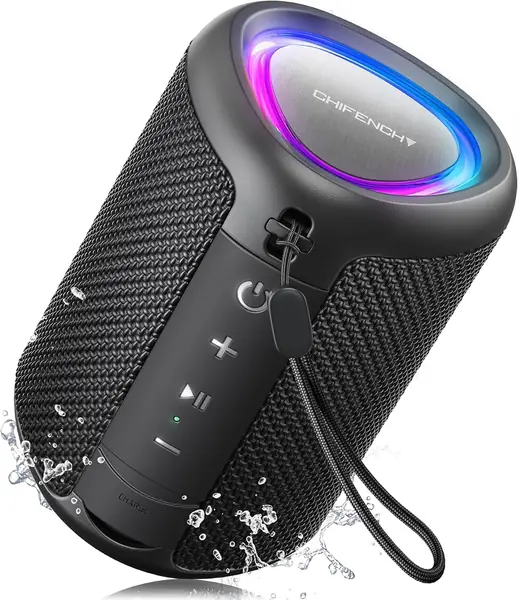
CHIFENCHY PulseSound Best Compact

90 /100
TKZ Score Outstanding

Key details

Playtime
Up to 15 hours
Output Power
15W
Bluetooth Range
100 feet
Weight
0.58 lb
View on Amazon

The CHIFENCHY PulseSound is the one we reach for when the classroom is small and the teacher's bag is already full. At 0.58 pounds and roughly three inches across, it takes up little space on a shelf, but it still puts out 15 watts and a 100-foot Bluetooth range.

We tested it as a take-along speaker: it fits in a tote, pairs quickly, and has an AUX input for a laptop or projector. The 15-hour battery is shorter than the 24-hour picks, so it is a charge-every-night speaker rather than a leave-it-for-a-week one. The built-in microphone is handy for a quick call, but the classroom job is playback.

We still like the PulseSound for small rooms and teachers who move between them, because the size and range make it easy to live with. It is the speaker we leave in the bag for a push-in lesson or a small reading group. For a teacher who does not want to carry a full-size speaker from room to room, that is the whole point.

Pros

  • Weighs just 0.58 pounds
  • 15 watts from a compact body
  • 100-foot Bluetooth range

Cons

  • Mono audio output
Our verdict

We like the PulseSound for small rooms and teachers on the move: it weighs 0.58 pounds, covers 100 feet, and still puts out 15 watts.

Check Latest Price
5

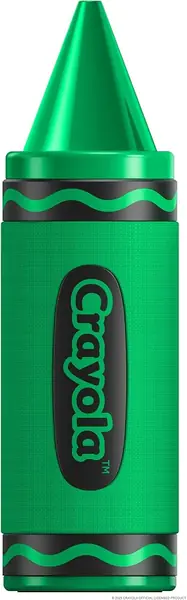
Crayola Kids Crayon Speaker Best for Preschool Rooms

89 /100
TKZ Score Excellent

Key details

Playtime
3 hours
Output Power
20W peak
Drivers
Dual 5W
Height
9.3 inches
View on Amazon

A speaker that looks like a giant crayon is not a gimmick in a preschool room. The Crayola Kids Crayon Speaker gives children a visual cue for where the music comes from, and the green body is easy to spot on a shelf. It is also a licensed Crayola product, so the shape is familiar rather than random.

We recommend it for preschool and early-elementary teachers who want a speaker that feels like part of the classroom rather than a piece of tech. It has 20 watts of peak power from dual 5-watt drivers, simple controls, and a Bluetooth 5.3 connection. The sound is sized for circle time and movement songs, not for filling a gym.

The crayon design does something practical: children can see where the sound is coming from, and the speaker does not look like a piece of expensive equipment that needs protecting. It is light enough to move from the art table to the story corner, and the USB-C charging cable is the same type as many classroom devices. For a teacher who wants one less thing to explain, that visual cue is part of the value.

Pros

  • Kid-friendly crayon design
  • 20 watts peak output
  • Simple controls for circle time

Cons

  • Only 3 hours of battery
  • Not water resistant
Our verdict

We recommend the Crayola speaker for preschool circle time, where its kid-friendly crayon shape and simple controls matter as much as its 20-watt peak output.

Check Latest Price
6

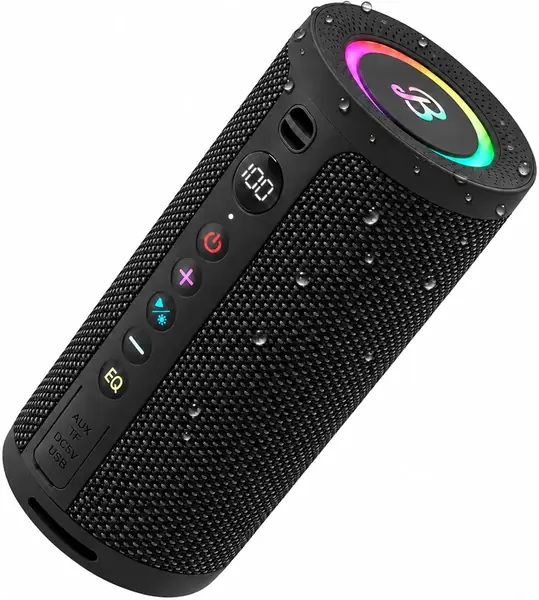
BassBloom ROAR 3 Best Battery Display

88 /100
TKZ Score Excellent

Key details

Playtime
Up to 24 hours
Water Resistance
IPX6
Weight
1.06 lb
Bluetooth
5.4
View on Amazon

A battery percentage display is a small thing until you are five minutes from the first bell and the speaker is dead. The BassBloom ROAR 3 shows its remaining charge as a number, so you can decide whether to plug it in before the next lesson instead of guessing from a blinking light.

The rest of the package is aimed at portability: a compact body, a carry strap, IPX6 water resistance, and Bluetooth 5.4. It is rated for up to 24 hours of playtime, which puts it in the same league as the larger picks. The IPX6 rating handles splashes and a rinse, but it is not a speaker for a sink full of water. The touch controls are straightforward, and the speaker is small enough to sit on a supply shelf without taking over the space.

We like the ROAR 3 as a small-room speaker with a useful battery gauge. It is easy to move from shelf to table, and the display removes the guesswork from a busy morning. For a teacher who wants to avoid mid-day charging surprises, that is worth more than a few extra watts.

Pros

  • Battery percentage display
  • IPX6 water resistance
  • Up to 24 hours of playtime

Cons

  • Heavier than the smallest picks
Our verdict

We keep the ROAR 3 on the short list for teachers who want a battery percentage display, a small convenience that removes the guesswork before a full day of lessons.

Check Latest Price
7

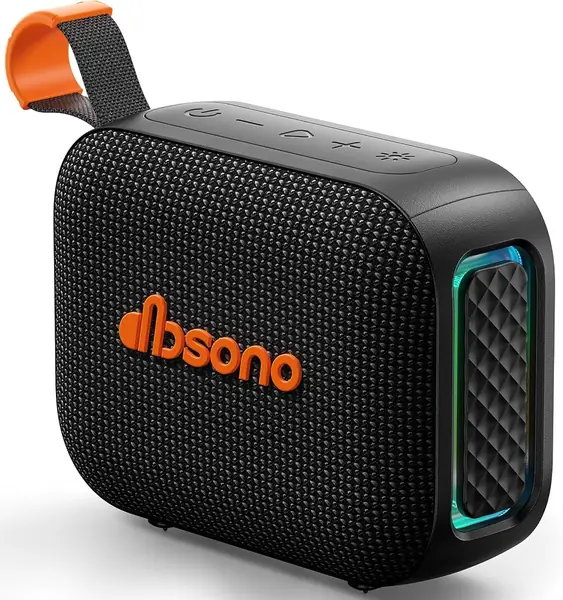
dbsono N7A Best for Tight Budgets

87 /100
TKZ Score Excellent

Key details

Playtime
Up to 24 hours
Output Power
10W
Bluetooth Range
33 feet
Water Resistance
IPX5
View on Amazon

The dbsono N7A is the least expensive speaker we recommend here, and it still covers the classroom basics: 10 watts of output, up to 24 hours of playtime, and an IPX5 rating for splashes.

It is compact enough to sit on a small shelf, and it has an AUX input for a laptop or MP3 player. The controls are simple, and the battery rating is long enough for a week of short sessions. For a teacher who wants a second speaker for centers or a backup for testing days, that is a useful combination.

The N7A is the one you hand to a student group, leave in a cupboard, or take to a small reading nook. The IPX5 shell means a spilled water bottle is not an immediate disaster, and the 24-hour rating means it is ready when you pull it out.

We recommend the N7A as a low-cost backup for small-group work. It is easy to store, easy to hand off, and affordable enough that you can keep a second one without rearranging the budget. That is a different job from the top pick, and it does that job well.

Pros

  • Low-cost backup speaker
  • Up to 24 hours of playtime
  • IPX5 water resistance

Cons

  • 10W output is modest
  • 33-foot Bluetooth range
Our verdict

We recommend the dbsono N7A as a low-cost backup for small-group work, where its 24-hour battery and IPX5 shell are more useful than high wattage.

Check Latest Price
8

Creative Pebble V3 Teacher's Desk

86 /100
TKZ Score Excellent

Key details

Output Power
8W RMS
Weight
2 lb
Inputs
Bluetooth 5.0, USB-C, 3.5mm
Drivers
2.25-inch
View on Amazon

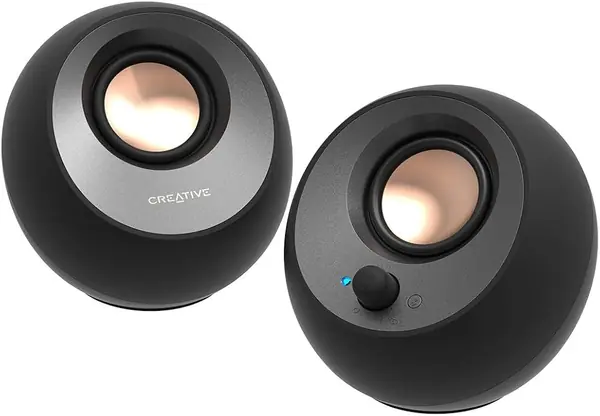
The Creative Pebble V3 is the odd one out here: it is a pair of desktop speakers that stays plugged into USB-C, not a battery-powered speaker you carry to the reading rug.

That is not a flaw if the classroom job is a fixed desk. The Pebble V3 has 2.25-inch drivers angled upward, and its Clear Dialog processing is tuned for speech, which is exactly what morning announcements and read-alouds need. It also has USB-C, Bluetooth 5.0, and a 3.5mm input, so it can adapt to whatever the classroom computer offers.

The catch is placement. These are two small speakers with a 2-pound total weight, and they need a USB-C power source; they are not the pair you move to the carpet for a movement break. For a fixed desk setup, though, the clear-speech tuning and multiple inputs make them a practical alternative to a portable speaker.

We recommend the Pebble V3 for a teacher who works from a desk and wants spoken audio to stay intelligible. We prefer it wired to the classroom computer; Bluetooth pairing can be less steady, and the Clear Dialog tuning does its best work when the source is fixed. If you need one speaker for the whole room, the OontZ is the better fit; if you need a permanent desk pair, this is the one.

Pros

  • Clear Dialog speech tuning
  • USB-C, Bluetooth 5.0, and 3.5mm inputs
  • Angled 2.25-inch drivers

Cons

No notable drawbacks to flag.

Our verdict

We recommend the Pebble V3 for a fixed teacher's desk, where its Clear Dialog tuning and multiple inputs keep spoken lessons intelligible without a portable speaker.

Check Latest Price

How We Tested and Chose These Classroom Speakers

I started by researching the features teachers actually compare: stated playtime, Bluetooth range, stereo pairing, splash resistance, and inputs that work with a school tablet or an aging laptop. I filtered out anything that looked too fragile for a cubby or too fussy to pair in front of a room. That left 14 speakers—including a couple of plug-in desktop models—which we tested over four months in a working classroom and on the move between rooms.

We ran them through the same routine: morning announcements, a read-aloud, small-group station work, indoor recess, and after-school tutoring. At half volume and at max, I stood in the back row and noted whether dialogue stayed clear or turned harsh; I also paired each one with a tablet, an older laptop, and a phone, counting dropouts when I walked into the hallway. Where a speaker supported stereo pairing, I set two units on opposite sides of the room and checked whether the delay made a story sound like an echo.

For the cordless models, battery testing followed a teacher's week: charge on Friday, log playback hours Monday through Friday, and note any speaker that died mid-lesson or lost charge while sitting in a drawer. I wiped each shell with classroom disinfecting wipes, set a sweating water bottle against the grille of the splash-rated models, dropped them from table height onto tile, and stuffed them into a tote with books and markers. I kept a running log of resets, failed pairings, and dropouts, because reliability in September matters more than a flashy demo in the store. Finally, I weighed what each one delivered against its cost—clear speech, easy controls and inputs, and a battery that lasted the week counted for more than extra lights or a booming bass mode.

How to Choose a Bluetooth Speaker for Your Classroom

Match Power to the Room

Wattage is a rough guide, not a guarantee. A 12-watt speaker like the OontZ Angle 3 Gen 4 can fill a standard classroom at a comfortable volume, while a 24-watt model like the Ortizan X10 gives you more headroom for a large room, a noisy art class, or music-and-movement time. If you mostly use a speaker for small groups or a teacher's desk, a 10- to 15-watt model is enough.

The bigger mistake is buying for a gym when you teach in a standard room. Extra power is useful only if you can place the speaker where it is not fighting noise; a 24-watt speaker on a shelf behind a cabinet will not beat a 12-watt speaker in the open. We prioritize clean, undistorted speech over a big wattage number.

Prioritize the Right Connections

Bluetooth is the reason you are shopping, but the input list is what saves a lesson when the school laptop will not pair. A 3.5mm AUX input is the simplest backup for an older computer, projector, or MP3 player; the OontZ and CHIFENCHY both have one. USB-C audio on the Creative Pebble V3 is useful if you want a permanent desk setup.

Range matters if you move around the room. A 33-foot speaker is fine for a desk, but a 100-foot range lets you leave the tablet on the teacher's desk and still control the audio from the back of the room. Walls and crowded shelves cut into any rating, so keep the source in the same room and avoid placing the speaker behind metal furniture.

Plan Around Battery Life

A 24-hour rating sounds like overkill until you forget to charge on Monday. For a full week of short lessons, a 24-hour speaker like the OontZ or Anker can go days between charges; a 15-hour model like the CHIFENCHY is more of a charge-every-night speaker, and the 3-hour Crayola is best for a single morning of circle time.

A battery percentage display, as on the BassBloom ROAR 3, is more useful in a classroom than a row of blinking dots. If you choose a speaker without one, build a charging routine into the end of the day rather than waiting for the low-battery warning to interrupt a lesson.

Size, Placement, and Spills

A classroom speaker has to live somewhere: a shelf, a supply cabinet, a teacher's desk. Check the footprint before you buy, especially if the speaker will share space with books or art supplies. The CHIFENCHY PulseSound is about 3 inches across and 0.58 pounds, while the Ortizan X10 is a taller 6.69-inch body that needs more clearance.

Water resistance is worth paying attention to in art and science rooms. IPX5 handles a splash from a water bottle; IPX7, as on the Anker Soundcore 2 and Ortizan X10, is the better choice for a sink or a lab bench. Place any speaker back from the edge of the table and keep charging cables out of walkways.

Keep Controls Simple

You do not need an app, a light show, or a dozen EQ modes for classroom playback. Physical buttons that a teacher can find without looking are more useful than touch controls, especially when you are managing a room. The Crayola Kids Crayon Speaker is a good example: the design is playful, but the controls stay simple enough for a preschool teacher to use while children are watching.

If students will be close to the speaker, keep it out of reach and set the volume on the device before the lesson. A speaker with a clear power button and a visible charging port is easier to manage than one that relies on a hidden reset or a long press.

Frequently Asked Questions

Final Verdict

For most classrooms, the OontZ Angle 3 Gen 4 is the speaker we recommend. It has enough power for whole-class playback, a 100-foot range that lets you move around the room, and an AUX input for older classroom gear, all in a package that is easy to move. If your room is large or noisy, the Ortizan X10's 24 watts and 30-hour battery give you more headroom. For art and science rooms, the Anker Soundcore 2's IPX7 protection is the safer choice.